Photo: Ruff tuff cream puff, CC0 · Wikimedia Commons
Clove Currant
Ribes aureum var. villosum
Also called buffalo currant, golden currant, Missouri currant, fragrant golden currant, Ribes odoratum.
A thornless Plains currant whose golden yellow spring flowers smell of cloves, followed by sweet black berries for jam, jelly and pie.
Be first when clove currant is priced
Saplings ship bare-root or in a pot, usually 12 to 18 inches tall, in the dormant season, and their height and age are stated here with the price, once available.
We grow it as saplings and seed. One email when it is listed with prices, and nothing else. Or ask, and we reply with what is ready now. Live plants ship February to May and October to November.
Limited timeSign up now and get 10% off when it is ready.
Share: copy link
Clove Currant at a glance
- Type
- Shrub
- Mature height
- 3–10 ft
- USDA zones
- 2–7
- Growth rate
- Medium
- Flowers
- April to June
- Fruit
- Berries, June to August
- First crop
- 3 years
- Mature spread
- 8 ft
- Sun
- Full, Part
- Soil moisture
- Dry, Average
- Grows wild in
- Rocky ground, dry uplands, sandy barrens and stream banks
- Native range
- 15 states, north to North Dakota, south to Texas, east to Tennessee and west to Montana Also recorded, not native, in 12 other states (listed above). See what is native in your state
List all 15, and the 12 others
Arkansas, Colorado, Iowa, Kansas, Minnesota, Missouri, Montana, Nebraska, New Mexico, North Dakota, Oklahoma, South Dakota, Tennessee, Texas and Wyoming
Also recorded, not native, in Connecticut, Illinois, Indiana, Maryland, Massachusetts, Michigan, New Jersey, New York, Ohio, Pennsylvania, Vermont and Wisconsin.
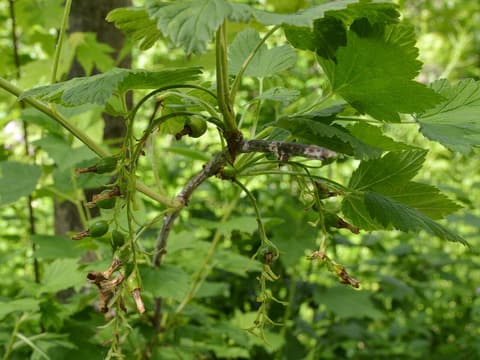
Clove currant is a thornless currant of the Great Plains and the Ozarks, named for the strong clove scent of its golden yellow spring flowers. Many Native American peoples and early settlers ate the berries. It takes drier, sunnier ground than the wild black currant we grow, and it has long been planted in Plains shelterbelts and hedges. Tennessee lists it as threatened. It holds the soil on roadsides and other disturbed ground. Use it as a fragrant fruiting hedge or a clump at a sunny edge, where birds and people can share the summer berries.
Size, growth and what to expect
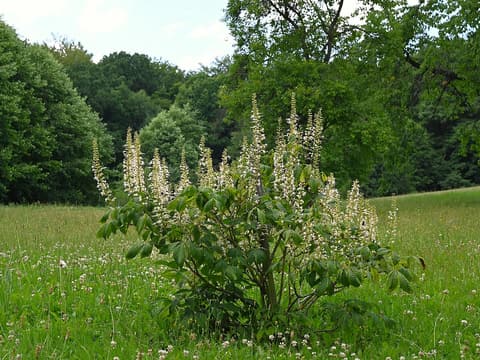
It grows at a medium pace, about a foot and a half a year in our growth estimator, and seedlings put on 6 to 12 inches in their first year. It makes an arching, many-stemmed shrub of 3 to 10 feet, most often 6 to 8 feet tall and as wide. It slowly spreads by suckers into a small colony.
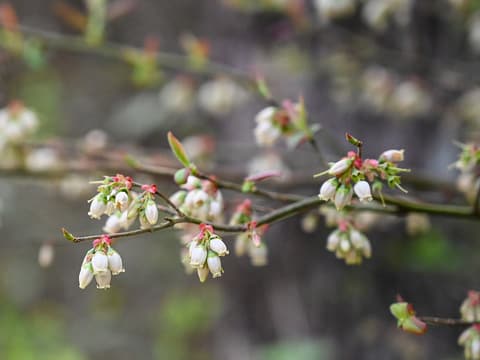
Golden yellow, tubular flowers open in nodding clusters from April into June, with a strong scent of cloves. The berries ripen from June into August, black or sometimes golden or reddish brown, a quarter to nearly half an inch across. They are sweet and full of seeds, good fresh or in jam, jelly and pie. Catbirds, thrashers, robins, waxwings, squirrels and chipmunks eat them, and mule deer browse the twigs.
It grows wild mostly on the Plains and in the Ozarks, from Montana and the Dakotas south to New Mexico and Texas and east to Minnesota, Iowa, Missouri, Arkansas and Tennessee. Its home is rocky slopes, limestone and sandy bluffs, prairies and shaded banks. It has spread from gardens farther east.
How to grow Clove Currant
Clove currant grows in full sun or part shade, in almost any well-drained soil, sandy, loamy or clay, from slightly acid to alkaline. It takes dry, exposed ground once rooted, but ground that stays waterlogged does not suit it. Set plants 6 feet apart, and keep each one 4 feet from a wall. At its size it can go within 15 feet of overhead wires.
Saplings ship bare-root or potted. Plant them dormant, from leaf fall until bud swell, in a hole wider than the roots and no deeper. Set the crown at the soil line, put the native soil back in, and keep the mulch clear of the stems. Sow cleaned seed outdoors in fall a quarter inch deep, under a light mulch. Fall sowing suits it best, because some seed has a hard coat. For spring, keep the seed damp in the refrigerator for 60 to 90 days first.
Water weekly through the first summer, at the base rather than overhead, since wet leaves invite mildew. White-tailed deer and rabbits seldom browse it, though mule deer do. In early spring, cut a few of the oldest stems to the ground to renew the clump.
Each flower carries both male and female parts. Some plants set no fruit with their own pollen and others only a little, so plant two or more from different seed for a crop. Plants begin to bear after about three years, and good crops come every year. Leaf spot, anthracnose, mildew and rust can mark the leaves, and currant worms and tent caterpillars can strip them. It is a host of white pine blister rust, which does a currant little harm but kills white pines and other five-needled pines. Keep it at least 900 feet from any white pine, since the spores that carry the rust from currant to pine rarely survive farther. Several states restrict currants for this reason, and North Carolina and Rhode Island ban this one outright, so check your state's rules first.
Heights and zones are typical ranges for the species in cultivation; local conditions and seed source shift them.
Sources (21)
- USDA Forest Service, Fire Effects Information System: Ribes aureum, Marshall 1995
- USDA NRCS Plant Guide: Golden currant, Ribes aureum
- USDA NRCS Plant Fact Sheet: Golden currant, Ribes aureum var. villosum, Wynia 2011, Manhattan Plant Materials Center
- USDA Forest Service, Woody Plant Seed Manual (2008), Ribes chapter, Pfister and Sloan
- Flora of North America, vol. 8: Ribes aureum
- Flora of North America, vol. 8: Ribes aureum var. villosum
- The Morton Arboretum: Clove currant, Ribes odoratum
- Lady Bird Johnson Wildflower Center: Ribes aureum var. villosum
- Missouri Department of Conservation Field Guide: Golden Currant, Ribes odoratum
- Chicago Botanic Garden Plant Finder: Clove currant, Ribes odoratum
- Oregon State University, Landscape Plants: Ribes odoratum
- NDSU Extension, North Dakota Tree Selector F2149: Golden Clove Currant, Ribes odoratum, Zeleznik
- North Dakota Tree Handbook, III-19: Golden or Clove Currant, Ribes odoratum
- University of Wisconsin-Madison, Center for Integrated Agricultural Systems, Uncommon Fruit: American Black Currant, Clove Currant
- Kampuss 2024, Self- and cross-compatibility of golden currant, Acta Horticulturae 1388: XIII International Rubus and Ribes Symposium
- NatureServe Explorer: Ribes aureum var. villosum
- Tennessee Natural Heritage Program: Rare Plant List 2025
- Maine Forest Service: White Pine Blister Rust
- Ohio State University Extension: HYG-3205, White Pine Blister Rust on Currants and Gooseberries, Ellis and Horst, 2010
- North Carolina Department of Agriculture and Consumer Services, Plant Industry: White Pine Blister Rust
- National Plant Board: state summaries of plant quarantines, combined copy as of 2025-10-30
Plan the planting
Check your site for it What to plant with it How big, how fast How much to water How to sow it How many for a crop When it flowers and fruits When to plant it where you live How far from the house and wires How old is yours
Read before planting
- Ten planting mistakes that quietly kill trees
- Transplanting young trees: timing, water and protection
- Protecting young trees from voles, rabbits, deer and squirrels
- How fast every tree and shrub we grow gets tall: growth rate, A to Z
- The habitat around a tree is part of the tree
- Invasive vines and shrubs are what is killing your woods
Other currants and gooseberries (Ribes) we grow: Granite Gooseberry, Miccosukee Gooseberry and Wild Black Currant.
Grows in the same conditions
Plants that share its sun and soil
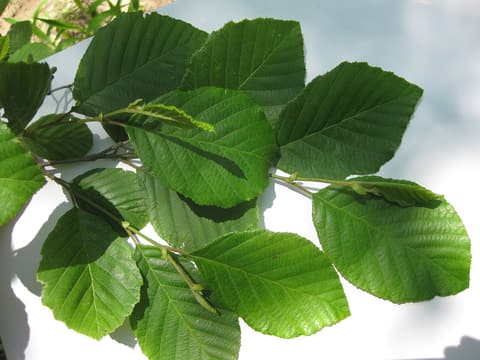
Trees to plant it under: Rock Elm, Common Hackberry and Black Oak.
More like this