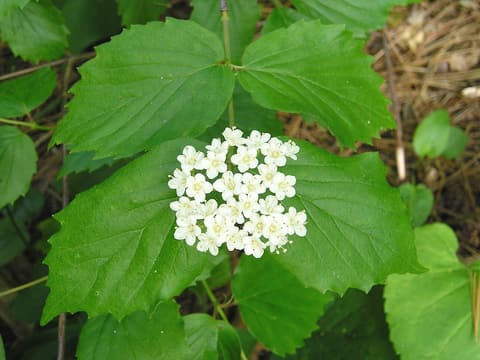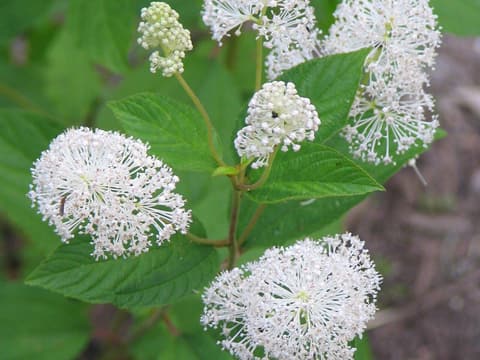
New Jersey Tea
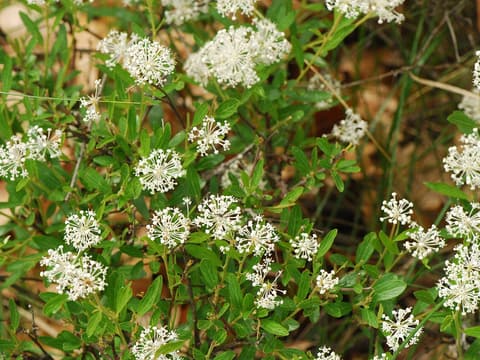
Ceanothus americanus Shrub Zones 4–8 2–3 ft
Shares dry uplands, rocky ground, sandy barrens, old fields and edges in the wild.

A native we do not grow
Rhus glabra. Shrub, 2 to 20 feet, zones 3 to 9; full sun, part shade or shade; dry or average ground.
We do not grow smooth sumac, and it is not in our shop. This page gathers what our tools say about it and the natives we grow for the same ground.
| Other names | Scarlet sumac, common sumac, red sumac, vinegar tree, western sumac, white sumac, Rocky Mountain sumac |
|---|---|
| Form | Shrub |
| Height, feet | 2 to 20 |
| Spread, feet | Up to 15 |
| Zones | 3 to 9 |
| Sun | Full sun, part shade or shade |
| Soil moisture | Dry or average ground |
| Growth | Medium |
| Leaves | Deciduous |
| Traits | Showy flowers, fall color, wildlife value, honey tree, edible, bears young, hedge or screen, salt tolerant, winter interest, erosion control |
| Flowers | May to July |
| Fruit | Drupes, August to February |
| First crop | 3 to 4 years |
| Pollination | Separate male and female plants. Smooth sumac plants are male or female, and only females bear the red fruit, so a female needs a male nearby. |
| Black walnut | Tolerant, on the Morton Arboretum's list |
| Ground | Dry uplands, rocky ground, sandy barrens, old fields and edges |
| Native in | 47 states and the District of Columbia |
Smooth sumac is native in 47 states and the District of Columbia: Alabama, Arizona, Arkansas, Colorado, Connecticut, Delaware, Florida, Georgia, Idaho, Illinois, Indiana, Iowa, Kansas, Kentucky, Louisiana, Maine, Maryland, Massachusetts, Michigan, Minnesota, Mississippi, Missouri, Montana, Nebraska, Nevada, New Hampshire, New Jersey, New Mexico, New York, North Carolina, North Dakota, Ohio, Oklahoma, Oregon, Pennsylvania, Rhode Island, South Carolina, South Dakota, Tennessee, Texas, Utah, Vermont, Virginia, Washington, West Virginia, Wisconsin, Wyoming and the District of Columbia. The states are the USDA PLANTS Database's records, with the native range read from Silvics of North America and NatureServe Explorer. The USDA PLANTS Database also records it growing wild beyond that range in California, where it is naturalized, not native.
These shrubs we grow share the most of smooth sumac's natural communities in the wild, by the companion species tool's rules.
Shares dry uplands, rocky ground, sandy barrens, old fields and edges in the wild.
Shares dry uplands, rocky ground, sandy barrens, old fields and edges in the wild.
Shares dry uplands, rocky ground, sandy barrens, old fields and edges in the wild.
Shares dry uplands, rocky ground, sandy barrens, old fields and edges in the wild.
Shares dry uplands, rocky ground, sandy barrens, old fields and edges in the wild.
Shares dry uplands, rocky ground, old fields and edges in the wild.
Its figures come from the USDA PLANTS Database, NC State Extension, the Missouri Botanical Garden, the Morton Arboretum, the Wildflower Center, the Forest Service's Fire Effects Information System, the Woody Plant Seed Manual and the University of Connecticut's plant database.