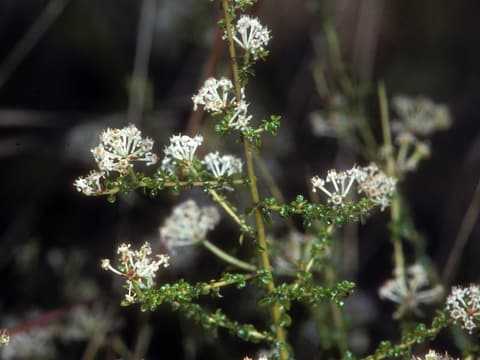
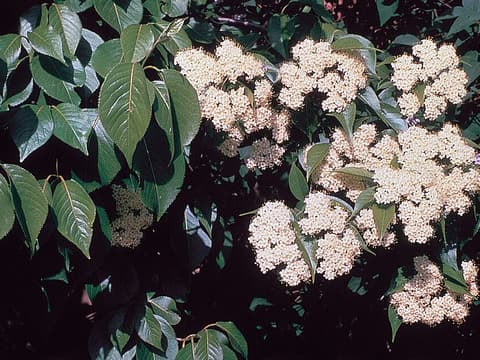
Photo: Francis Groeters, CC BY-SA 4.0, cropped · Wikimedia Commons
New Jersey Tea
Scientific name: Ceanothus americanus
Also called redroot, wild snowball, Jersey tea, Indian tea, snowbrush, soapbloom.
A knee-high shrub for dry, poor ground, with fragrant white flower clusters in June that feed azures, hairstreaks and two bees that use almost nothing else.
Be first when New Jersey tea is priced
Saplings ship bare-root or in a pot, usually 12 to 18 inches tall, in the dormant season, and their height and age are stated here with the price, once available.
We grow it as saplings and seed. One email when it is listed with prices, and nothing else. Or ask, and we reply with what is ready now. Live plants ship February to May and October to November.
Limited timeSign up now and get 10% off when it is ready.
Share: copy link
New Jersey Tea at a glance
- Type
- Shrub
- Mature height
- 2–3 ft
- USDA zones
- 4–8
- Growth rate
- Slow
- Flowers
- May to July
- Fruit
- Capsules, August to October
- First crop
- 5 to 10 years
- Mature spread
- 5 ft
- Sun
- Full, Part
- Soil moisture
- Dry, Average
- Grows wild in
- Dry uplands, sandy barrens, rocky ground, old fields and edges
- Native range
- 35 states and the District of Columbia, north to Minnesota, south to Florida and west to Nebraska See what is native in your state
List all 36
Alabama, Arkansas, Connecticut, Delaware, Florida, Georgia, Illinois, Indiana, Iowa, Kansas, Kentucky, Louisiana, Maine, Maryland, Massachusetts, Michigan, Minnesota, Mississippi, Missouri, Nebraska, New Hampshire, New Jersey, New York, North Carolina, Ohio, Oklahoma, Pennsylvania, Rhode Island, South Carolina, Tennessee, Texas, Vermont, Virginia, West Virginia, Wisconsin and the District of Columbia
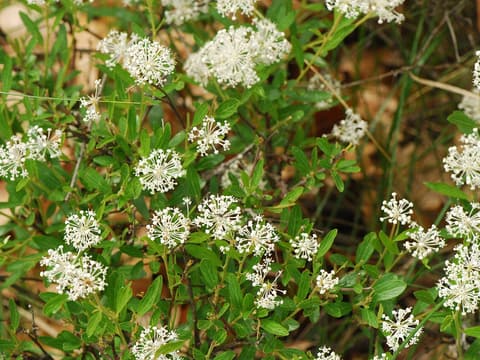
New Jersey tea is a low, rounded shrub of dry woods and rocky hillsides. Its fragrant white flower clusters draw hairstreaks, and two rare mining bees collect its pollen and almost nothing else. The azures and the mottled duskywing lay eggs on it. Frankia bacteria in its root nodules fix nitrogen, so it thrives on ground too poor for most shrubs. Colonists brewed the leaves as a caffeine-free tea during the Revolution, hence the name. Deep roots let it hold a slope against erosion, and its young twigs show yellow in winter. Perfect for a dry sunny bank, the front of a pollinator bed or the poor ground along a driveway where nothing else has thrived.
Size, growth and what to expect
New Jersey tea grows wild from Quebec and Minnesota south to Florida and Texas, on dry open plains and prairie and on sandy or rocky ground in clearings at the edge of woods. It is slow, a few inches a year on an average site, our growth estimator's figure for a slow grower of its size. It is a low shrub of 2 to 3 feet, typically about 5 feet wide, over a shallow mat of fibrous roots and a thick, deep, burl-like woody root. Those massive roots let it stand poor, dry ground, and they make an established plant hard to move.
The flowers open from May into July in fragrant creamy panicles 2 to 5 inches long, made of blossoms an eighth of an inch across. The three-lobed capsules that follow ripen from August into early October and eject three seeds apiece. White-tailed deer browse it through the growing season, and in the Missouri Ozarks they take the twigs heavily in winter. Turkeys and quail eat the seed.
How to grow New Jersey Tea
New Jersey tea wants full sun to light shade and sharp drainage: sand, gravel, rocky loam, a bank that bakes in August. Wet or heavy soil rots the roots, and limey ground suits it as well as acid. Plants grow wider than tall, so set them 3 feet apart.
Plant potted or bare-root plants while dormant and young, in a hole wider than the roots and no deeper. Set the crown at the soil line, put the native soil back in, and add no fertilizer. Do not tease the taproot apart or plan to move the plant later. Sow seed outdoors in late fall, half an inch deep in a pot or a screened bed; it comes up in spring. For spring sowing, pour water heated to 180 to 200 degrees over the seed and soak it for 24 hours as the water cools. Then hold it in damp sand in the refrigerator for 60 to 90 days. Seedlings are weak their first season, so keep them weeded.
Water weekly through the first summer if rain is short. Deer and rabbits browse it, so cage a young plant for two or three years, and keep mulch thin, gritty and clear of the crown so voles have nowhere to nest. It is built to be burned off by prairie fire and resprout, so an old, leggy plant can be cut hard in late winter; otherwise it needs no pruning.
Growth is slow, and seedlings are slow to start. Each flower carries both male and female parts, so there are no male and female plants to pair. Leaf spot and mildew mark the leaves in a wet summer and rarely matter; wet soil kills it. The capsules turn brown in August and burst, throwing seed several feet, so bag a cluster before it splits if you want the seed.
Heights and zones are typical ranges for the species in cultivation; local conditions and seed source shift them.
Sources (12)
- USDA Fire Effects Information System, Ceanothus americanus
- NC State Extension Gardener Plant Toolbox, Ceanothus americanus
- Lady Bird Johnson Wildflower Center, Ceanothus americanus
- USDA NRCS PLANTS Database: Ceanothus americanus
- USDA NRCS Plant Guide: New Jersey tea, Ceanothus americanus, Hurteau
- USDA NRCS Plant Fact Sheet: New Jersey tea, Ceanothus americanus, Wynia
- USDA Forest Service, Woody Plant Seed Manual (2008), Ceanothus chapter, Conard and Reed
- The Morton Arboretum: New Jersey tea
- Minnesota Wildflowers: Ceanothus americanus, New Jersey tea
- Virginia Tech Dendrology: New Jersey tea, Ceanothus americanus
- Go Botany, Native Plant Trust: Ceanothus americanus
- Fowler and Droege 2020, Pollen Specialist Bees of the Eastern United States
Plan the planting
Check your site for it What to plant with it How big, how fast How much to water How to sow it How many for a crop When it flowers and fruits When to plant it where you live How far from the house and wires How old is yours
Read before planting
- Ten planting mistakes that quietly kill trees
- Transplanting young trees: timing, water and protection
- Protecting young trees from voles, rabbits, deer and squirrels
- Native trees and shrubs for dry, sandy soil: the plants of barrens and dunes, and how to grow them
- Native trees and shrubs for butterflies and moths: host plants first, nectar second
- The habitat around a tree is part of the tree
Other buckbrushes (Ceanothus) we grow: Littleleaf Buckbrush and Prairie Redroot.
Grows in the same conditions
Plants that share its sun and soil
Trees to plant it under: Black Oak, Sassafras and Mockernut Hickory.
More like this