For the shade under tall trees
Shade Understory Pack
Five plants that are happiest under a canopy of oaks: flowers from March to November, fruit for thrushes, and the host plants of two swallowtails.
5 kinds, 8 saplings Zones 5–8 Priced on request
The plants in this bundle
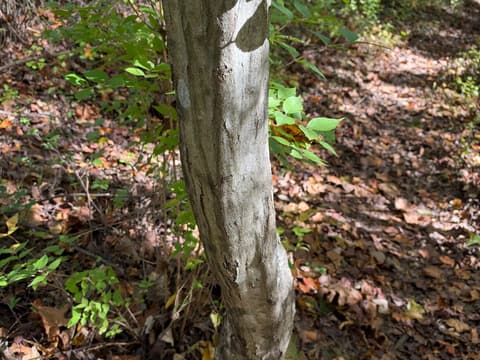
American Hornbeam (Musclewood)
Carpinus caroliniana Small tree Zones 3–9 20–35 ft
Middle layer, slow, needs no pruning
Planted for berries and fruit: 3 spicebushes, 2 pawpaws and one each of the other three, 8 saplings in all. Planting the pack asks for three to five spicebushes, and the set takes three.
None of these is priced online yet. Ask us to put the whole set together at the sizes on hand, or leave your email to hear when any of them is priced.
Why these five go together
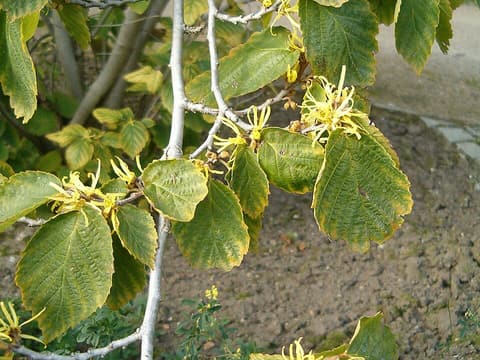
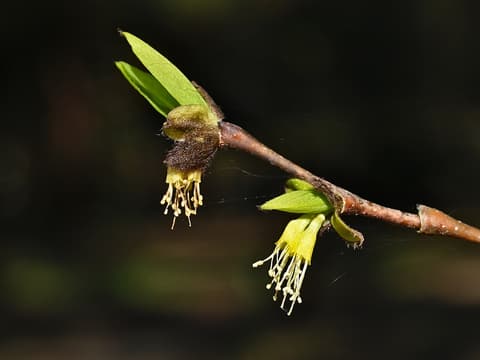
This is the understory of an eastern oak woods, sold as a set. Spicebush opens the year with yellow flowers in March, and leatherwood follows in the first week of spring. Pawpaw and hornbeam fill the middle layer through summer, and witch hazel closes the year with ribbon flowers in November as its leaves turn gold. Every one of them is at home in shade.
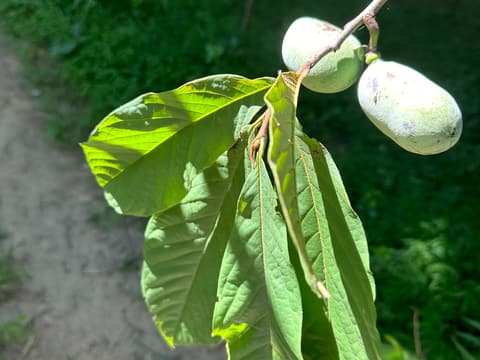
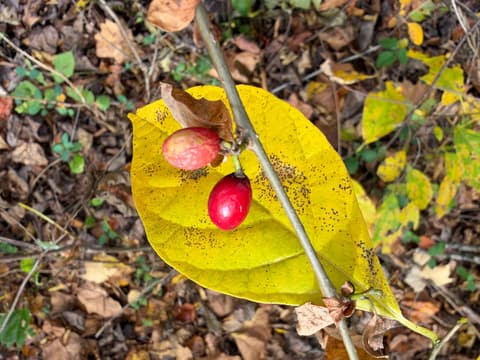
Two of them are host plants that a butterfly cannot do without: spicebush for the spicebush swallowtail and pawpaw for the zebra swallowtail. Spicebush berries, high in fat, feed thrushes on their way south, and pawpaw carries the largest native fruit in North America.
Where it fits
The set wants the dappled or high shade under tall trees, in ordinary to moist soil. Spicebush, pawpaw, hornbeam and leatherwood all take ground that stays wet, and witch hazel is content with average moisture. Together they are hardy in zones 5 through 8 (witch hazel and hornbeam go to zone 3, spicebush and leatherwood to zone 4, and all but witch hazel to zone 9).
Heights run in steps: leatherwood 3 to 6 feet, spicebush 6 to 12, witch hazel 12 to 20, pawpaw 15 to 30 and hornbeam 20 to 35. The pack layers naturally, with hornbeam and pawpaw toward the back and leatherwood at the front of the view. Spacing, from the plant pages: leatherwood 4 feet apart at the front, spicebush 6, pawpaw 8 to 10, witch hazel 10, and hornbeam 15 to 20 feet from a building or another tree.
See the set's year in the bloom and fruit calendar, how many of each give a crop in the pollination planner, and how far its tallest plant goes from the house in the planting-distance tool.
Planting the pack
Plant dormant, in holes no deeper than the roots, under a mulch of the leaves that fall from the canopy above rather than wood chips. Pawpaw fruits only when two unrelated trees stand within reach of each other, and only female spicebush carries berries, so plant three to five spicebush seedlings and at least two pawpaws.
Hornbeam and leatherwood are slow and never need pruning. Leave the swallowtail caterpillars that roll spicebush and pawpaw leaves in summer. They are the point of the planting.
Ask
Want this set for your ground?
Tell us the spot, the zone and how many of each plant you have in mind; we reply with what is ready now and what the next season brings.
Ask about this bundleShare: copy link
Be first
Email me when any of these is ready to order
Limited timeSign up now and get 10% off when it is ready.
For Witch Hazel, Pawpaw, Spicebush, Eastern Leatherwood, American Hornbeam (Musclewood): one email per plant when it is priced or back in stock, and nothing else. Each carries a code for 10% off the plants in that order, not shipping or tax.
Saplings ship bare-root or in a pot, usually 12 to 18 inches tall, in the dormant season, and their height and age are stated with the price, once available. Pawpaw and American hornbeam ship February to May. The other live plants ship February to May and October to November.
While you wait, ask what is ready now.