Photo: Krzysztof Ziarnek, CC BY-SA 4.0, cropped · Wikimedia Commons
Eastern Leatherwood
Scientific name: Dirca palustris
Also called wicopy, moosewood, leatherwood.
Tiny yellow flowers in the first week of spring, on a rare, slow shade shrub with bark you can tie in knots.
Be first when eastern leatherwood is priced
Saplings ship in a pot, usually 12 to 18 inches tall, in the dormant season, and their height and age are stated here with the price, once available.
We grow it as saplings and seed. One email when it is listed with prices, and nothing else. Or ask, and we reply with what is ready now. Live plants ship February to May and October to November.
Limited timeSign up now and get 10% off when it is ready.
Share: copy link
Eastern Leatherwood at a glance
- Type
- Shrub
- Mature height
- 3–6 ft
- USDA zones
- 4–9
- Growth rate
- Slow
- Flowers
- March to April
- Fruit
- Berries, June to July
- First crop
- About 4 years (first flowers)
- Mature spread
- 6 ft
- Sun
- Part, Shade
- Soil moisture
- Average, Wet
- Grows wild in
- Rich moist slopes, the forest understory and stream banks
- Native range
- 33 states and the District of Columbia, north and west to North Dakota and south to Florida See what is native in your state
List all 34
Alabama, Arkansas, Connecticut, Delaware, Florida, Georgia, Illinois, Indiana, Iowa, Kansas, Kentucky, Louisiana, Maine, Maryland, Massachusetts, Michigan, Minnesota, Mississippi, Missouri, New Hampshire, New Jersey, New York, North Carolina, North Dakota, Ohio, Oklahoma, Pennsylvania, South Carolina, Tennessee, Vermont, Virginia, West Virginia, Wisconsin and the District of Columbia
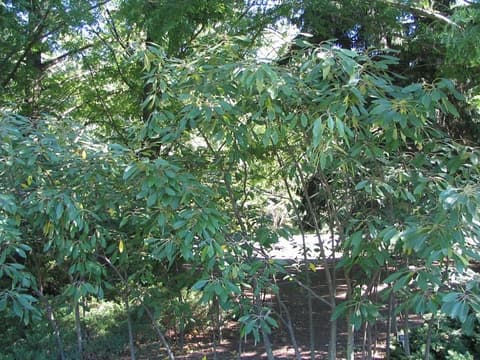
Leatherwood is a plant for the connoisseur: a rounded, small-leaved shrub of rich moist woods that blooms in March before anything else and turns butter yellow in fall. Slow-growing, deer-resistant and rarely offered because it is difficult in nursery production. At home beside a woodland path, where the March flowers get noticed and the deer walk past.
Size, growth and what to expect
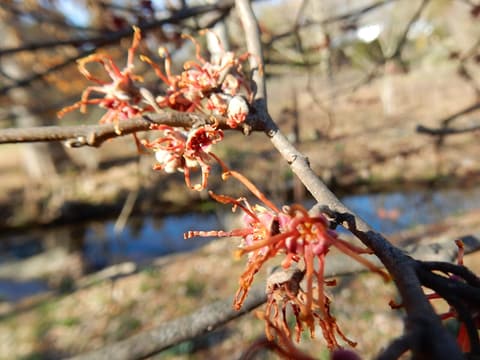
Eastern leatherwood opens its pale lemon-yellow bells, only a quarter inch long, in March and April. It grows slowly, 6 inches to a foot a year in its youth on an average site, the figure our growth estimator uses for a slow grower of its size. It is long-lived and slow-growing. Expect a shrub 4 to 6 feet tall and as wide, and up to 10 feet at most.
The green fruit that follows the flowers is up to half an inch across, ripens toward red in June and July, and goes to birds and small mammals. The twigs and bark are so pliable that Native Americans used them for bowstrings, fishing line, baskets and rope.
It grows wild in the forest understory from southern Quebec west to Minnesota and south to Florida, Alabama and Oklahoma, in low bottom woods, rich wooded slopes and streambanks. It will not stand dry ground.
How to grow Eastern Leatherwood
Eastern leatherwood is a shade plant first. Put it under a high canopy or on the north side of a building, in moist soil loose with leaf litter. Ground that stays damp much of the year is no problem. Set plants 4 feet apart at the front of a shade bed.
We ship leatherwood potted. Plant it in the dormant season and break up the root ball as little as you can. Dig twice the width of the pot, keep the top of the ball flush with grade, and put back the same soil with nothing added. A few inches of leaf mulch, pulled back from the stems, matches what it grows in. No stake is needed. Sow the seed outdoors as soon as the fruit ripens in June or July, with or without its pulp, a quarter inch deep. It comes up the next spring.
Water through the first two summers whenever the surface dries, because this shrub has no drought tolerance at all. Voles girdle stems under deep winter mulch, so keep the ring thin. It shapes itself and needs no pruning.
A single leatherwood sets fruit without a partner, even in a cold spring when few insects fly. Afternoon sun scorches the leaves of eastern leatherwood, so err toward more shade. The bark and sap can irritate skin, so wear gloves when you cut it.
Heights and zones are typical ranges for the species in cultivation; local conditions and seed source shift them.
Sources (12)
- NC State Extension Gardener Plant Toolbox: Dirca palustris
- Missouri Botanical Garden Plant Finder: Dirca palustris
- Lady Bird Johnson Wildflower Center: Dirca palustris
- USDA Forest Service, Woody Plant Seed Manual (2008), Dirca chapter
- The Morton Arboretum: leatherwood
- UConn Plant Database: Dirca palustris
- Brooklyn Botanic Garden, New York Metropolitan Flora: Dirca palustris
- Minnesota Wildflowers: Dirca palustris, leatherwood
- NatureServe Explorer: Dirca palustris
- Go Botany, Native Plant Trust: Dirca palustris
- Virginia Tech Dendrology: eastern leatherwood, Dirca palustris
- Norris 2011, Horticultural & Ecophysiological Evaluations of Leatherwoods (Dirca spp.), MS thesis, Iowa State University
Plan the planting
Check your site for it What to plant with it How big, how fast How much to water How to sow it How many for a crop When it flowers and fruits When to plant it where you live How far from the house and wires How old is yours
Read before planting
- Ten planting mistakes that quietly kill trees
- Transplanting young trees: timing, water and protection
- Protecting young trees from voles, rabbits, deer and squirrels
- What to plant under a big tree: native shrubs for shade, and how to plant without hurting the tree
- Native replacements for burning bush, barberry, privet, Bradford pear, boxwood, butterfly bush and forsythia
- The habitat around a tree is part of the tree
Grows in the same conditions
Plants that share its sun and soil
Trees to plant it under: Florida Maple, Slippery Elm and Ohio Buckeye.
More like this