Photo: Wendy Cutler, CC BY 2.0, cropped · Wikimedia Commons
Northern Catalpa
Scientific name: Catalpa speciosa
Also called western catalpa, hardy catalpa, cigar tree.
Orchid-like white flowers in June, giant heart-shaped leaves and a tolerance for almost any soil.
Be first when northern catalpa is priced
Saplings ship bare-root or in a pot, usually 12 to 18 inches tall, in the dormant season, and their height and age are stated here with the price, once available.
We grow it as saplings and seed. One email when it is listed with prices, and nothing else. Or ask, and we reply with what is ready now. Live plants ship February to May and October to November.
Limited timeSign up now and get 10% off when it is ready.
Share: copy link
Northern Catalpa at a glance
- Type
- Large tree
- Mature height
- 40–70 ft
- USDA zones
- 4–8
- Growth rate
- Fast
- Flowers
- May to June
- Fruit
- Pods, October
- First crop
- About 20 years
- Mature spread
- 50 ft
- Sun
- Full, Part
- Soil moisture
- Dry, Average, Wet
- Grows wild in
- Floodplain forests, stream banks, old fields and edges
- Native range
- Arkansas, Illinois, Indiana, Kentucky, Missouri and Tennessee Also recorded, not native, in 32 other states (listed above). See what is native in your state
List the others
Also recorded, not native, in Alabama, Colorado, Connecticut, Georgia, Iowa, Kansas, Louisiana, Maine, Maryland, Massachusetts, Michigan, Minnesota, Mississippi, Nebraska, New Hampshire, New Jersey, New Mexico, New York, North Carolina, North Dakota, Ohio, Oklahoma, Pennsylvania, Rhode Island, South Carolina, South Dakota, Texas, Utah, Virginia, West Virginia, Wisconsin and the District of Columbia.
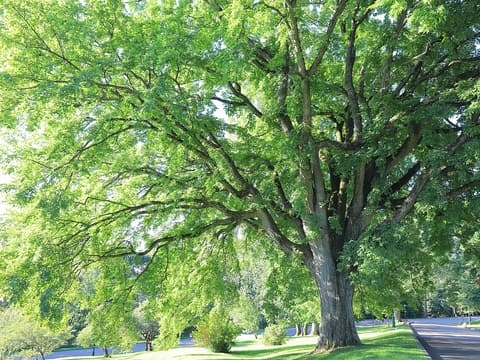
Catalpa is the tree grandparents planted and landscapers forgot. It blooms when little else does, hosts the catalpa sphinx moth, and thrives in wet clay, dry gravel and city air alike. The long seed pods and big leaves make litter, so keep it away from patios, but on a large lot it is fast, tough and beautiful. In winter its bare, rugged outline stands out. A quick shade tree for the back of a hayfield or the far side of a farm pond.
Size, growth and what to expect
By the USDA Plant Guide's figure, a northern catalpa stands about 20 feet at 20 years, rapid in youth and slowing with age. Our growth estimator models that youthful pace at nearly three feet a year on an average site, its rate for a fast tree. It reaches 40 to 70 feet with an irregular, open crown and lives about 60 years. It can live up to 100 years.
It flowers in late spring in upright clusters 4 to 8 inches tall of white bells striped orange and spotted purple, good for honey. The pods that follow run 10 to 24 inches long, turn dark brown in fall and split in spring to drop winged seeds. Their shape and color give the tree its other name, cigar tree. The caterpillars of the catalpa sphinx moth strip it some years and are prized as fish bait.
Its native ground is a small area of the central Mississippi Valley in western Tennessee, northeast Arkansas, eastern Missouri, western Kentucky and southern Illinois and Indiana. After 200 years of planting it grows across most eastern states.
How to grow Northern Catalpa
Catalpa wants room and sun. It grows in full sun or part shade, on dry, average or wet soil. Its crown grows wide, so keep it 30 feet from the house, away from a patio, and never under a power line. Set trees 20 feet apart.
Plant while dormant. Saplings arrive bare-root or potted. Dig two to three times the root width but no deeper, keep the root flare visible at grade, refill with what you dug, and mulch a ring clear of the trunk. Stake only if the top whips in wind. For seed, split the pods in late winter and sow the flat winged seeds a quarter inch deep in spring, under screen.
Give it a soaking each week through its first summer. Guard the trunk from rabbits and voles, and cage against deer two or three winters. Prune in winter while the tree is young, keeping one leader and cutting out tight forks.
Each flower carries both male and female parts. Northern catalpa sets pods only with pollen from another tree, so plant two or more seedlings for seed. Bumblebees and carpenter bees work them by day and moths by night. The wood is brittle and big limbs break in storms, reason enough to keep northern catalpa away from anything you value. Catalpa sphinx caterpillars strip a tree some summers, though it leafs out again. Leaves come late in spring and drop at the first hard frost.
Heights and zones are typical ranges for the species in cultivation; local conditions and seed source shift them.
Sources (13)
- USDA NRCS Plant Guide, Northern Catalpa
- Morton Arboretum, Northern catalpa
- NC State Extension Gardener Plant Toolbox, Catalpa speciosa
- Virginia Tech Dendrology: northern catalpa, Catalpa speciosa
- Lady Bird Johnson Wildflower Center: Catalpa speciosa
- Illinois Wildflowers (John Hilty): Northern Catalpa, Catalpa speciosa
- USDA Forest Service, Woody Plant Seed Manual (2008), Catalpa chapter
- Go Botany (Native Plant Trust): Catalpa speciosa, northern catalpa
- Missouri Department of Conservation field guide: Northern Catalpa
- Stephenson and Thomas 1977, Diurnal and nocturnal pollination of Catalpa speciosa (Bignoniaceae), Systematic Botany 2(3): 191-198
- University of Florida IFAS Extension: Catalpa spp., Catalpa, ENH289/ST130
- Missouri Botanical Garden Plant Finder: Catalpa speciosa
- BIEN, the Botanical Information and Ecology Network: trait data for Catalpa speciosa, from Loehle 1988
Plan the planting
Check your site for it What to plant with it How big, how fast How much to water How to sow it How many for a crop When it flowers and fruits When to plant it where you live How far from the house and wires How old is yours Moving one you already have
Read before planting
- Ten planting mistakes that quietly kill trees
- Transplanting young trees: timing, water and protection
- Protecting young trees from voles, rabbits, deer and squirrels
- Winter identification: telling native trees apart by bark, buds and twigs
- Native trees and shrubs for heavy clay: which take it wet, which take it dry, and how to plant them
- Six trees not to plant near a house, and what to plant instead
Other catalpas (Catalpa) we grow: Southern Catalpa.
Grows in the same conditions
Plants that share its sun and soil
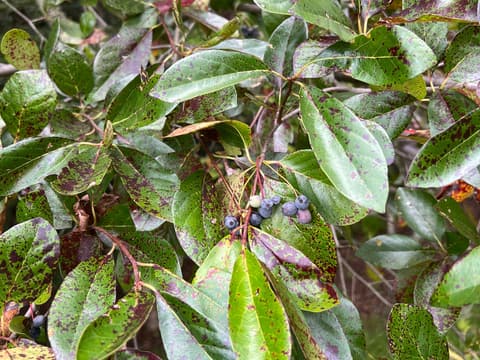
Under its canopy: Riverbank Grape, Virginia Creeper and Gray Dogwood.
More like this