Photo: Matt Lavin, CC BY-SA 2.0, cropped · Wikimedia Commons
Bebb's Willow
Salix bebbiana
Also called Bebb willow, beaked willow, long-beaked willow, diamond willow, Salix rostrata.
A northern willow of streams and wet meadows, the main source of carved diamond willow, with spring catkins and twigs that moose and deer browse.
Be first when Bebb's willow is priced
Saplings ship bare-root or in a pot, usually 12 to 18 inches tall, in the dormant season, and their height and age are stated here with the price, once available.
We grow it as saplings. One email when it is listed with prices, and nothing else. Or ask, and we reply with what is ready now. Live plants ship February to May and October to November.
Limited timeSign up now and get 10% off when it is ready.
Share: copy link
Bebb's Willow at a glance
- Type
- Shrub
- Mature height
- 10–25 ft
- USDA zones
- 3–7
- Growth rate
- Medium
- Flowers
- April to June
- Fruit
- Capsules, May to June
- First crop
- 2 to 10 years (first flowers)
- Mature spread
- 15 ft
- Sun
- Full, Part
- Soil moisture
- Average, Wet
- Grows wild in
- Stream banks, swamps and wet flats, old fields and edges
- Native range
- Alaska and 31 other states, north to North Dakota, south to Arizona and west to Oregon See what is native in your state
List all 32
Alaska, Arizona, California, Colorado, Connecticut, Idaho, Illinois, Indiana, Iowa, Maine, Maryland, Massachusetts, Michigan, Minnesota, Montana, Nebraska, Nevada, New Hampshire, New Jersey, New Mexico, New York, North Dakota, Ohio, Oregon, Pennsylvania, Rhode Island, South Dakota, Utah, Vermont, Washington, Wisconsin and Wyoming
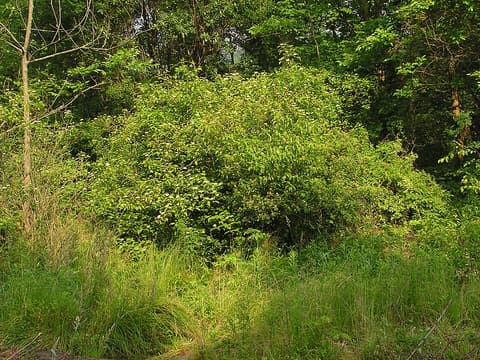
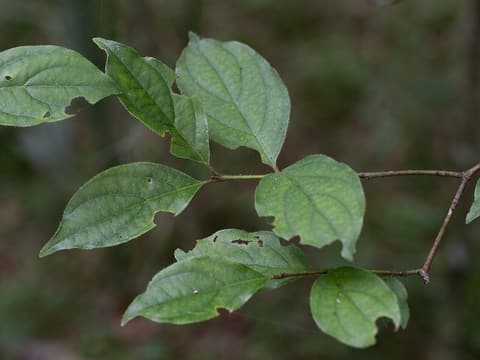
Bebb's willow is a large shrub or small tree of northern streams, lakeshores, bogs and wet meadows, one of the most widespread willows of the North. It is the main source of diamond willow, whose diamond-shaped scars, carved, show creamy sapwood against red-brown heartwood. Chickadees dig their nest holes in its stems. Along a stream it helps hold the bank against erosion. Set it along a stream, a pond shore or a wet swale in full sun, as a clump of stems or a small tree.
Size, growth and what to expect
Bebb's willow grows at a medium pace, about a foot and a half a year in our growth estimator. It makes a clump of stems about 10 feet tall or a small, bushy tree of 15 to 25 feet, 10 to 15 feet wide. Its roots are shallow and dense.
Catkins open from April into June, the males just before the leaves and the females as they unfold. The female catkins hold long-beaked, hairy capsules on slender stalks, which split in May and June to release cottony seed. Birds, beavers and small mammals eat the buds, shoots and catkins.
It grows wild from Newfoundland west across Canada to interior Alaska. In the West it reaches south to Arizona and New Mexico. In the East it reaches Iowa, Illinois, Ohio, Pennsylvania and Maryland. Its home is stream banks, lakeshores, bogs, wet meadows and thickets, and dry slopes in the mountains. It is gone from Maryland.
How to grow Bebb's Willow
Bebb's willow grows best in full sun and takes part shade. It wants a moist soil, sandy, gravelly or loamy, and it takes moderately limy ground. It rides out short floods, but it grows poorly where water stands over the roots for long, and it does not take drought. Set it 8 feet from a wall and keep it 15 feet from overhead wires, since some plants reach 25 feet. Set plants 10 feet apart.
Saplings ship bare-root or potted. Plant them dormant, from leaf fall until bud swell, in a hole wider than the roots and no deeper. Set the root flare at the soil line, put the native soil back in, and keep the mulch clear of the stems. Willow seed lives only a few days, so sow it the day the capsules split. Press it onto wet, bare soil in sun, uncovered. Keep the bed moist, and it sprouts within a day or two. Dormant cuttings 12 to 20 inches long, taken in early spring and pushed into moist soil, root within two or three weeks.
Water weekly through the first summer unless the ground stays wet. Moose, elk, deer, hares and beavers browse the twigs, so cage young plants where they are common.
Plants are male or female, and bees carry the pollen from male catkins to female ones. Plants start to flower at 2 to 10 years old. The willow sawfly can be a serious pest of new cuttings. Fungi that attack the stems where branches join leave the diamond-shaped scars that carvers prize.
Heights and zones are typical ranges for the species in cultivation; local conditions and seed source shift them.
Sources (11)
- USDA Forest Service, Fire Effects Information System: Salix bebbiana (Uchytil 1989)
- USDA NRCS Plant Guide: Bebb willow, Salix bebbiana (Favorite)
- Iowa State University Extension and Outreach, Natural Resources: Bebb Willow
- Flora of North America, vol. 7: Salix bebbiana
- Minnesota Wildflowers: Salix bebbiana, Bebb's willow
- Go Botany, Native Plant Trust: Salix bebbiana
- USDA Forest Service, Woody Plant Seed Manual (2008), Salix chapter (Zasada, Douglas and Buechler)
- USDA NRCS PLANTS Database: Salix bebbiana
- NatureServe Explorer: Salix bebbiana, Bebb's Willow
- Maryland Natural Heritage Program: List of Rare, Threatened, and Endangered Plants of Maryland
- Ohio Department of Natural Resources: Rare Native Ohio Plants, 2024-25 Status List
Plan the planting
Check your site for it What to plant with it How big, how fast How much to water How to sow it How many for a crop When it flowers and fruits When to plant it where you live How far from the house and wires How old is yours
Read before planting
- Ten planting mistakes that quietly kill trees
- Transplanting young trees: timing, water and protection
- Protecting young trees from voles, rabbits, deer and squirrels
- How fast every tree and shrub we grow gets tall: growth rate, A to Z
- The habitat around a tree is part of the tree
- Invasive vines and shrubs are what is killing your woods
Other willows (Salix) we grow: Carolina Willow, Florida Willow, Missouri River Willow and Peachleaf Willow.
Grows in the same conditions
Plants that share its sun and soil
Trees to plant it under: American Elm, Peachleaf Willow and Yellow Birch.
More like this