Photo: SB_Johnny, CC BY-SA 3.0, cropped · Wikimedia Commons
Silky Dogwood
Scientific name: Cornus amomum
Also called swamp dogwood, silky cornel.
Creamy flower clusters in June, porcelain-blue berries in September and purple-red winter stems for wet spots.
Be first when silky dogwood is priced
Saplings ship bare-root or in a pot, usually 12 to 18 inches tall, in the dormant season, and their height and age are stated here with the price, once available.
We grow it as saplings and seed. One email when it is listed with prices, and nothing else. Or ask, and we reply with what is ready now. Live plants ship February to May and October to November.
Limited timeSign up now and get 10% off when it is ready.
Share: copy link
Silky Dogwood at a glance
- Type
- Shrub
- Mature height
- 6–12 ft
- USDA zones
- 4–8
- Growth rate
- Medium
- Flowers
- May to June
- Fruit
- Berries, August to September
- First crop
- 4 to 5 years
- Mature spread
- 12 ft
- Sun
- Full, Part
- Soil moisture
- Average, Wet
- Grows wild in
- Stream banks, swamps and wet flats
- Native range
- 27 states and the District of Columbia, north to Maine, south to Florida and west to Iowa See what is native in your state
List all 28
Alabama, Connecticut, Delaware, Florida, Georgia, Illinois, Indiana, Iowa, Kentucky, Maine, Maryland, Massachusetts, Michigan, Mississippi, Missouri, New Hampshire, New Jersey, New York, North Carolina, Ohio, Pennsylvania, Rhode Island, South Carolina, Tennessee, Vermont, Virginia, West Virginia and the District of Columbia
Silky dogwood is the shrub for wet, sunny ground: ditches, pond margins, low corners of the yard. It roots wherever the stems touch soil and feeds dozens of bird species with its blue fruit. On stream banks it is planted beside willows, and after two or three years it keeps the bank from washing out. A bird hedge for the drainage swale, sited where the winter stems show from a window.
Size, growth and what to expect
Silky dogwood makes a multi-stemmed, open, rounded shrub 6 to 12 feet tall and as wide. It grows at a medium pace, and our growth estimator models it at roughly a foot and a half of new height a year on an average site. Branches that touch the ground root where they lie, so an untended plant spreads into a thicket.
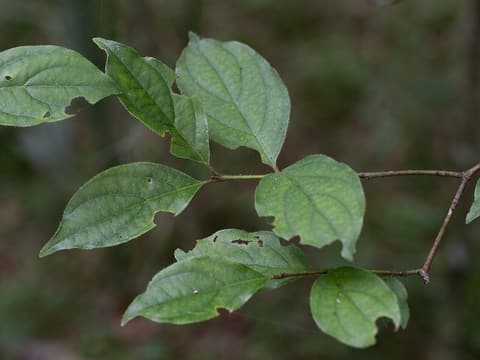
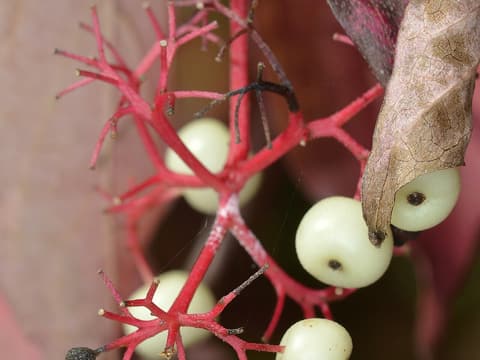
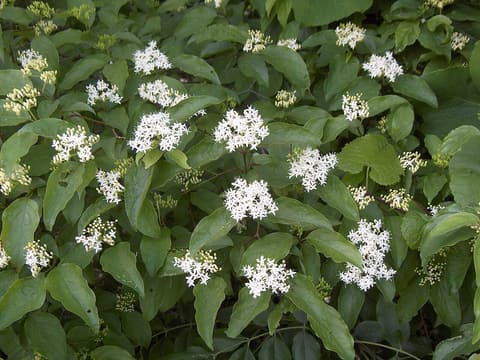
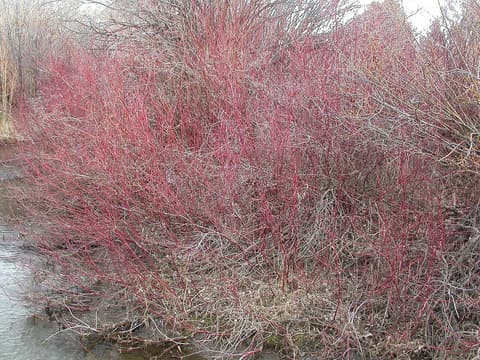
Flat clusters of tiny creamy flowers up to 2½ inches across open in May and June, and the quarter-inch fruit turns from white to blue as it ripens in August and September. Songbirds, grouse, quail and turkeys take the fruit, and the leaves feed the caterpillars of the spring and summer azure butterflies. Young stems are greenish purple to dark reddish purple, and the pith inside a twig more than a year old is brown. The name silky comes from the silky hairs on the leaves and twigs.
It grows wild from Newfoundland and Ontario south to Missouri, Mississippi and Florida, on swamp borders and floodplains and along the banks of streams and ponds.
How to grow Silky Dogwood
Silky dogwood grows in full sun or light shade on ground from average to soggy: a ditch, a pond margin, the low corner that stays wet. Each plant spreads nearly as wide as it is tall, so set a hedge 5 feet apart and keep it that far from a foundation.
Plant dormant bare-root or potted shrubs between leaf fall and bud break. Dig a wide, shallow hole, set the crown at the soil line, backfill with what came out, and mulch a ring that does not touch the stems. No stake is needed. Clean the stones from the pulp and sow them outdoors at once, while the weather is still warm, a quarter to half an inch deep. Seedlings come up the next spring. Stones kept until spring need three to four months damp in the refrigerator first.
Water weekly the first summer unless the site stays wet. Deer browse silky dogwood eagerly and rabbits cut stems in winter, so cage new plants for two or three years. Once established, cut a third of the oldest stems to the ground each winter; new shoots carry the best red color.
Each flower carries both male and female parts, so there are no male and female plants to pair. Stems that touch the soil root down, so the shrub creeps outward; mow or spade the edge to hold it. Fruit ripens in late summer and birds strip it quickly; stems color after leaf drop. Leaf spots show up in wet years but do no lasting harm.
Heights and zones are typical ranges for the species in cultivation; local conditions and seed source shift them.
Sources (10)
- NC State Extension Gardener Plant Toolbox: Cornus amomum
- Missouri Botanical Garden Plant Finder: Cornus amomum
- Lady Bird Johnson Wildflower Center: Cornus amomum
- USDA NRCS PLANTS Database: Cornus amomum
- The Morton Arboretum: Silky dogwood
- Virginia Tech Dendrology: silky dogwood, Cornus amomum
- USDA Forest Service, Woody Plant Seed Manual (2008), Cornus chapter
- USDA NRCS Plant Fact Sheet: Silky Dogwood, Cornus amomum
- Go Botany (Native Plant Trust): Swida amomum, silky dogwood
- Flora of North America, vol. 12: Cornus amomum
Plan the planting
Check your site for it What to plant with it How big, how fast How much to water How to sow it How many for a crop When it flowers and fruits When to plant it where you live How far from the house and wires How old is yours
Read before planting
- Ten planting mistakes that quietly kill trees
- Transplanting young trees: timing, water and protection
- Protecting young trees from voles, rabbits, deer and squirrels
- Why reservoirs and drinking watersheds are surrounded by forest, and what the trees do for the water
- Native trees and shrubs for bees: pollen, nectar, nesting and a bloom calendar from willow to witch hazel
- The habitat around a tree is part of the tree
We grow 7 other dogwoods (Cornus): see them all.
Grows in the same conditions
Plants that share its sun and soil
Trees to plant it under: River Birch, American Elm and Atlantic White Cedar.
More like this