Photo: Mason Brock, Public domain · Wikimedia Commons
Blue Ash
Scientific name: Fraxinus quadrangulata
The one ash worth planting: square twigs, limestone-loving roots and real tolerance of emerald ash borer.
Be first when blue ash is priced
Saplings ship bare-root or in a pot, usually 12 to 18 inches tall, in the dormant season, and their height and age are stated here with the price, once available.
We grow it as saplings and seed. One email when it is listed with prices, and nothing else. Or ask, and we reply with what is ready now. Live plants ship February to May and October to November.
Limited timeSign up now and get 10% off when it is ready.
Share: copy link
Blue Ash at a glance
- Type
- Large tree
- Mature height
- 50–70 ft
- USDA zones
- 4–7
- Growth rate
- Medium
- Flowers
- March to April
- Fruit
- Winged seeds, June to October
- First crop
- About 25 years
- Mature spread
- 35 ft
- Sun
- Full
- Soil moisture
- Dry, Average
- Grows wild in
- Rocky ground, dry uplands and rich moist slopes
- Native range
- 18 states, north to Minnesota, south to Georgia and west to Kansas See what is native in your state
List all 18
Alabama, Arkansas, Georgia, Illinois, Indiana, Iowa, Kansas, Kentucky, Michigan, Minnesota, Mississippi, Missouri, Ohio, Oklahoma, Tennessee, Virginia, West Virginia and Wisconsin
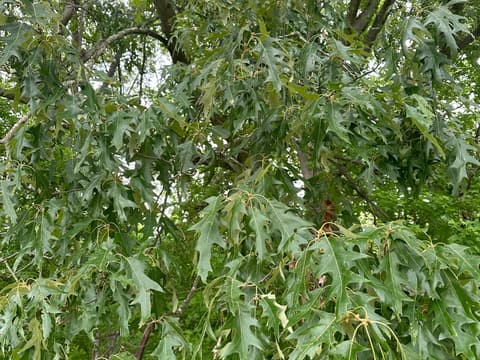
Blue ash survives emerald ash borer at far higher rates than green or white ash, and in Ohio and Michigan it is often the last ash standing. It is a tree of dry limestone slopes and glades from Ontario to Tennessee, with distinctive four-angled twigs and inner bark that turns blue in water. Plant it as a hedge against losing the genus. Well suited to a lawn shade tree or a street planting on dry, alkaline ground.
Size, growth and what to expect
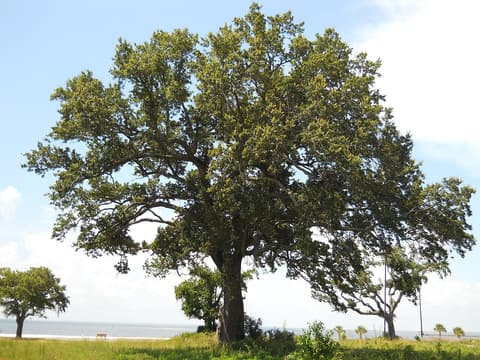
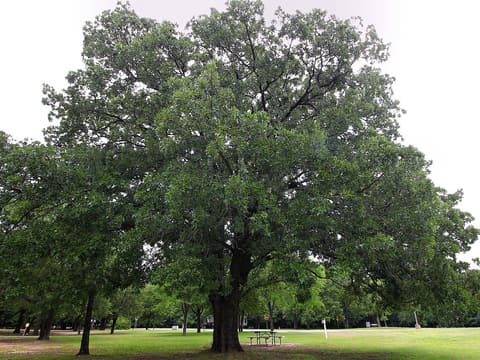
Blue ash is a long-lived tree, 150 to 200 years and sometimes 300. One tree in central Kentucky was estimated from core samples to be 405 years old. The oldest tree dated by its rings reached 249. Only a tiny share of trees is ever dated this way, so older ones may exist. Our growth estimator models it as a medium tree at roughly a foot and a half a year, between Iowa State's moderate to fast and Kentucky's moderately slow. A mature tree stands 50 to 70 feet tall with a trunk 18 to 40 inches through, and the crown spreads 25 to 35 feet.
The first seed comes at about 25 years, with a heavy crop every 3 to 4 years. The winged seeds run 1 to 1½ inches long and feed birds and small mammals. Early settlers soaked the inner bark to draw a blue dye for yarn, which gave the tree its name.
It grows wild on rocky bluffs from southern Ontario and Michigan west to Wisconsin and Iowa, and south to West Virginia, Alabama and Oklahoma. It is the North American ash least affected by the emerald ash borer, and it has stood where white and green ash have died.
How to grow Blue Ash
Blue ash wants full sun and dry to average soil, and unlike most trees it prefers thin, alkaline ground over limestone. It grows an open, rounded crown, so set it 35 feet from the house and out from under wires. Set trees about 50 feet apart.
Plant in the dormant season. Saplings arrive bare-root or potted. Make the hole twice as wide as the root mass and no deeper, keep the root flare visible at grade, and return the soil you dug without amendments. Mulch a ring clear of the trunk. Sow seed outdoors in fall and leave the bed a full winter, or longer, before seedlings show.
Water through the first summer when rain fails. Rabbits and voles chew the thin young bark, so guard the lower stem, and tube or cage against deer until the leader clears six feet. Remove a competing leader in winter and leave the rest alone.
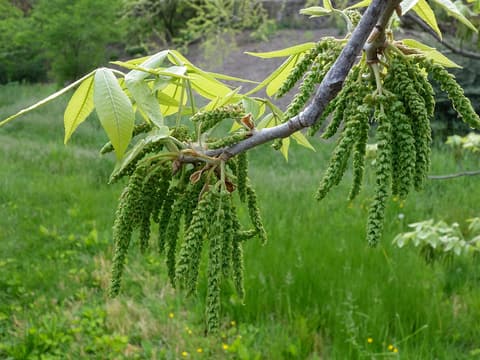
Unlike most ashes, blue ash usually carries male and female parts in each flower, and few trees are only male or female. The wind carries the pollen. Emerald ash borer attacks blue ash like any other ash. What sets it apart is how many mature trees survive and recover, though young trees still need watching. It handles drought, heat and high pH better than white or green ash. Fall color is a clear yellow.
Heights and zones are typical ranges for the species in cultivation; local conditions and seed source shift them.
Sources (15)
- NC State Extension Gardener Plant Toolbox: Fraxinus quadrangulata
- The Morton Arboretum: blue ash
- Iowa State University Extension, Natural Resources: blue ash
- University of Kentucky Forestry and Natural Resources: blue ash
- USDA NRCS PLANTS Database: Fraxinus quadrangulata, FRQU
- USDA Forest Service, Woody Plant Seed Manual (2008), Fraxinus chapter
- Missouri Department of Conservation field guide: Ashes
- Virginia Tech Dendrology: blue ash, Fraxinus quadrangulata
- Lady Bird Johnson Wildflower Center: Fraxinus quadrangulata
- NatureServe Explorer: Fraxinus quadrangulata
- Committee on the Status of Endangered Wildlife in Canada (COSEWIC): assessment and status report on the Blue Ash (Fraxinus quadrangulata) in Canada, 2014
- Ontario Ministry of Natural Resources and Forestry: Recovery Strategy for the Blue Ash (Fraxinus quadrangulata) in Ontario, Bickerton 2017
- Mathieu and McCullough 2025, Environmental Entomology 54: 603-614, Long-term survival and radial growth of four North American and two Asian ash species in a common garden exposed to emerald ash borer invasion
- Virginia Tech Dendrology, Eastern OLDLIST of maximum tree ages (Neil Pederson): Fraxinus quadrangulata, blue ash
- Castanea: Bryant and others 1980, Castanea 45(3)
Plan the planting
Check your site for it What to plant with it How big, how fast How much to water How to sow it How many for a crop When it flowers and fruits When to plant it where you live How far from the house and wires How old is yours Moving one you already have
Read before planting
- Ten planting mistakes that quietly kill trees
- Transplanting young trees: timing, water and protection
- Protecting young trees from voles, rabbits, deer and squirrels
- Native trees for the Southeast: the Carolinas, Georgia, north Florida, Tennessee and Kentucky
- Winter identification: telling native trees apart by bark, buds and twigs
- Six trees not to plant near a house, and what to plant instead
Grows in the same conditions
Plants that share its sun and soil
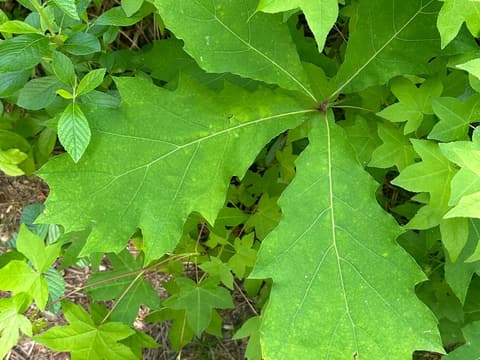
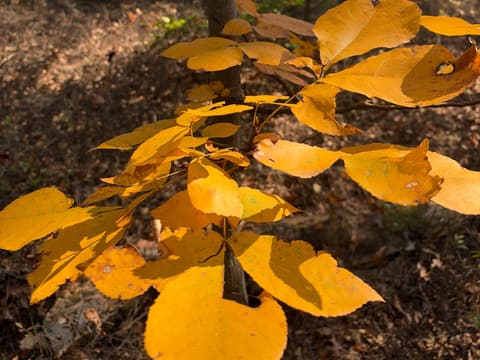
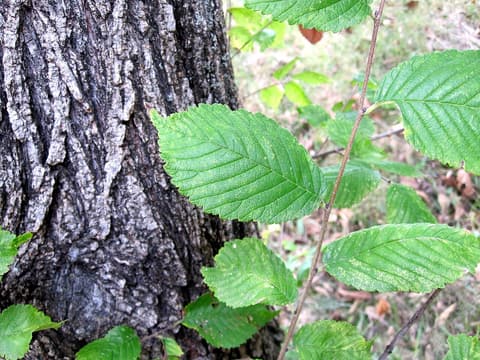
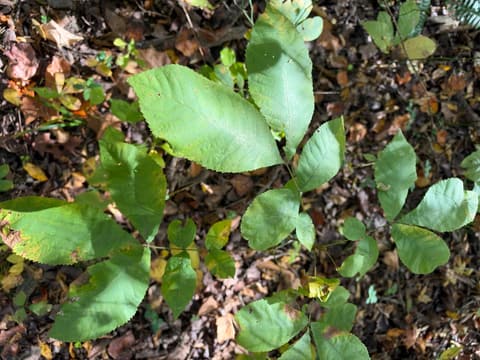
Under its canopy: Mapleleaf Viburnum, Alabama Azalea and Downy Arrowwood.
More like this