Photo: James Lee, CC BY 2.0, cropped · Wikimedia Commons
Eastern Hemlock
Tsuga canadensis
Also called Canada hemlock, Canadian hemlock, hemlock spruce.
A graceful evergreen of cool northern woods and Appalachian ravines, with flat sprays of fine needles and tiny cones, that grows even in deep shade.
Be first when eastern hemlock is priced
Saplings ship bare-root or in a pot, usually 12 to 18 inches tall, in the dormant season, and their height and age are stated here with the price, once available.
We grow it as saplings and seed. One email when it is listed with prices, and nothing else. Or ask, and we reply with what is ready now. Live plants ship February to May and October to November.
Limited timeSign up now and get 10% off when it is ready.
Share: copy link
Eastern Hemlock at a glance
- Type
- Large tree
- Mature height
- 40–100 ft
- USDA zones
- 3–7
- Growth rate
- Slow
- Flowers
- April to June
- Fruit
- Cones, September to October
- First crop
- 20 to 30 years (later in shade)
- Mature spread
- 35 ft
- Sun
- Full, Part, Shade
- Soil moisture
- Average
- Grows wild in
- Rich moist slopes, the Appalachians, rocky ground and stream banks
- Native range
- 24 states and the District of Columbia, north and west to Minnesota and south to Georgia Also recorded, not native, in Missouri. See what is native in your state
List all 25
Alabama, Connecticut, Delaware, Georgia, Indiana, Kentucky, Maine, Maryland, Massachusetts, Michigan, Minnesota, New Hampshire, New Jersey, New York, North Carolina, Ohio, Pennsylvania, Rhode Island, South Carolina, Tennessee, Vermont, Virginia, West Virginia, Wisconsin and the District of Columbia
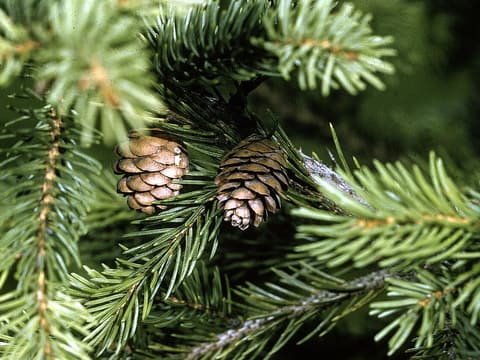
Eastern hemlock is the dark, feathery evergreen of cool northern forests and Appalachian ravines, and the state tree of Pennsylvania. It is among the most shade-tolerant of all trees, able to live on 5 percent of full sunlight and wait centuries beneath taller trees. Its dense stands shelter deer in winter and shade trout streams. It differs from our Carolina hemlock in its flat sprays, with the needles set in two ranks, and in cones about half as long. Minnesota, at the western edge of its range, lists it as endangered. Grow it as a sheared hedge or a tall evergreen screen in a shady yard.
Size, growth and what to expect
Eastern hemlock grows slowly, about a foot a year in our growth estimator. It matures at 40 to 100 feet with a crown 25 to 35 feet wide. Trees can live more than 800 years, and the oldest dated by its rings reached 555. Only a tiny share of trees is ever dated this way.
Trees begin to bear cones at 20 to 30 years and still bear large crops past 450. Pollen is shed from late April to early June. Its cones, the smallest of any hemlock at half an inch to three quarters of an inch long, ripen in September and October. Red crossbills eat the seed, ruffed grouse eat the buds, and Columbia silkmoth caterpillars feed on the needles.
It grows wild from Nova Scotia west to northern Michigan, Wisconsin and Minnesota, and south through New England, New York and Pennsylvania. It follows the Appalachians to northern Georgia and Alabama. The hemlock woolly adelgid has killed most of the old hemlocks in Great Smoky Mountains National Park and about 95 percent of those in Shenandoah National Park.
How to grow Eastern Hemlock
Eastern hemlock does best in part shade in a cool, sheltered spot, and it grows in deep shade too. It takes full sun only where summers are cool, since hot sun and drying winter wind scorch the needles. It wants a moist, acid soil that drains well, and it stands neither drought, soggy ground nor salt spray. Plant it 20 feet from a wall, and set trees 15 feet apart for a screen. Keep it more than 50 feet from overhead wires.
Saplings ship bare-root or potted. Plant in early spring or early fall, in a hole wider than the roots and no deeper. Set the root flare at the soil line, put the native soil back in, and mulch a wide ring clear of the trunk. Seed needs two to four months of cold, damp storage in the refrigerator. Sow it in spring, barely covered, in a bed with light shade. Hemlock seedlings are hard to raise, since usually fewer than a quarter of the seeds sprout and young seedlings die if the bed dries.
Water weekly through the first two summers and in every dry spell after that, since drought is the worst danger to a young hemlock. Keep a mulch of leaves or bark over the shallow roots. Deer browse it heavily in winter, and rabbits and hares nibble young trees, so cage saplings until they are well above browse height. It takes shearing well as a hedge, and a specimen needs pruning only of dead wood.
Eastern hemlock carries male and female cones on the same tree and readily sets seed with its own wind-borne pollen, so one tree bears alone. The hemlock woolly adelgid, a tiny sap-sucking insect from Asia that hides under white wool on the twigs, is its gravest threat. An infested tree that is not treated usually drops its needles and dies within several years. Imidacloprid or dinotefuran applied to the soil gives good control, and these systemic treatments suit trees away from water. The elongate hemlock scale, an armored scale insect, often infests the same trees and yellows and thins the needles. The soil treatments for the adelgid do not control it, and nitrogen fertilizer helps it multiply.
Heights and zones are typical ranges for the species in cultivation; local conditions and seed source shift them.
Sources (19)
- USDA Forest Service, Silvics of North America: Eastern Hemlock, Godman and Lancaster 1990
- USDA Forest Service, Fire Effects Information System: Tsuga canadensis, Carey 1993
- USDA Forest Service, Woody Plant Seed Manual: Tsuga chapter, Barbour, Ruth and Karrfalt
- Flora of North America, vol. 2: Tsuga canadensis
- NC State Extension Gardener Plant Toolbox: Tsuga canadensis
- NC State Extension, Entomology Insect Notes: Hemlock Woolly Adelgid, Frank, Baker, Bambara and Baldwin, reviewed 2019
- Penn State Extension: Elongate Hemlock Scale, Hoover
- The Morton Arboretum: Eastern hemlock
- Missouri Botanical Garden Plant Finder: Tsuga canadensis
- Lady Bird Johnson Wildflower Center: Tsuga canadensis
- Virginia Tech Dendrology: eastern hemlock
- Trees and Shrubs Online (Bean): Tsuga canadensis
- USDA NRCS Plant Guide: Eastern hemlock, Nesom
- NatureServe Explorer: Tsuga canadensis
- Minnesota Department of Natural Resources: Minnesota's List of Endangered, Threatened, and Special Concern Species, effective August 19, 2013
- North Carolina Natural Heritage Program: 2024 List of Rare Plant Species
- Delaware Division of Fish and Wildlife: Rare and Uncommon Plants of Delaware (McAvoy 2024)
- Bentz, Riedel, Pooler and Townsend 2002, Hybridization and self-compatibility in controlled pollinations of eastern North American and Asian hemlock (Tsuga) species, Journal of Arboriculture 28(4): 200-205
- Virginia Tech, Eastern OLDLIST of maximum tree ages: Tsuga canadensis
Plan the planting
Check your site for it What to plant with it How big, how fast How much to water How to sow it How many for a crop When it flowers and fruits When to plant it where you live How far from the house and wires How old is yours Moving one you already have
Read before planting
- Ten planting mistakes that quietly kill trees
- Transplanting young trees: timing, water and protection
- Protecting young trees from voles, rabbits, deer and squirrels
- How fast every tree and shrub we grow gets tall: growth rate, A to Z
- Six trees not to plant near a house, and what to plant instead
- Pruning at the branch collar, and when to make the cut
Other hemlocks (Tsuga) we grow: Carolina Hemlock.
Grows in the same conditions
Plants that share its sun and soil
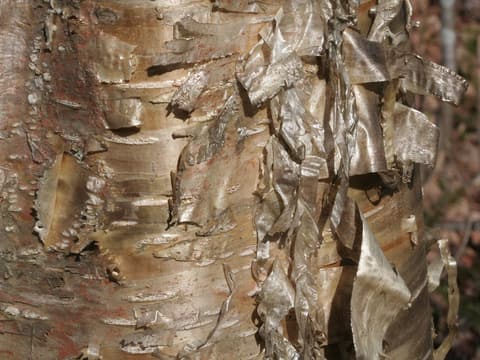
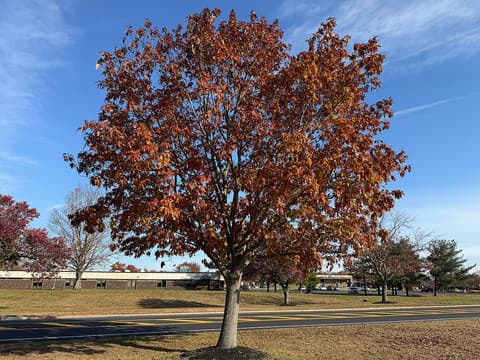
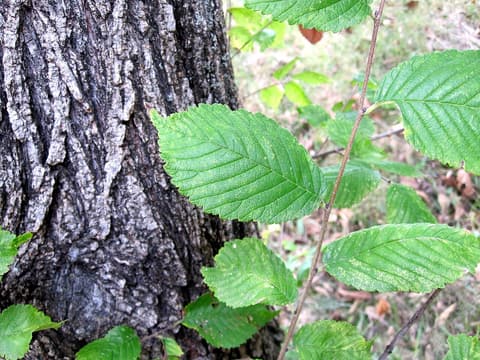
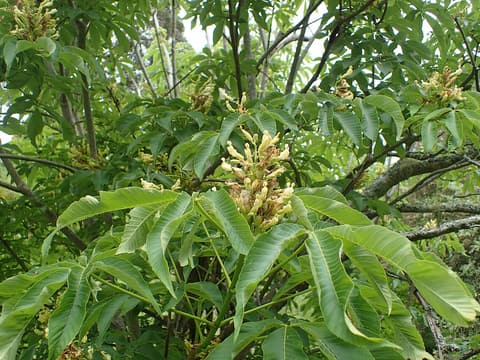
Under its canopy: Roseshell Azalea, Pagoda Dogwood and Mountain Maple.
More like this