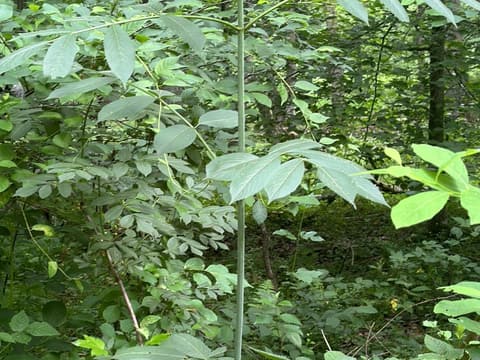
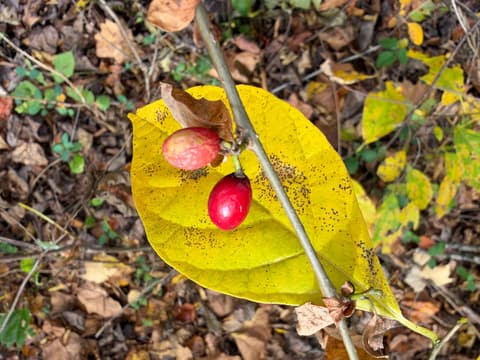
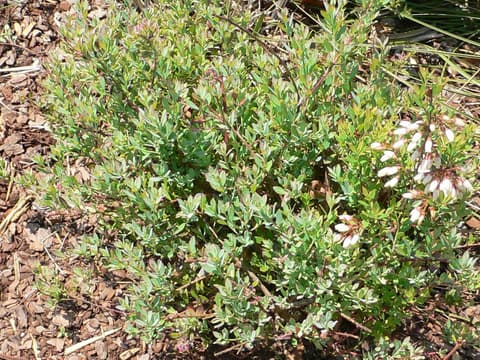
Photo: Judy Gallagher, CC BY 2.0, cropped · Wikimedia Commons
Partridgeberry
Scientific name: Mitchella repens · Family: Rubiaceae (madder family)
Also called twinberry, two-eyed berry, running box, running-fox, winter clover.
A trailing evergreen an inch or two high, whose paired white flowers join to make one red berry that often lasts the winter.
Be first when partridgeberry is priced
Saplings ship in a pot, in the dormant season, and their height and age are stated here with the price, once available.
We grow it as saplings and seed. One email when it is listed with prices, and nothing else. Or ask, and we reply with what is ready now. Live plants ship February to May and October to November.
Limited timeSign up now and get 10% off when it is ready.
Share: copy link
Partridgeberry at a glance
- Type
- Shrub
- Mature height
- 1 ft
- USDA zones
- 3–8
- Growth rate
- Slow
- Flowers
- May to July
- Fruit
- Berries, July to February
- First crop
- —
- Mature spread
- 1 ft
- Sun
- Part, Shade
- Soil moisture
- Dry, Average
- Grows wild in
- The forest understory, stream banks, floodplain forests and rich moist slopes
- Native range
- 33 states and the District of Columbia, north to Minnesota, south to Florida and west to Texas See what is native in your state
List all 34
Alabama, Arkansas, Connecticut, Delaware, Florida, Georgia, Illinois, Indiana, Iowa, Kentucky, Louisiana, Maine, Maryland, Massachusetts, Michigan, Minnesota, Mississippi, Missouri, New Hampshire, New Jersey, New York, North Carolina, Ohio, Oklahoma, Pennsylvania, Rhode Island, South Carolina, Tennessee, Texas, Vermont, Virginia, West Virginia, Wisconsin and the District of Columbia
Partridgeberry is a trailing evergreen of the madder family whose slender stems creep over the forest floor and root where they touch the ground. Its small, glossy leaves sit in pairs and carry pale veins. Its fragrant white flowers open in pairs as well, and each pair fuses into a single scarlet berry, which is why it is also called twinberry. Iowa lists it as endangered. Grow it under trees, in a rock garden or around a small pond in shade, where a small space suits its slow, fine-textured carpet.
Size, growth and what to expect
It grows slowly, a few inches a year in our growth estimator. It lies flat, only 1 to 3 inches high, and a plant's stems trail 6 to 12 inches, spreading a foot or more across. Rooting as they go, the stems can join into colonies several yards wide. The leaves are under an inch long, oval to heart-shaped.
Fragrant white flowers, often flushed with pink, open from May to July. Bumblebees carry their pollen, and the berries ripen from July into late summer, about a third of an inch across. They are edible but nearly tasteless, and they often last through the winter. Ruffed grouse, wild turkeys, quail, songbirds, foxes, raccoons, skunks and white-footed mice eat them.
It grows wild from Newfoundland and Ontario south to Florida and west to Minnesota, Missouri and eastern Texas. Its home is moist or dry woods of hardwoods or conifers, stream banks, rotting logs and sandy slopes.
How to grow Partridgeberry
Partridgeberry grows in shade or part shade, and it takes morning sun. It needs a moist, well-drained soil rich in humus and on the acid side. Once settled it stands some drought, but it does best when the soil stays moist. Set plants 2 feet apart and keep them 2 feet from a wall. At its size it can go within 15 feet of overhead wires.
Saplings ship potted. Plant them in spring or fall, in a hole wider than the root ball and no deeper, and keep the root ball whole. Set the crown at the soil line, put the native soil back in, and keep the mulch ring clear of the stems. It is very hard to raise from seed. Sow the cleaned seed outdoors in fall and mulch the bed over winter. For spring, hold the damp seed in the refrigerator for 150 to 180 days first. Many seeds wait until the second spring to sprout.
Water it every day for the first two weeks after planting, then every two to three days until week 12. After that, water weekly through the first two summers, and if it wilts, water it within two days, or it starts to die. Keep fallen leaves and garden debris from covering the mats.
Each plant bears flowers of one of two forms, long-styled or short-styled, and only pollen carried between the two forms sets berries, so plant three or more seedlings to have both. Both flowers of a pair must be pollinated to make one berry. No significant pests or diseases trouble it, and deer seldom damage it.
Heights and zones are typical ranges for the species in cultivation; local conditions and seed source shift them.
Sources (8)
- NC State Extension Gardener Plant Toolbox: Mitchella repens
- Missouri Botanical Garden Plant Finder: Mitchella repens
- Lady Bird Johnson Wildflower Center: Mitchella repens
- USDA Forest Service, Celebrating Wildflowers, Plant of the Week: Partridge Berry, Stritch
- USDA Forest Service, Woody Plant Seed Manual (2008), Mitchella chapter, Brinkman, Erdmann and Barbour
- Go Botany (Native Plant Trust): Mitchella repens, partridge-berry
- Iowa Administrative Code 571, chapter 77: Endangered and Threatened Plant and Animal Species, effective June 17, 2026
- NatureServe Explorer: Mitchella repens
Plan the planting
Check your site for it What to plant with it How big, how fast How much to water How to sow it How many for a crop When it flowers and fruits When to plant it where you live How far from the house and wires How old is yours
Read before planting
- Ten planting mistakes that quietly kill trees
- Transplanting young trees: timing, water and protection
- Protecting young trees from voles, rabbits, deer and squirrels
- Low native shrubs and groundcovers for sun, shade, sand and bog
- The habitat around a tree is part of the tree
- What a young tree looks like: first-year seedlings of oak, walnut, hickory, chestnut, maple and redbud, and the weed trees to pull
Grows in the same conditions
Plants that share its sun and soil
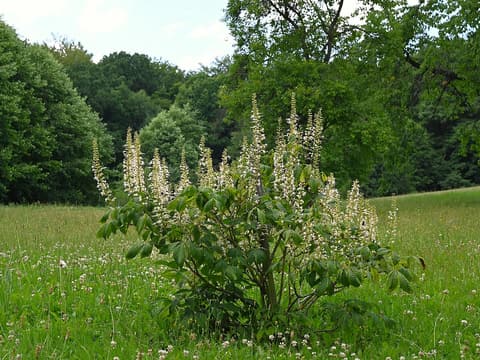
Trees to plant it under: Florida Maple, Slippery Elm and Black Maple.
More like this