Photo: Muggwort17, Public domain · Wikimedia Commons
Staghorn Sumac
Scientific name: Rhus typhina
Also called velvet sumac.
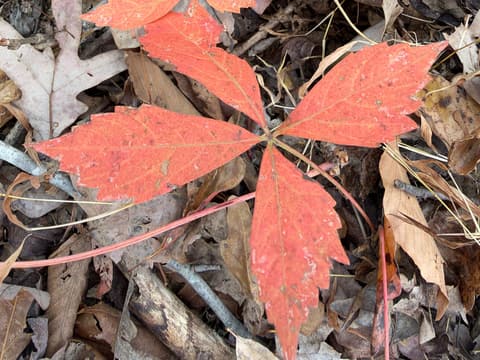
Fuzzy antler-like branches, fiery orange-red fall color and red fruit cones that feed birds through the winter.
Be first when staghorn sumac is priced
Saplings ship bare-root or in a pot, usually 12 to 18 inches tall, in the dormant season, and their height and age are stated here with the price, once available.
We grow it as saplings and seed. One email when it is listed with prices, and nothing else. Or ask, and we reply with what is ready now. Live plants ship February to May and October to November.
Limited timeSign up now and get 10% off when it is ready.
Share: copy link
Staghorn Sumac at a glance
- Type
- Shrub
- Mature height
- 15–25 ft
- USDA zones
- 3–8
- Growth rate
- Fast
- Flowers
- May to July
- Fruit
- Berries, September to March
- First crop
- 3 to 4 years
- Mature spread
- 25 ft
- Sun
- Full
- Soil moisture
- Dry, Average
- Grows wild in
- Dry uplands, rocky ground, old fields and edges
- Native range
- 29 states and the District of Columbia, north to Minnesota, south to Georgia and west to Utah Also recorded, not native, in Kansas and South Dakota. See what is native in your state
List all 30
Alabama, Connecticut, Delaware, Georgia, Illinois, Indiana, Iowa, Kentucky, Maine, Maryland, Massachusetts, Michigan, Minnesota, Mississippi, Missouri, New Hampshire, New Jersey, New York, North Carolina, Ohio, Pennsylvania, Rhode Island, South Carolina, Tennessee, Utah, Vermont, Virginia, West Virginia, Wisconsin and the District of Columbia
Staghorn sumac colonizes dry banks, gravel and road cuts where nothing else will, spreading by root suckers into a grove. Its fall color is among the best of any plant, and the fruit makes a lemony drink. Give it room to spread or a mowed boundary. Not poison sumac, which has white berries and grows in swamps. Massed on a slope, staghorn sumac holds the soil against erosion. A rough screen for a back fence or a highway edge, at its best in October.
Size, growth and what to expect
Staghorn sumac stems stand 15 to 25 feet tall in a yard, and the colony spreads as wide as its root sprouts are allowed to run. Wild plants reach 40 feet. It grows fast, nearly three feet a year in its youth on an average site by our growth estimator's model. Female plants bear their first fruit at 3 to 4 years. The oldest stem dated by its rings was 21 years old.
Panicles of tiny greenish-white flowers 4 to 8 inches long open from May to July on separate male and female plants, and a colony generally sets at least some seed every year. The fruit is a cone of tiny drupes covered in red hairs that ripens by September and hangs on through winter, when pheasant, quail and turkey eat it. The name refers to the reddish-brown hairs on the young branches, like the velvet on a stag's antlers, and velvet sumac is its other name.
It grows wild from Nova Scotia west to Minnesota, south to Iowa, Tennessee and northern Alabama, and east to Georgia, Maryland and New Jersey. In the wild it takes dry, rocky or gravelly ground in old fields, clearings and woodland edges.
How to grow Staghorn Sumac
Staghorn sumac wants full sun and poor, dry ground: a gravel bank or the slope that will not grow grass. Rich wet soil makes it floppy. One plant becomes a colony as wide as you let it, so keep it 15 feet from the house with a mowed strip where it must stop. Set plants 6 to 12 feet apart in a screen or windbreak row.
Plant dormant bare-root or potted plants between leaf fall and bud break. The roots run shallow and wide, so dig wide and shallow, keep the crown at grade, backfill with the same lean soil and mulch lightly, off the stem. Seed has a hard coat. Pour water just off the boil over it and let it stand a day as it cools. Then keep it damp in the refrigerator for at least a month and sow it half an inch deep in spring.
Water every couple of weeks the first summer and then not at all. Rabbits gnaw young stems and deer nip tips, so cage the first plant for a year or two; after that the colony outgrows any browsing. Remove suckers where you do not want them and cut old stems to the ground in late winter.
Sumac is male or female and only females carry the red fruit cones, so plant several seedlings if you want fruit. Stems are short-lived and brittle, but the roots replace them. Verticillium wilt can kill a colony, so keep it on the dry, lean ground it wants.
Heights and zones are typical ranges for the species in cultivation; local conditions and seed source shift them.
Sources (12)
- USDA Fire Effects Information System: Rhus typhina
- NC State Extension Gardener Plant Toolbox: Rhus typhina
- USDA Forest Service, Woody Plant Seed Manual (2008), Rhus chapter, Rowe and Blazich
- Lady Bird Johnson Wildflower Center: Rhus typhina
- NatureServe Explorer: Rhus typhina, Staghorn Sumac
- Go Botany, Native Plant Trust: Rhus hirta, staghorn sumac
- Trees and Shrubs Online: Rhus typhina, from Bean's Trees and Shrubs Hardy in the British Isles
- USDA NRCS PLANTS Database: Rhus typhina
- The Morton Arboretum: staghorn sumac
- Iowa State University Extension and Outreach, Natural Resources: Staghorn Sumac
- Missouri Botanical Garden Plant Finder: Rhus typhina
- Eastern Native Tree Society, Sumac Cookie, Edward Frank, 2007-10-09
Plan the planting
Check your site for it What to plant with it How big, how fast How much to water How to sow it How many for a crop When it flowers and fruits When to plant it where you live How far from the house and wires How old is yours
Read before planting
- Ten planting mistakes that quietly kill trees
- Transplanting young trees: timing, water and protection
- Protecting young trees from voles, rabbits, deer and squirrels
- Native trees for the Mid-Atlantic: what to plant on the Coastal Plain, the Piedmont and the mountains
- Native trees and shrubs for birds: caterpillars, fruit, mast, nests and winter cover, month by month
- The habitat around a tree is part of the tree
Other sumacs (Rhus) we grow: Fragrant Sumac and Michaux's Sumac.
Grows in the same conditions
Plants that share its sun and soil
More like this