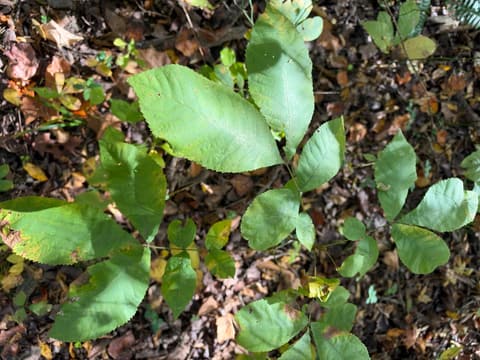
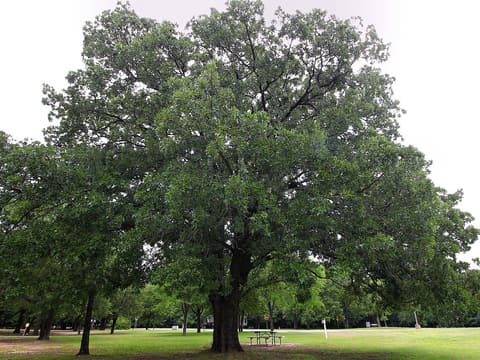
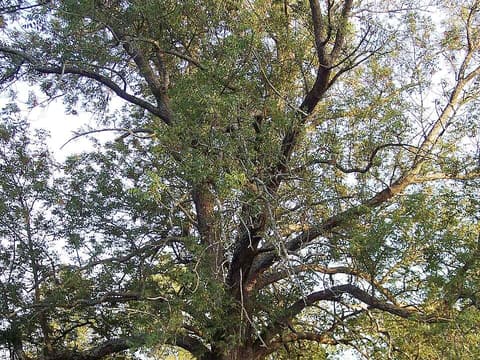
Photo: Gilles Ayotte, CC BY-SA 4.0, cropped · Wikimedia Commons
American Basswood (Linden)
Scientific name: Tilia americana
Also called American linden, lime tree, bee tree.
The bee tree: a broad shade tree whose fragrant June flowers hum with pollinators.
Be first when American basswood is priced
Saplings ship bare-root, usually 12 to 18 inches tall, in the dormant season, and their height and age are stated here with the price, once available.
We grow it as saplings and seed. One email when it is listed with prices, and nothing else. Or ask, and we reply with what is ready now. Live plants ship February to May and October to November.
Limited timeSign up now and get 10% off when it is ready.
Share: copy link
American Basswood at a glance
- Type
- Large tree
- Mature height
- 60–90 ft
- USDA zones
- 2–8
- Growth rate
- Medium
- Flowers
- June
- Fruit
- Nutlets, September to October
- First crop
- 15 or more years (trees have borne at 8)
- Mature spread
- 60 ft
- Sun
- Full, Part, Shade
- Soil moisture
- Average
- Grows wild in
- Rich moist slopes
- Native range
- 37 states and the District of Columbia, north and west to North Dakota and south to Florida See what is native in your state
List all 38
Alabama, Arkansas, Connecticut, Delaware, Florida, Georgia, Illinois, Indiana, Iowa, Kansas, Kentucky, Louisiana, Maine, Maryland, Massachusetts, Michigan, Minnesota, Mississippi, Missouri, Nebraska, New Hampshire, New Jersey, New York, North Carolina, North Dakota, Ohio, Oklahoma, Pennsylvania, Rhode Island, South Carolina, South Dakota, Tennessee, Texas, Vermont, Virginia, West Virginia, Wisconsin and the District of Columbia
Basswood is the classic honey tree of the northern forest, yielding a pale, distinctive honey when the bloom is strong. Big heart-shaped leaves cast deep shade, the soft wood is prized by carvers, and the tree tolerates cold, shade and clay. On a good site it becomes a landmark. It also serves as a street tree, though it does poorly in city conditions. Made for a big lawn or the tree line behind an apiary.
Size, growth and what to expect
In a yard American basswood reaches 60 to 90 feet with a trunk 2 to 3 feet through and a crown 30 to 60 feet wide. Forest trees reach 130 feet. It gets there at a medium pace, roughly a foot and a half a year in its youth on an average site, which is the rate our growth estimator uses for it.
The first seed usually comes at 15 years or later, though trees have borne at 8, and one 26-year study found good crops in 62 percent of the years. Fragrant yellow-white flowers open for about two weeks in June and give an abundance of nectar for a choice honey, which is why beekeepers call it the bee tree. The fruit is a pea-sized nutlet hung from a strap-shaped bract, and mice, squirrels and chipmunks take the seed. Trees can live beyond 200 years, and the oldest known was ring-counted to 242. Most begin to decline at 90 to 140 years. The nutlets ripen in September and October and fall soon after.
It grows wild from New Brunswick west to Manitoba and south through the Dakotas and Kansas to Oklahoma, Arkansas, Tennessee and the North Carolina mountains.
How to grow American Basswood
American basswood wants deep, moist soil that drains, in full sun or part shade. It tolerates clay and does poorly on thin, droughty ground. This is a big shade tree with a wide crown, so plant it at least 30 feet from buildings and out from under wires. Set trees 30 feet apart.
Plant bare-root saplings while they are dormant. Dig a hole two to three times as wide as the root spread and only as deep, set the root flare at the soil line, and backfill with the same soil. Mulch a wide ring, kept clear of the trunk. Sow basswood seed outdoors in fall under hardware cloth against mice, but germination is slow and uneven, often waiting until the second or third spring.
Give a young linden a deep soak every week in its first summer and in dry spells for two more years. Deer browse it hard and rabbits girdle the bark, so keep a tube or wire guard on until the trunk is well above browse height.
Lindens do not set seed from their own pollen, and bees and flies carry pollen between trees, so plant two or more if you want seed. Basswood casts dense shade and drips aphid honeydew in some summers. Japanese beetles skeletonize the leaves without doing lasting harm. Leaves turn a soft yellow in fall.
Heights and zones are typical ranges for the species in cultivation; local conditions and seed source shift them.
Sources (15)
- USDA Forest Service, Silvics of North America: American basswood
- The Morton Arboretum: American basswood
- NC State Extension Gardener Plant Toolbox: Tilia americana
- USDA NRCS Plant Guide: basswood, Tilia americana
- USDA Fire Effects Information System: Tilia americana
- USDA Forest Service, Woody Plant Seed Manual: Tilia chapter
- Lady Bird Johnson Wildflower Center: Tilia americana
- Virginia Tech Dendrology: American basswood, Tilia americana
- NatureServe Explorer: Tilia americana
- Flora of North America, vol. 6: Tilia americana
- Go Botany (Native Plant Trust): Tilia americana, American basswood
- USDA NRCS PLANTS Database: Tilia americana
- Trees and Shrubs Online: Tilia americana
- Eastern Native Tree Society, ENTS Maximum Ages for Eastern Trees, Edward Frank
- University of Illinois Extension, Technical Forestry Bulletin NRES-502: Maximum Tree Age & Longevity, J. C. Hayek, updated May 2019
Plan the planting
Check your site for it What to plant with it How big, how fast How much to water How to sow it How many for a crop When it flowers and fruits When to plant it where you live How far from the house and wires How old is yours Moving one you already have
Read before planting
- Ten planting mistakes that quietly kill trees
- Transplanting young trees: timing, water and protection
- Protecting young trees from voles, rabbits, deer and squirrels
- Native trees and shrubs for bees: pollen, nectar, nesting and a bloom calendar from willow to witch hazel
- Native trees for the Great Lakes and Midwest: Michigan, Ohio, Indiana, Illinois and Wisconsin
- Six trees not to plant near a house, and what to plant instead
Grows in the same conditions
Plants that share its sun and soil
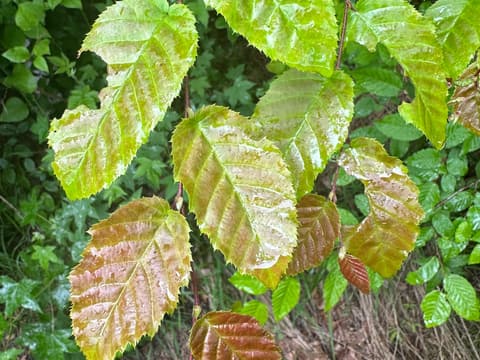
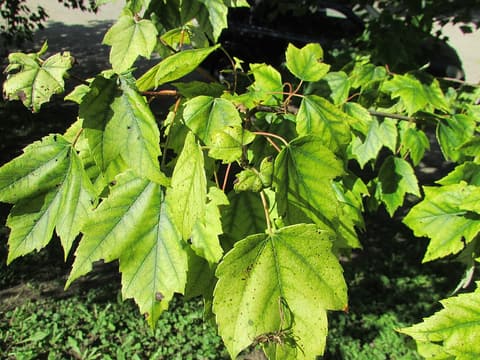
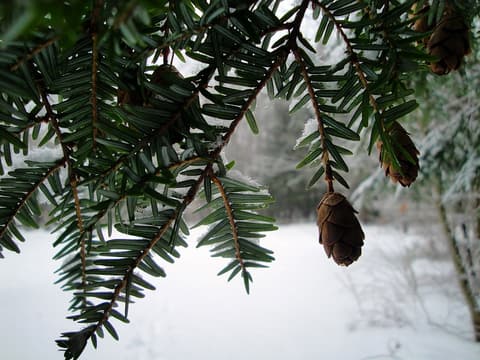
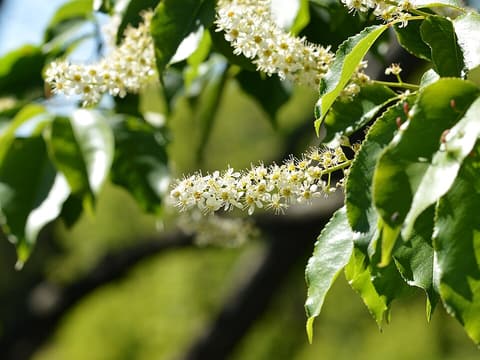
Under its canopy: Arrowwood Viburnum, Witch Hazel and Mapleleaf Viburnum.
More like this