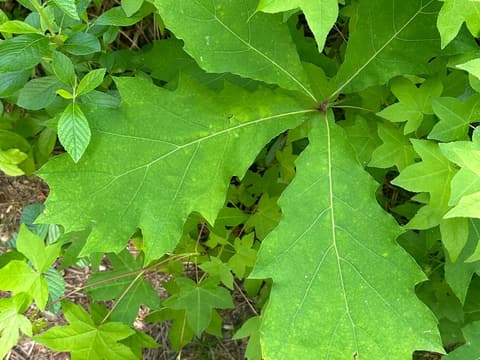
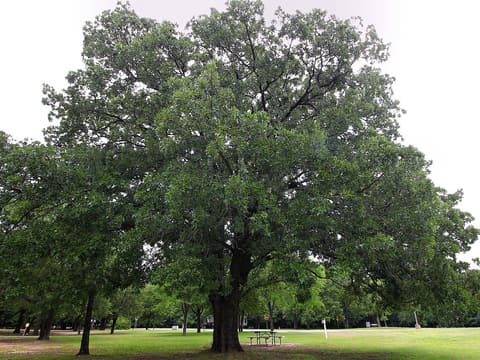
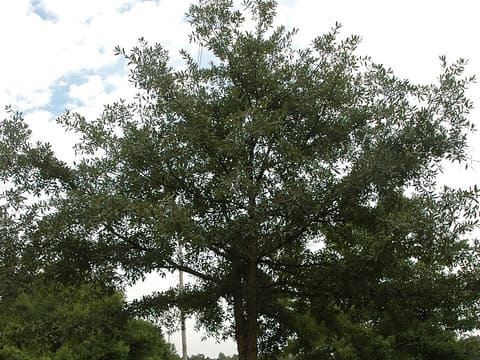
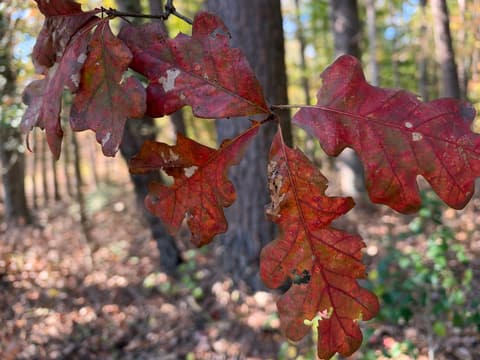
Photo: Blue Whale Trees
Swamp Chestnut Oak, select line
Scientific name: Quercus michauxii
Also called basket oak, cow oak.
Huge, sweet acorns and clean chestnut-like foliage, collected from a superior parent tree.
Be first when swamp chestnut oak is priced
Saplings ship bare-root or in a pot, usually 12 to 18 inches tall, in the dormant season, and their height and age are stated here with the price, once available.
We grow it as saplings and acorns. One email when it is listed with prices, and nothing else. Or ask, and we reply with what is ready now. Live plants ship February to May and October to November.
Limited timeSign up now and get 10% off when it is ready.
Share: copy link
Swamp Chestnut Oak at a glance
- Type
- Large tree
- Mature height
- 60–90 ft
- USDA zones
- 5–9
- Growth rate
- Medium
- Flowers
- April to May
- Fruit
- Acorns, September to October
- First crop
- 20 to 25 years (10 to 15 on an exceptional site)
- Mature spread
- 60 ft
- Sun
- Full
- Soil moisture
- Average, Wet
- Grows wild in
- Floodplain forests
- Native range
- 19 states, north to New Jersey, south to Florida and west to Texas See what is native in your state
List all 19
Alabama, Arkansas, Delaware, Florida, Georgia, Illinois, Indiana, Kentucky, Louisiana, Maryland, Mississippi, Missouri, New Jersey, North Carolina, Oklahoma, South Carolina, Tennessee, Texas and Virginia
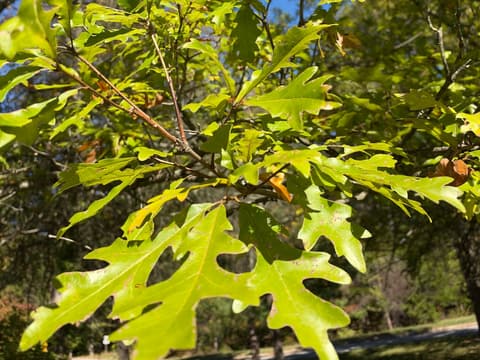
Swamp chestnut oak, also called basket oak or cow oak, produces some of the largest and sweetest acorns of any eastern oak; livestock and deer eat them straight from the ground. It grows on moist bottomland but tolerates ordinary yard soil, with rich red-brown fall color and flaky, pale bark. Our seed comes from a single proven specimen selected for acorn size and form. Made for a pasture or a deer mast planting on low ground that stays damp.
Size, growth and what to expect
Swamp chestnut oak grows at a medium pace, roughly a foot and a half a year in its youth on an average site, which is the rate our growth estimator uses for it. On an average site it reaches 60 to 80 feet with a trunk 2 to 3 feet through, and 100 feet on the best ground. The crown spreads 40 to 60 feet, so give it room. Trees live 100 to 200 years. It can live up to 400 years, and the oldest tree dated by its rings reached 205. Only a tiny share of trees is ever dated this way, so older ones may exist.
The first acorns come at about 20 to 25 years, or within 10 to 15 on an exceptional site. The heaviest crops come around 40, with a good crop every 3 to 5 years. The acorns run 1 to 1½ inches long under a bowl-shaped cup that covers about a third of the nut. Deer, wild hogs, squirrels, turkeys, ducks and bears take them, and so do cattle, which is where the name cow oak comes from. It flowers in April and May as the leaves unfold, and the acorns ripen and fall in September and October.
It grows wild on the coastal plains from New Jersey to north Florida and west to east Texas, on the well-drained ridges of first bottoms that flood briefly in spring.
How to grow Swamp Chestnut Oak
Swamp chestnut oak wants full sun and moist ground and takes a low spot that floods in spring; ordinary yard soil suits it too. It becomes a big round-headed tree, so plant it 40 feet from buildings and other large trees and clear of power lines.
Plant a dormant sapling, bare-root or potted, between leaf fall and bud break, in a hole twice the root width and no deeper, flare at grade, native soil back in, mulch off the trunk. Stake only in wind. The acorns sprout soon after they fall and will not keep dry, so sow them on arrival, 1 to 2 inches deep, under hardware cloth against mice and squirrels.
Water deeply every week or two the first summer. Deer browse young oaks to the ground, so use a five-foot tube or wire cage and remove it when the trunk fills it, in year three, and cut off any competing leader.
Like other oaks, swamp chestnut oak is wind pollinated and needs pollen from another tree to set acorns, so plant two or more seedlings. The taproot forms early, so plant it young and leave it. Seedlings of a selected parent vary; the line improves odds, not certainty. As a white oak it withstands oak wilt better than the red oaks. The first acorns are many years off.
Heights and zones are typical ranges for the species in cultivation; local conditions and seed source shift them.
Sources (11)
- USDA Forest Service, Silvics of North America: swamp chestnut oak
- NC State Extension Gardener Plant Toolbox: Quercus michauxii
- The Morton Arboretum: swamp chestnut oak
- USDA Forest Service, Woody Plant Seed Manual (2008), Quercus chapter, Bonner
- USDA NRCS Plant Fact Sheet: swamp chestnut oak, Quercus michauxii
- Lady Bird Johnson Wildflower Center: Quercus michauxii
- NatureServe Explorer: Quercus michauxii, Swamp Chestnut Oak
- USDA NRCS PLANTS Database: Quercus michauxii
- Flora of North America, vol. 3: Quercus michauxii
- University of Florida IFAS, School of Forest, Fisheries, and Geomatics Sciences: Campus Tree Tour, Swamp Chestnut Oak
- BIEN, the Botanical Information and Ecology Network: trait data for Quercus michauxii, from Loehle 1988
Plan the planting
Check your site for it What to plant with it How big, how fast How much to water How to sow it How many for a crop When it flowers and fruits When to plant it where you live How far from the house and wires How old is yours Moving one you already have
Read before planting
- Ten planting mistakes that quietly kill trees
- Transplanting young trees: timing, water and protection
- Protecting young trees from voles, rabbits, deer and squirrels
- Which oak to plant: the fastest, the first to bear, the biggest acorns, and oaks for small yards, wet ground and deer
- Which oak dropped this acorn? Telling the eastern oaks apart by acorn size, cap and shape
- Red oaks and white oaks, and where each belongs
We grow 42 other oaks (Quercus): see them all.
Grows in the same conditions
Plants that share its sun and soil
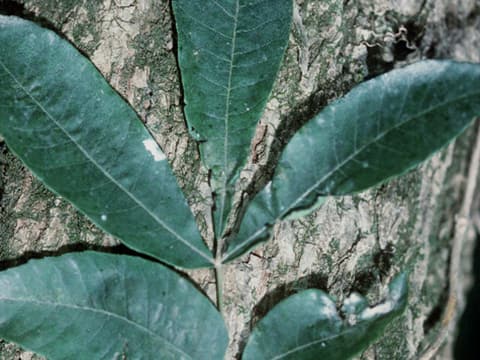
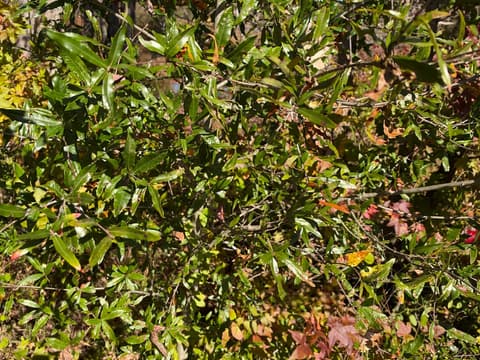
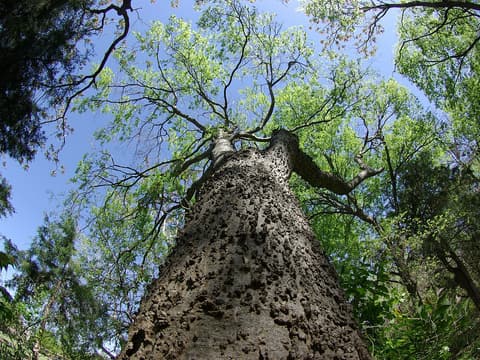
Under its canopy: Virginia Sweetspire, Pawpaw and Spicebush.
More like this