Photo: Lucy Keith-Diagne, CC BY 4.0, cropped · Wikimedia Commons
Fox Grape
Scientific name: Vitis labrusca
Also called northern fox grape.
The eastern wild grape behind Concord, a climbing vine whose large, musky, slip-skin grapes ripen in early fall for jelly, juice and wildlife.
Be first when fox grape is priced
Saplings ship bare-root or in a pot, usually 12 to 18 inches tall, in the dormant season, and their height and age are stated here with the price, once available.
We grow it as saplings and seed. One email when it is listed with prices, and nothing else. Or ask, and we reply with what is ready now. Live plants ship February to May and October to November.
Limited timeSign up now and get 10% off when it is ready.
Share: copy link
Fox Grape at a glance
- Type
- Shrub
- Mature height
- 20–40 ft
- USDA zones
- 5–8
- Growth rate
- Fast
- Flowers
- May to June
- Fruit
- Berries, August to October
- First crop
- About 3 years after planting
- Mature spread
- 20 ft
- Sun
- Full, Part
- Soil moisture
- Average
- Grows wild in
- Floodplain forests, stream banks, old fields and edges
- Native range
- 26 states and the District of Columbia, north to Maine and south and west to Louisiana Also recorded, not native, in Utah. See what is native in your state
List all 27
Alabama, Connecticut, Delaware, Georgia, Illinois, Indiana, Kentucky, Louisiana, Maine, Maryland, Massachusetts, Michigan, Mississippi, New Hampshire, New Jersey, New York, North Carolina, Ohio, Pennsylvania, Rhode Island, South Carolina, Tennessee, Vermont, Virginia, West Virginia, Wisconsin and the District of Columbia
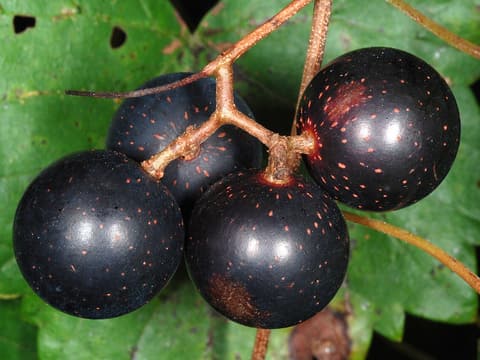
Fox grape is a wild grape of the eastern United States and the native parent of Concord and other American grapes grown for juice and jelly. Unlike its close relatives, it carries a tendril or a flower cluster at nearly every joint of its stems, and its leaves are thickly felted beneath with rusty or grayish hairs. Its large grapes have skins that slip off the pulp and a sweet, musky taste. Run it along a sturdy fence or over an arbor in full sun, where the grapes sweeten best.
Size, growth and what to expect
No source rates its growth, so our growth estimator uses the fast rate of our other wild grapes, nearly three feet a year. It climbs 20 to 40 feet into trees by its tendrils or sprawls over shrubs. The bark of older stems is rough and shreds in strips.
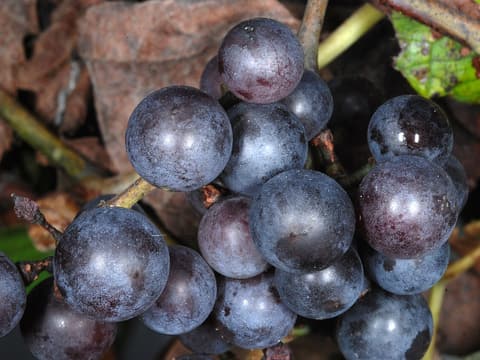
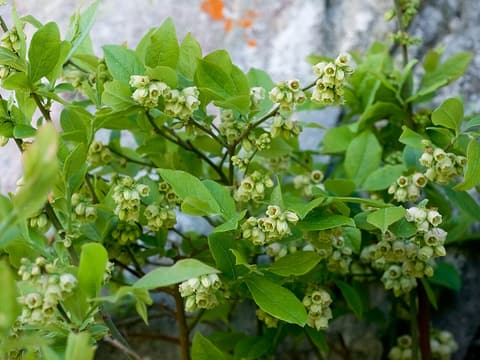
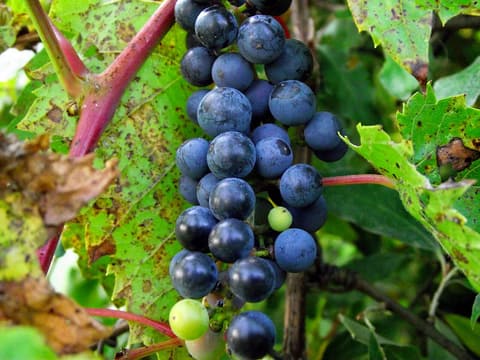
Fragrant, yellow-green flowers open in May and June. Clusters of up to about 20 grapes follow, each up to three quarters of an inch across and dark purple to black. They ripen from August into October and drop one by one, and many birds and mammals eat them.
It grows wild from Maine and southern Ontario west to Michigan, Wisconsin and Illinois, and south to Georgia and Mississippi. It lives in upland and lowland woods, on bottomlands that flood now and then, at forest edges and in thickets and along roadsides. Escaped hybrids of the Concord kind have gone wild in Utah and the Pacific Northwest. Kentucky lists it as threatened.
How to grow Fox Grape
Fox grape fruits best in full sun, and the more sun it gets, the sweeter the grapes. It does best in deep, loamy soil that stays evenly moist, and it tolerates most soils if they drain well. Site it out of frost pockets and winter wind, since late frosts can hurt the new shoots. It climbs by tendrils, so give it a sturdy arbor, fence or trellis to grip. It can climb to the tops of tall trees or sprawl over shrubs, so keep it off ornamental trees and shrubs. Set the support 8 feet from a wall, and set vines 15 feet apart along it. It climbs whatever it reaches, so keep it more than 50 feet from overhead wires.
Saplings ship bare-root or potted. Plant them dormant, from leaf fall until bud swell, in a hole wider than the roots and no deeper. Set the crown at the soil line, put the native soil back in, and keep the mulch clear of the stem. Tie the first shoots to the support until the tendrils take hold. Strip the ripe grapes, and wash the seed clean of the pulp. For a spring sowing, hold the seed damp in the refrigerator for 3 to 4 months first. Seedlings rarely come true, so Concord and other named varieties are grown from cuttings.
Water weekly through the first summer if rain is short. Prune it every year and train it along its support, since a vine needs both to bear well. Deer eat young shoots, leaves and fruit, so cage young vines where deer are many.
Vines are male or female, and only females bear grapes, so plant three or more seedlings for a male and a female. Black rot, anthracnose, downy and powdery mildew and bunch rot can strike, especially in humid summers. Grape berry moths and Japanese beetles are its worst insects, and birds take a share of the crop. Moonseed, a poisonous look-alike, climbs without tendrils, has leaves with no teeth, and holds one crescent-shaped seed in each berry. Other vines with similar fruit are poisonous too, so be sure of the plant before eating its grapes.
Heights and zones are typical ranges for the species in cultivation; local conditions and seed source shift them.
Sources (11)
- Missouri Botanical Garden Plant Finder: Vitis labrusca
- Lady Bird Johnson Wildflower Center: Vitis labrusca
- Flora of North America, Volume 12: Vitis labrusca (Moore and Wen)
- USDA Forest Service, Woody Plant Seed Manual (Agriculture Handbook 727, 2008): Vitis labrusca, fox grape (Bonner)
- Native Plant Trust, Go Botany: Vitis labrusca
- Trees and Shrubs Online: Vitis labrusca
- NatureServe Explorer: Vitis labrusca
- Office of Kentucky Nature Preserves: Kentucky Rare Plant List, September 30, 2022
- USDA NRCS PLANTS Database: Vitis labrusca
- Missouri Department of Conservation Field Guide: Common moonseed
- NC State Extension Gardener Plant Toolbox: Menispermum canadense
Plan the planting
Check your site for it What to plant with it How big, how fast How much to water How to sow it How many for a crop When it flowers and fruits When to plant it where you live How far from the house and wires How old is yours
Read before planting
- Ten planting mistakes that quietly kill trees
- Transplanting young trees: timing, water and protection
- Protecting young trees from voles, rabbits, deer and squirrels
- The habitat around a tree is part of the tree
- What a young tree looks like: first-year seedlings of oak, walnut, hickory, chestnut, maple and redbud, and the weed trees to pull
- Invasive vines and shrubs are what is killing your woods
Other grapes (Vitis) we grow: Muscadine, Riverbank Grape and Summer Grape.
Grows in the same conditions
Plants that share its sun and soil
Trees to plant it under: Slippery Elm, American Elm and Common Hackberry.
More like this