Photo: Andrey Butko, CC BY-SA 3.0, cropped · Wikimedia Commons
Trumpet Creeper
Scientific name: Campsis radicans
Also called trumpet vine, common trumpet creeper, cow-itch vine.
A fast native vine whose orange-red trumpets draw hummingbirds all summer, for a sturdy arbor or fence where its root suckers can be kept in check.
Be first when trumpet creeper is priced
Saplings ship bare-root or in a pot, usually 12 to 18 inches tall, in the dormant season, and their height and age are stated here with the price, once available.
We grow it as saplings and seed. One email when it is listed with prices, and nothing else. Or ask, and we reply with what is ready now. Live plants ship February to May and October to November.
Limited timeSign up now and get 10% off when it is ready.
Share: copy link
Trumpet Creeper at a glance
- Type
- Shrub
- Mature height
- 30–40 ft
- USDA zones
- 4–10
- Growth rate
- Fast
- Flowers
- June to September
- Fruit
- Pods, September to November
- First crop
- —
- Mature spread
- 10 ft
- Sun
- Full, Part
- Soil moisture
- Dry, Average, Wet
- Grows wild in
- Floodplain forests, stream banks, old fields and edges
- Native range
- 28 states and the District of Columbia, north and west to North Dakota and south to Florida Also recorded, not native, in 10 other states (listed above). See what is native in your state
List all 29, and the 10 others
Alabama, Arkansas, Delaware, Florida, Georgia, Illinois, Indiana, Kansas, Kentucky, Louisiana, Maryland, Mississippi, Missouri, Nebraska, New Jersey, New York, North Carolina, North Dakota, Ohio, Oklahoma, Pennsylvania, South Carolina, South Dakota, Tennessee, Texas, Virginia, West Virginia, Wisconsin and the District of Columbia
Also recorded, not native, in California, Colorado, Connecticut, Iowa, Massachusetts, Michigan, New Hampshire, Rhode Island, Utah and Washington.
Trumpet creeper is a woody vine of the trumpet creeper family, native to the eastern and central United States. Short aerial rootlets along its stems grip bark, wood and stone, and it also spreads by suckers from its roots. Grown where it has room, it covers a pergola in summer color, and its flowers draw hummingbirds all summer. Its quick spread by suckers and rooting stems also suits it to holding a bank against erosion. Give it a sturdy freestanding arbor, pergola or metal fence of its own, away from the house.
Size, growth and what to expect
Trumpet creeper grows fast, nearly three feet a year in our growth estimator. It climbs 30 to 40 feet when given support, and one vine spreads 5 to 10 feet wide. Its leaves, up to 15 inches long with 7 to 11 toothed leaflets, turn a dull yellow in fall.
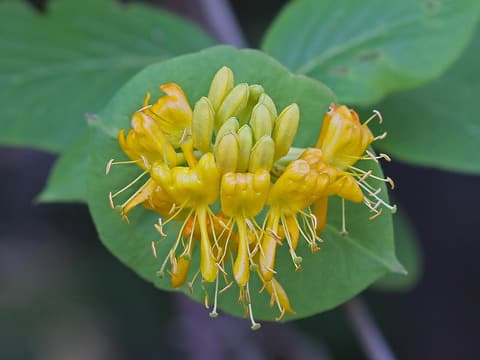
Clusters of orange to red trumpets, up to 3 inches long, open from June into September. Ruby-throated hummingbirds are their main pollinators, and long-tongued bees visit too. Bean-like pods 3 to 6 inches long ripen from September into November and split on the vine to free winged seeds on the wind. Its leaves feed the caterpillars of the plebeian sphinx moth.
It grows wild from New Jersey and Ohio south to Florida and west to South Dakota and Texas, in moist woods, thickets, fencerows and old fields. Vines from gardens have also gone wild in New England, Michigan, Iowa and Colorado.
How to grow Trumpet Creeper
Trumpet creeper flowers best in full sun and grows in part shade, where its leaves do well but it blooms less. Any soil that drains suits it, from sand to clay and from acid to limy, and it does best in lean to average ground. Once rooted it rides out heat and drought, and it takes occasional wet spells. Its aerial rootlets can damage wood siding, shingles and mortar, and a mature vine is heavy. Train it on a sturdy support of its own, never on a house, a wooden fence or a living tree it could smother. Set its support 10 feet from a wall, and set plants 3 feet apart along it. Plant it near concrete or a lawn you mow, since mowing keeps the suckers down. It burns readily, so where wildfire is a risk keep it out of the planting zone next to a house. It climbs utility poles, so keep it off them and at least 15 feet from overhead wires.
Saplings ship bare-root or potted. Plant them dormant, from leaf fall until bud swell, in a hole wider than the roots and no deeper. Set the crown at the soil line, put the native soil back in, and keep the mulch clear of the stems. Tie the first shoots to the support, and pinch and prune them to train the vine until its rootlets take hold. Gather the pods when they turn grayish brown in fall, before they split, and shake out the winged seed. Sow it outdoors in fall. For a spring sowing, hold the seed damp in the refrigerator for 60 days first. Softwood cuttings taken in summer root easily too.
Water weekly through the first summer if rain is short. It blooms on new wood, so prune it hard in late winter or early spring, back to a few buds, without losing that summer's flowers. Thin the vine through the growing season, and pull or mow down the suckers that rise from its roots. Deer and rabbits eat the leaves, though the vine is moderately resistant to deer.
Each flower carries both male and female parts, but a vine seldom sets pods with its own pollen, so plant two seedlings if you want pods. Leafhoppers, leaf spots and powdery mildew are minor troubles. It spreads by root suckers and seed into thickets that can choke out nearby plants, and it has escaped from gardens far beyond its range. Touching the leaves or flowers reddens and itches the skin of some people, and the plant is mildly toxic if eaten.
Heights and zones are typical ranges for the species in cultivation; local conditions and seed source shift them.
Sources (11)
- NC State Extension Gardener Plant Toolbox: Campsis radicans
- Lady Bird Johnson Wildflower Center: Campsis radicans
- Missouri Botanical Garden Plant Finder: Campsis radicans
- The Morton Arboretum: Trumpet vine
- University of Florida IFAS Extension, FPS99: Campsis radicans, Trumpet Creeper, Trumpet Vine (Graves, Wilber, Wichman, Lewis, Hansen and Klein; 1999, revised 2023 and 2026)
- USDA NRCS Plant Guide: Trumpet Creeper, Campsis radicans
- USDA Forest Service, Woody Plant Seed Manual (Agriculture Handbook 727, 2008): Campsis radicans, common trumpet-creeper (Bonner)
- Virginia Tech Dendrology: trumpet creeper
- Bertin, R. I. and Sullivan, M. 1988. Pollen interference and cryptic self-fertility in Campsis radicans. American Journal of Botany 75: 1140-1147
- NatureServe Explorer: Campsis radicans
- USDA NRCS PLANTS Database: Campsis radicans
Plan the planting
Check your site for it What to plant with it How big, how fast How much to water How to sow it How many for a crop When it flowers and fruits When to plant it where you live How far from the house and wires How old is yours
Read before planting
- Ten planting mistakes that quietly kill trees
- Transplanting young trees: timing, water and protection
- Protecting young trees from voles, rabbits, deer and squirrels
- The habitat around a tree is part of the tree
- What a young tree looks like: first-year seedlings of oak, walnut, hickory, chestnut, maple and redbud, and the weed trees to pull
- Invasive vines and shrubs are what is killing your woods
Grows in the same conditions
Plants that share its sun and soil
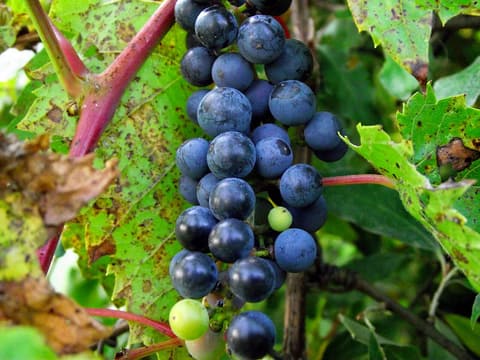
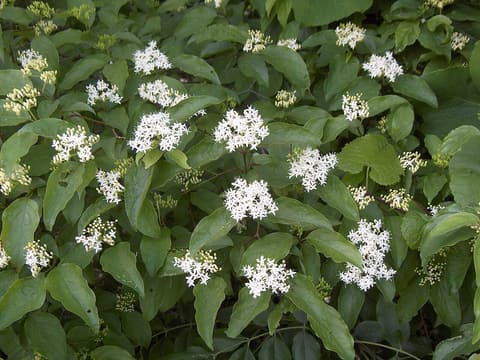
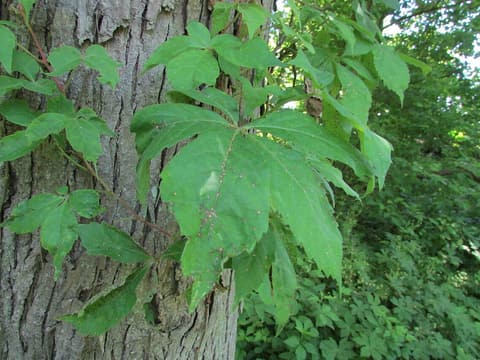
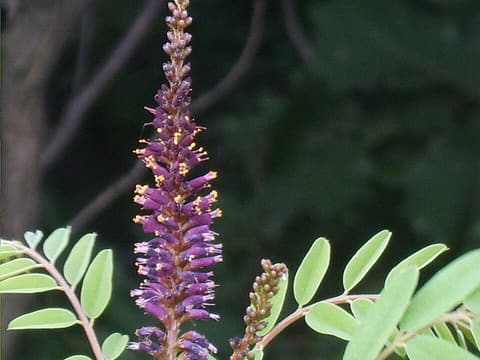
Trees to plant it under: Slippery Elm, American Elm and Sugarberry.
More like this