Photo: Dalgial, CC BY-SA 3.0, cropped · Wikimedia Commons
Indigobush (False Indigo)
Scientific name: Amorpha fruticosa
Also called false indigo bush, desert false indigo.
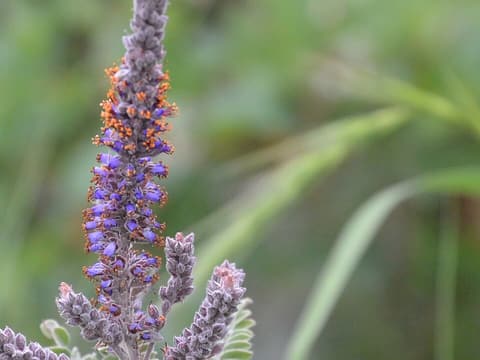
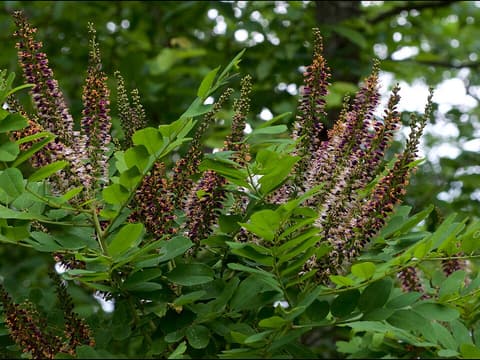
Purple flower spikes with orange stamens in June, on a nitrogen-fixing shrub for streambanks and hot dry edges.
Be first when indigobush is priced
Saplings ship bare-root or in a pot, usually 12 to 18 inches tall, in the dormant season, and their height and age are stated here with the price, once available.
We grow it as saplings and seed. One email when it is listed with prices, and nothing else. Or ask, and we reply with what is ready now. Live plants ship February to May and October to November.
Limited timeSign up now and get 10% off when it is ready.
Share: copy link
Indigobush at a glance
Showy flowers, Wildlife value, Nitrogen fixing, Drought tolerant, Tolerates wet soil, Erosion control
- Type
- Shrub
- Mature height
- 6–12 ft
- USDA zones
- 4–9
- Growth rate
- Fast
- Flowers
- May to June
- Fruit
- Pods, August
- First crop
- 1 year after planting (transplants in seed production plots)
- Mature spread
- 15 ft
- Sun
- Full, Part
- Soil moisture
- Dry, Average, Wet
- Grows wild in
- Stream banks and floodplain forests
- Native range
- 34 states and the District of Columbia, north to North Dakota, south to Florida and west to California Also recorded, not native, in 12 other states (listed above). See what is native in your state
List all 35, and the 12 others
Alabama, Arizona, Arkansas, California, Colorado, Delaware, Florida, Georgia, Illinois, Indiana, Iowa, Kansas, Kentucky, Louisiana, Maryland, Minnesota, Mississippi, Missouri, Nebraska, New Jersey, New Mexico, North Carolina, North Dakota, Ohio, Oklahoma, Pennsylvania, South Carolina, South Dakota, Tennessee, Texas, Virginia, West Virginia, Wisconsin, Wyoming and the District of Columbia
Also recorded, not native, in Connecticut, Idaho, Maine, Massachusetts, Michigan, New Hampshire, New York, Oregon, Rhode Island, Utah, Vermont and Washington.
Indigobush is a legume shrub of riverbanks and prairies that handles both flooding and drought. Its bloom draws a crowd of native bees and it hosts several butterflies. Fast and loose in habit; cut it back hard in spring to keep it dense. Excellent for stabilizing banks and for pollinator hedges. Belongs in a rain garden or a ditch that floods in spring and bakes by August.
Size, growth and what to expect
Indigobush flowers young. In seed production plots at the Tallgrass Prairie Center, transplants flowered and set seed the year after planting. Growth is fast, and our growth estimator models it at nearly three feet a year on an average site. It makes a loose, airy shrub of 6 to 12 feet that spreads into a thicket of cane-like stems, branching only above 3 or 4 feet.
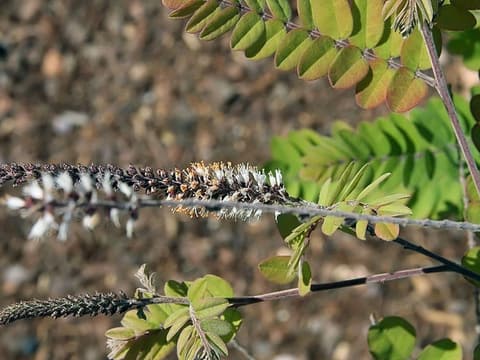
The purple spikes run 3 to 6 inches long and open in June, and the small warty pods that follow are under half an inch long, each holding a single seed. Bees and butterflies take the nectar, and it is a larval host for the silver-spotted skipper and the gray hairstreak. Nodules on its roots fix nitrogen that neighboring plants can share. The name false indigo comes from early settlers who used it as a substitute for true indigo dye.
It grows wild from New Jersey west to Minnesota and Wyoming, south to Florida and Texas, and from southern California to New Mexico. It grows on wet ground along rivers, streams, ponds and ditches, and on gravel bars.
How to grow Indigobush
Indigobush grows anywhere in full sun or part shade, on a dry bank, ordinary garden soil, or ground that floods in spring. Full sun gives the heaviest bloom and the sturdiest stems. Plants lean outward, so allow 6 feet between them and keep them off a walk.
Plant dormant stock from leaf fall to bud break. Saplings come bare-root or potted. Dig twice the width of the roots, keep the crown at ground level, backfill with native soil, and mulch short of the stems. No stake is wanted. Seed is a hard-coated legume, so nick the coat, soak it overnight, and sow in fall under hardware cloth, or mice will clean out the bed.
Water the first summer and it takes over from there. Rabbits clip young stems in winter, so cage new plants a season or two. Cutting it hard in late winter costs no bloom, since flowers come on the current year's shoots.
Each flower carries both male and female parts and bees pollinate it, so there are no male and female plants to pair. The warning with false indigo is seed. It fruits freely, birds and water carry it, and it has made a nuisance of itself along rivers outside its home range. Maine, Connecticut, Oregon and Washington ban its sale or its entry, so we do not send it to those four states. On a small lot, cut the spikes before the pods ripen.
Heights and zones are typical ranges for the species in cultivation; local conditions and seed source shift them.
Sources (12)
- USDA NRCS Plant Guide, Desert False Indigo
- NC State Extension Gardener Plant Toolbox, Amorpha fruticosa
- Lady Bird Johnson Wildflower Center, Amorpha fruticosa
- Tallgrass Prairie Center, University of Northern Iowa, false indigo bush production guide
- USDA NRCS PLANTS Database: Amorpha fruticosa
- USDA Forest Service, Woody Plant Seed Manual (2008), Amorpha chapter, Zasada and Martineau
- Grabić, Ljevnaić-Mašić, Zhan, Benka and Heilmeier 2022, A review on invasive false indigo bush (Amorpha fruticosa L.): Nuisance plant with multiple benefits, Ecology and Evolution 12: e9290
- The Morton Arboretum: indigo bush
- Minnesota Wildflowers: Amorpha fruticosa, false indigo
- Virginia Tech Dendrology: desert false indigo, Amorpha fruticosa
- Go Botany, Native Plant Trust: Amorpha fruticosa
- Missouri Botanical Garden Plant Finder: Amorpha fruticosa
Plan the planting
Check your site for it What to plant with it How big, how fast How much to water How to sow it How many for a crop When it flowers and fruits When to plant it where you live How far from the house and wires How old is yours
Read before planting
- Ten planting mistakes that quietly kill trees
- Transplanting young trees: timing, water and protection
- Protecting young trees from voles, rabbits, deer and squirrels
- Native trees and shrubs that fix nitrogen, and the legumes that do not
- Pruning and renewing native shrubs: when each kind is cut, and which never need it
- The habitat around a tree is part of the tree
We grow 7 other indigobushes (Amorpha): see them all.
Grows in the same conditions
Plants that share its sun and soil
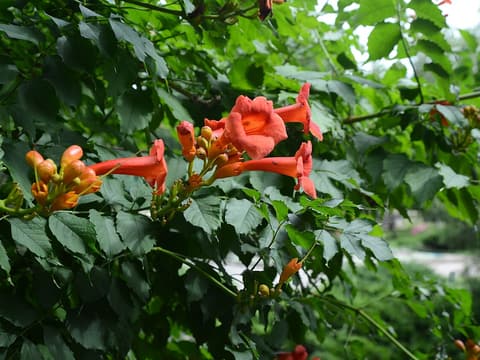
Trees to plant it under: American Elm, Slippery Elm and Sugarberry.
More like this