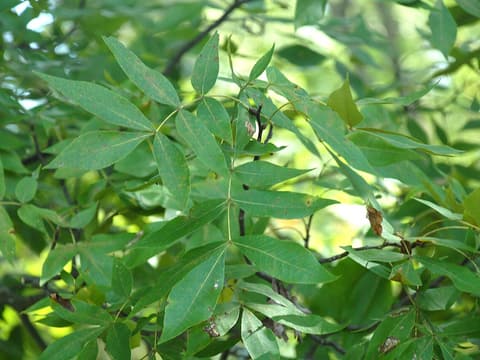
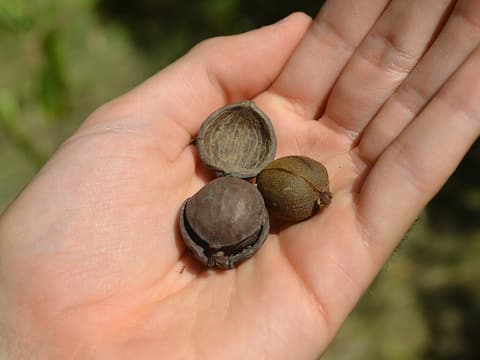
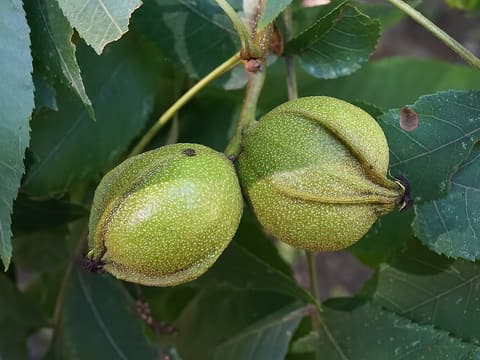
Photo: Sixflashphoto, CC BY-SA 4.0, cropped · Wikimedia Commons
Shagbark Hickory
Scientific name: Carya ovata
Also called scalybark hickory, upland hickory.
Peeling plated bark, golden fall color and the sweetest wild nut in the eastern forest.
Be first when shagbark hickory is priced
Saplings ship bare-root or in a pot, usually 12 to 18 inches tall, in the dormant season, and their height and age are stated here with the price, once available.
We grow it as saplings and nuts. One email when it is listed with prices, and nothing else. Or ask, and we reply with what is ready now. Live plants ship February to May and October to November.
Limited timeSign up now and get 10% off when it is ready.
Share: copy link
Shagbark Hickory at a glance
- Type
- Large tree
- Mature height
- 60–90 ft
- USDA zones
- 4–9
- Growth rate
- Slow
- Flowers
- April to June
- Fruit
- Nuts, September to October
- First crop
- More than 10 years (in quantity at about 40)
- Mature spread
- 70 ft
- Sun
- Full
- Soil moisture
- Average
- Grows wild in
- Dry uplands and rich moist slopes
- Native range
- 34 states and the District of Columbia, north to Minnesota, south to Louisiana and west to Nebraska Also recorded, not native, in North Dakota. See what is native in your state
List all 35
Alabama, Arkansas, Connecticut, Delaware, Georgia, Illinois, Indiana, Iowa, Kansas, Kentucky, Louisiana, Maine, Maryland, Massachusetts, Michigan, Minnesota, Mississippi, Missouri, Nebraska, New Hampshire, New Jersey, New York, North Carolina, Ohio, Oklahoma, Pennsylvania, Rhode Island, South Carolina, Tennessee, Texas, Vermont, Virginia, West Virginia, Wisconsin and the District of Columbia
Shagbark hickory is the tree behind hickory-smoked everything, and its nuts rival pecans for flavor. It grows a long taproot, so plant it small and young and be patient; the first nuts take well over a decade. Hardy, drought tolerant once established, and host to over a hundred caterpillar species. On older trees the shaggy bark is a winter feature. Plant it as the long-term nut tree on a big lawn, or in a mixed oak woodlot.
Size, growth and what to expect
A shagbark hickory seedling spends its first three years building a taproot 2 to 3 feet deep while the top grows only inches. Growth stays slow after that. Forest-grown trees stand 23 to 43 feet at age 40 and 54 to 70 feet at 80, depending on region. Our growth estimator models it at about a foot a year on an average site, slowing toward maturity. A mature tree averages 70 to 80 feet with a trunk 12 to 24 inches through.
Seed bearing begins in quantity at about 40 years and peaks from 60 to 200, with a good crop every 1 to 3 years. A tree lives 200 to 300 years, and the oldest known has been ring-counted to 401. The nuts run 1 to 2½ inches long with a sweet kernel, a preferred food of squirrels, bears and foxes. The name comes from the loose bark plates, 1 to 3 feet long, that curve away from an old trunk.
It grows wild from Minnesota and Nebraska east to Maine and south to Georgia and east Texas, on upland slopes in the north and river-laid soils farther south.
How to grow Shagbark Hickory
Shagbark hickory takes full sun and any well-drained soil, from upland clay to a rich slope. It grows tall and narrow and outlives the house, so plant it 30 feet from buildings, clear of power lines, and off driveways where nuts and husks drop. Set trees about 50 feet apart.
Saplings ship bare-root or potted. Plant a dormant sapling between leaf drop and bud swell. It puts down a long taproot early, so dig deep enough for that root to hang straight and wide enough for the rest, flare at grade, native soil back in, mulch off the trunk. No stake unless it leans. Sow nuts in fall 2 inches deep under hardware cloth, or squirrels take every one.
Water every week or two the first summer. Deer browse hickory less than oaks, but rabbits girdle it, so use a tube or wire guard for three years. Top growth is slight at first while the root does the work; prune only to keep one leader.
It resents transplanting once the taproot is set, so buy it small and leave it be. Seedling trees bear after more than a decade, and a second tree nearby improves the crop. Young bark is smooth and gray; the shag comes with age.
Heights and zones are typical ranges for the species in cultivation; local conditions and seed source shift them.
Sources (13)
- USDA Forest Service, Silvics of North America: shagbark hickory
- NC State Extension Gardener Plant Toolbox: Carya ovata
- Virginia Tech Dendrology: shagbark hickory, Carya ovata
- Lady Bird Johnson Wildflower Center: Carya ovata
- Illinois Wildflowers (John Hilty): Shagbark Hickory, Carya ovata
- USDA Fire Effects Information System: Carya ovata
- USDA Forest Service, Woody Plant Seed Manual (2008), Carya chapter
- Missouri Department of Conservation field guide: Shagbark Hickory
- The Morton Arboretum: Shagbark hickory, Carya ovata
- Flora of North America, vol. 3: Carya ovata
- Iowa State University Extension and Outreach, Natural Resources: Shagbark Hickory
- Virginia Tech Dendrology, Eastern OLDLIST of maximum tree ages (Neil Pederson): Carya ovata, shagbark hickory
- Ontario's old growth forests, Michael Henry: Ontario's oldest trees, updated February 2025
Plan the planting
Check your site for it What to plant with it How big, how fast How much to water How to sow it How many for a crop When it flowers and fruits When to plant it where you live How far from the house and wires How old is yours Moving one you already have
Read before planting
- Ten planting mistakes that quietly kill trees
- Transplanting young trees: timing, water and protection
- Protecting young trees from voles, rabbits, deer and squirrels
- Winter identification: telling native trees apart by bark, buds and twigs
- The deepest-rooted native trees: how deep oak, hickory, walnut and pine roots really go
- Six trees not to plant near a house, and what to plant instead
We grow 12 other hickories (Carya): see them all.
Grows in the same conditions
Plants that share its sun and soil
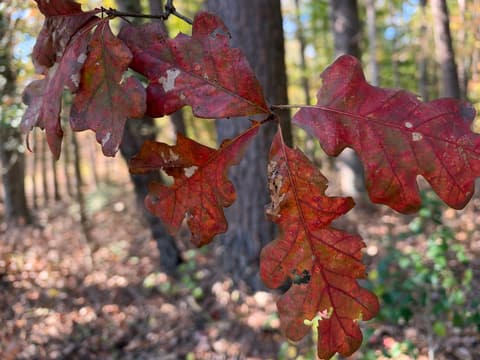
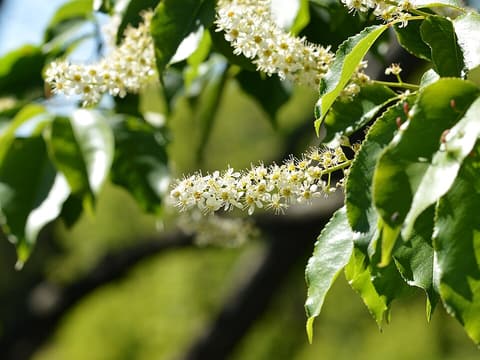
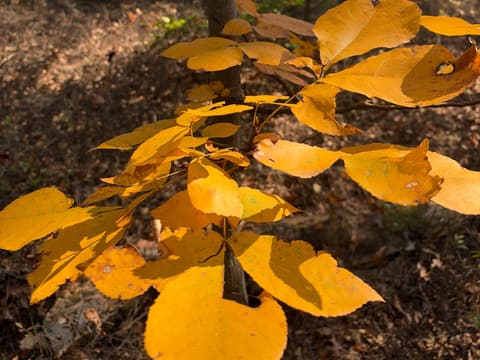
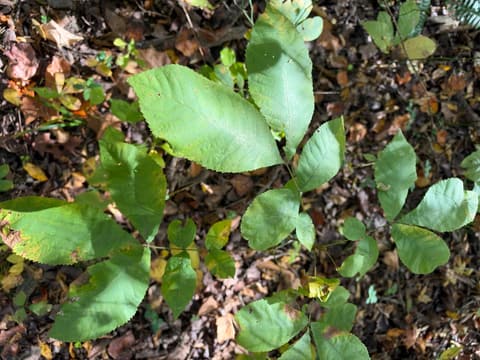
Under its canopy: Mapleleaf Viburnum, Alabama Azalea and Flame Azalea.
More like this