Photo: Krzysztof Ziarnek, CC BY-SA 4.0, cropped · Wikimedia Commons
Sourwood
Scientific name: Oxydendrum arboreum
Also called sorrel tree, lily-of-the-valley tree.
Lily-of-the-valley flowers in July, the famous sourwood honey, and fall color that rivals any maple.
Be first when sourwood is priced
Saplings ship bare-root or in a pot, usually 12 to 18 inches tall, in the dormant season, and their height and age are stated here with the price, once available.
We grow it as saplings and seed. One email when it is listed with prices, and nothing else. Or ask, and we reply with what is ready now. Live plants ship February to May and October to November.
Limited timeSign up now and get 10% off when it is ready.
Share: copy link
Sourwood at a glance
- Type
- Medium tree
- Mature height
- 25–50 ft
- USDA zones
- 5–9
- Growth rate
- Slow
- Flowers
- June to August
- Fruit
- Capsules, September to October
- First crop
- 4 to 5 years (first flowers)
- Mature spread
- 25 ft
- Sun
- Full, Part
- Soil moisture
- Average
- Grows wild in
- Dry uplands, the Appalachians and the forest understory
- Native range
- 15 states, north to Pennsylvania, south to Florida and west to Louisiana Also recorded, not native, in Arkansas, Illinois, New York and Rhode Island. See what is native in your state
List all 15
Alabama, Florida, Georgia, Indiana, Kentucky, Louisiana, Maryland, Mississippi, North Carolina, Ohio, Pennsylvania, South Carolina, Tennessee, Virginia and West Virginia
Sourwood is a slender Appalachian tree with drooping sprays of white summer flowers, glossy leaves that turn crimson early, and a honey so prized that jars sell out at mountain markets. It insists on acid, well-drained soil and dislikes compaction and salt, so plant it in a bed, not a lawn strip. Slow-growing and long-lived. Silver-gray seed capsules stay on the bare branches and keep the tree ornamental into winter. Perfect in an acid bed beside azaleas and blueberries, within reach of the hives.
Size, growth and what to expect
A sourwood seedling flowers 4 to 5 years after sowing. Growth is slow, about a foot a year in its youth on an average site by our growth estimator's model, and it stays slow in established stands. Around a house count on 25 to 50 feet with a trunk 8 to 12 inches through, and the record forest tree is 80 feet. In the forest it usually stays in the understory all its life. Trees typically live about 100 years, and one has been ring-counted to 263.
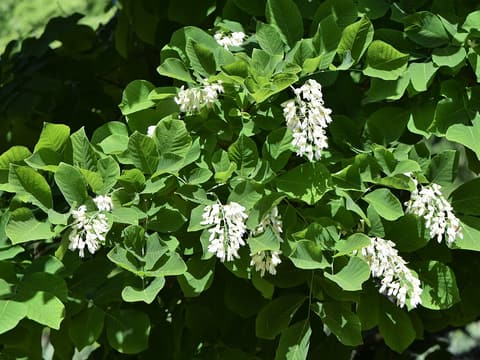
The white bell flowers hang in drooping sprays 4 to 8 inches long from late June into August, and bees make a rich, sought-after honey from the nectar. The capsules, a quarter to a half inch long, ripen in September and October and shed tiny seed all winter. Sorrel tree, its other name, comes from the sour taste of the leaves.
It grows wild from southwest Pennsylvania, southern Ohio and Indiana south to Louisiana and northwest Florida, and east to the Atlantic coast from southern Virginia to central North Carolina, up to about 5,000 feet.
How to grow Sourwood
Sourwood needs acid soil that drains, in full sun or light shade; sun gives the most bloom and the best color. Keep it out of lawn strips and salted roadsides. It grows slim, half as wide as it is tall, so 12 feet from the house is enough. Set trees 12 feet apart.
Saplings ship bare-root or potted. Plant a sapling while dormant, in a hole twice the root width and no deeper, flare at grade, native soil only; if your soil is not naturally acid, choose another tree. Mulch with pine straw, off the trunk; no stake. Seed is dust-fine and needs light: sow it on the surface of moist acid mix in spring, uncovered, and keep it misted under a screen.
Young sourwood dries out easily, so water weekly through the first two summers. Deer and rabbits can both damage a young sourwood, so tube it until the trunk is above browse height, about four years. It shapes itself; prune only broken limbs.
Each flower carries both male and female parts and insects pollinate it, so there are no male and female trees to pair. Growth is slow and a transplanted sourwood may sit a season before it moves. Yellow leaves with green veins mean the soil is too sweet. Flowers come in midsummer on new growth, and leaves start turning in September.
Heights and zones are typical ranges for the species in cultivation; local conditions and seed source shift them.
Sources (11)
- USDA Forest Service, Silvics of North America: sourwood
- NC State Extension Gardener Plant Toolbox: Oxydendrum arboreum
- USDA Fire Effects Information System: Oxydendrum arboreum
- USDA Forest Service, Woody Plant Seed Manual (2008), Oxydendrum chapter, Blazich and Starrett
- Lady Bird Johnson Wildflower Center: Oxydendrum arboreum
- NatureServe Explorer: Oxydendrum arboreum, Sourwood
- Trees and Shrubs Online: Oxydendrum arboreum, Hsu and Johnson (2021)
- USDA NRCS PLANTS Database: Oxydendrum arboreum
- The Morton Arboretum: sourwood
- Flora of North America, vol. 8: Oxydendrum arboreum
- Eastern OLDLIST of maximum tree ages (Virginia Tech): Oxydendron arboreum, sourwood
Plan the planting
Check your site for it What to plant with it How big, how fast How much to water How to sow it How many for a crop When it flowers and fruits When to plant it where you live How far from the house and wires How old is yours Moving one you already have
Read before planting
- Ten planting mistakes that quietly kill trees
- Transplanting young trees: timing, water and protection
- Protecting young trees from voles, rabbits, deer and squirrels
- Native trees and shrubs for bees: pollen, nectar, nesting and a bloom calendar from willow to witch hazel
- Why leaves turn red and yellow in fall, and which native trees give each color
- Multistem or single stem? Sometimes the trunk is hiding the answer
Grows in the same conditions
Plants that share its sun and soil
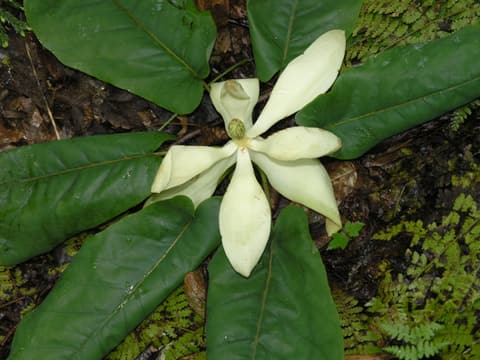
Under its canopy: Mountain Laurel, Cumberland Azalea and Box Huckleberry.
More like this