Photo: Cillas, CC BY-SA 4.0, cropped · Wikimedia Commons
Washington Hawthorn
Scientific name: Crataegus phaenopyrum
Also called Washington thorn.
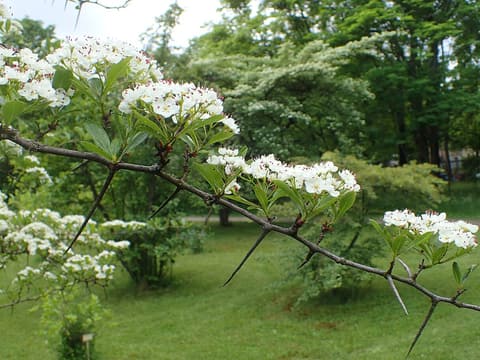
White June flowers, glossy red fruit that hangs into winter, and a thorny crown that shelters nesting birds.
Be first when Washington hawthorn is priced
Saplings ship bare-root or in a pot, usually 12 to 18 inches tall, in the dormant season, and their height and age are stated here with the price, once available.
We grow it as saplings and seed. One email when it is listed with prices, and nothing else. Or ask, and we reply with what is ready now. Live plants ship February to May and October to November.
Limited timeSign up now and get 10% off when it is ready.
Share: copy link
Washington Hawthorn at a glance
- Type
- Small tree
- Mature height
- 20–30 ft
- USDA zones
- 3–8
- Growth rate
- Medium
- Flowers
- June
- Fruit
- Haws, September to February
- First crop
- 5 to 8 years
- Mature spread
- 25 ft
- Sun
- Full
- Soil moisture
- Dry, Average
- Grows wild in
- Stream banks, old fields and edges
- Native range
- 19 states, north to Massachusetts, south to Florida and west to Missouri Also recorded, not native, in 7 other states (listed above). See what is native in your state
List all 19, and the 7 others
Alabama, Arkansas, Florida, Georgia, Illinois, Indiana, Kentucky, Louisiana, Maryland, Massachusetts, Mississippi, Missouri, North Carolina, Ohio, Pennsylvania, South Carolina, Tennessee, Virginia and West Virginia
Also recorded, not native, in Delaware, Maine, Michigan, New Jersey, New York, Rhode Island and the District of Columbia.
Washington hawthorn is among the most disease-resistant of the eastern hawthorns and the most reliable in the landscape: dense, rounded, orange-red in fall and loaded with fruit that cedar waxwings clean off in late winter. The thorns make an impenetrable hedge. A street tree for a small lot, and a nesting tree for catbirds and thrashers.
Size, growth and what to expect
A seedling Washington hawthorn bears its first fruit at 5 to 8 years, while a grafted tree often flowers heavily in its third year. It grows at a medium pace, roughly a foot and a half a year in its youth on an average site, which is the rate our growth estimator uses for it. It makes a low-branching tree 25 to 30 feet tall and 20 to 25 feet wide.
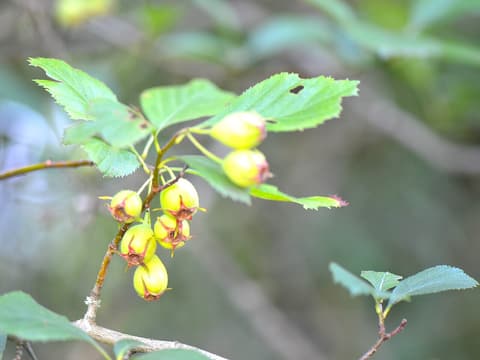
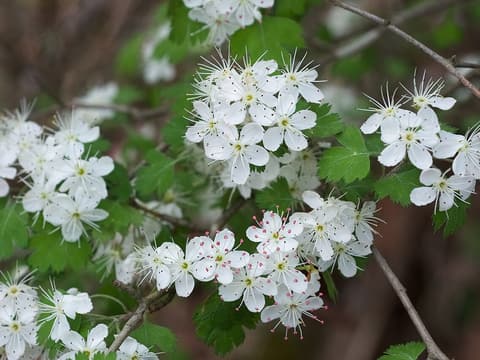
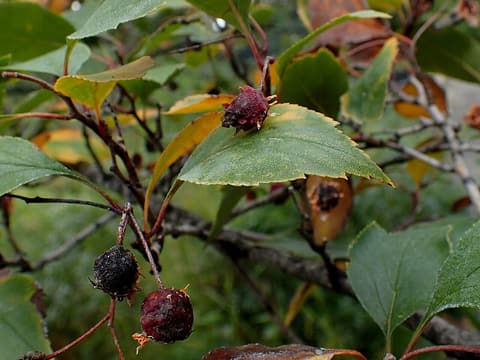
Flat clusters of up to 50 half-inch white flowers open in late spring. The glossy red fruit, about a quarter inch across, colors in September and hangs on through winter, when cedar waxwings, quail, turkeys and small mammals eat it. The dense branches shelter nesting birds behind straight thorns 1 to 3 inches long. The name comes from Washington, D.C., where it was reportedly first grown commercially in the late 1700s.
It grows wild from Virginia south to Georgia and Alabama and west to Illinois, Missouri, Arkansas and Louisiana, in low swamps and river bottoms in the east and on mountain ridges farther west.
How to grow Washington Hawthorn
Washington hawthorn wants full sun and any soil that drains, clay and dry banks included. It makes a dense rounded tree nearly as wide as it is tall, so plant it 12 feet from a building and, because of the thorns, back from paths and play areas. For a hedge, set plants 5 feet apart.
Plant a dormant sapling, bare-root or potted, between leaf drop and bud break, in a hole twice the root width and no deeper, flare at grade, native soil back in, mulch off the trunk. Stake only on a windy site and remove it after a season. Clean the seed from the fruit and sow it outdoors in fall a quarter inch deep. For a spring sowing, chill it damp for about four and a half months first. Sow it within the year, because stored seed loses viability.
Water weekly the first summer and in dry spells the second. Rabbits gnaw young bark and deer browse the tips until the thorns harden, so use a trunk guard and cage for three years, and wear gloves. Prune in late winter to lift the crown or shape a hedge.
The flowers can smell unpleasant, and the scent draws the midges that pollinate them. A newly planted hawthorn may add little the first year while it roots. Bloom comes in June, late enough to miss frost. It resists the rust and fire blight that ruin other hawthorns, though rust spots can appear where junipers grow nearby.
Heights and zones are typical ranges for the species in cultivation; local conditions and seed source shift them.
Sources (10)
- NC State Extension Gardener Plant Toolbox: Crataegus phaenopyrum
- Missouri Botanical Garden Plant Finder: Crataegus phaenopyrum
- The Morton Arboretum: Washington hawthorn
- USDA Forest Service, Woody Plant Seed Manual (2008), Crataegus chapter, Lasseigne and Blazich
- Lady Bird Johnson Wildflower Center: Crataegus phaenopyrum
- NatureServe Explorer: Crataegus phaenopyrum, Washington Hawthorn
- Trees and Shrubs Online: Crataegus phaenopyrum, from Bean's Trees and Shrubs Hardy in the British Isles
- USDA NRCS PLANTS Database: Crataegus phaenopyrum
- Flora of North America, vol. 9: Crataegus phaenopyrum
- Native Plant Network propagation protocol: Crataegus phaenopyrum, Hoss 2005
Plan the planting
Check your site for it What to plant with it How big, how fast How much to water How to sow it How many for a crop When it flowers and fruits When to plant it where you live How far from the house and wires How old is yours Moving one you already have
Read before planting
- Ten planting mistakes that quietly kill trees
- Transplanting young trees: timing, water and protection
- Protecting young trees from voles, rabbits, deer and squirrels
- How fast native trees grow: a year’s growth by species, soil and sun
- Small native trees and large shrubs for a small yard, and how to place them
- Multistem or single stem? Sometimes the trunk is hiding the answer
We grow 12 other hawthorns (Crataegus): see them all.
Grows in the same conditions
Plants that share its sun and soil
More like this