Photo: Krzysztof Ziarnek, CC BY-SA 4.0, cropped · Wikimedia Commons
Black Raspberry
Scientific name: Rubus occidentalis
Also called blackcap, blackcap raspberry.
The eastern native blackcap, with arching canes dusted white and sweet purple-black berries in early summer for jam, pies and the birds.
Be first when black raspberry is priced
Saplings ship bare-root or in a pot, usually 12 to 18 inches tall, in the dormant season, and their height and age are stated here with the price, once available.
We grow it as saplings and seed. One email when it is listed with prices, and nothing else. Or ask, and we reply with what is ready now. Live plants ship February to May.
Limited timeSign up now and get 10% off when it is ready.
Share: copy link
Black Raspberry at a glance
- Type
- Shrub
- Mature height
- 3–6 ft
- USDA zones
- 3–8
- Growth rate
- Fast
- Flowers
- April to June
- Fruit
- Berries, June to July
- First crop
- 2 years
- Mature spread
- 8 ft
- Sun
- Full, Part
- Soil moisture
- Dry, Average
- Grows wild in
- Stream banks, rich moist slopes, old fields and edges
- Native range
- 35 states and the District of Columbia, north to North Dakota, south to Georgia and west to Colorado See what is native in your state
List all 36
Alabama, Arkansas, Colorado, Connecticut, Delaware, Georgia, Illinois, Indiana, Iowa, Kansas, Kentucky, Maine, Maryland, Massachusetts, Michigan, Minnesota, Mississippi, Missouri, Nebraska, New Hampshire, New Jersey, New York, North Carolina, North Dakota, Ohio, Oklahoma, Pennsylvania, Rhode Island, South Carolina, South Dakota, Tennessee, Vermont, Virginia, West Virginia, Wisconsin and the District of Columbia
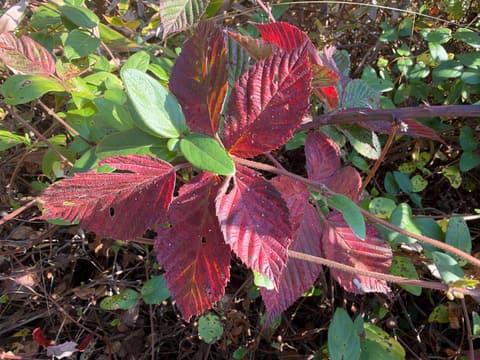
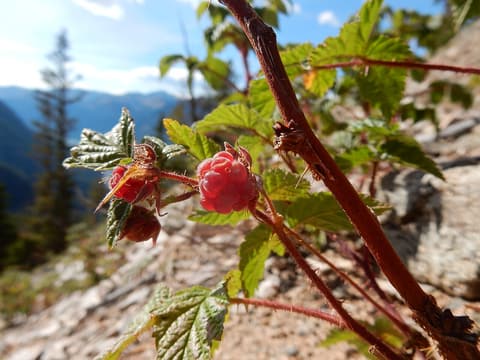
Black raspberry is the wild blackcap of eastern North America and the source of most cultivated black raspberries. Its young canes wear a white, powdery bloom and short, hooked thorns, and its leaflets are white-felted beneath. It grows wild at woods edges and on bluffs, in old fields and fencerows, and along streams. Native bees nest in its dead, hollow canes, and its tangles give birds and small mammals cover all year. Give it a sunny fence line or a trellis at the woods edge, where its berries feed you and the birds.
Size, growth and what to expect
Black raspberry grows fast, about two feet a year in our growth estimator. It makes a clump of arching canes 3 to 6 feet tall and 4 to 8 feet across. The roots live for years, while each cane lives only two summers.
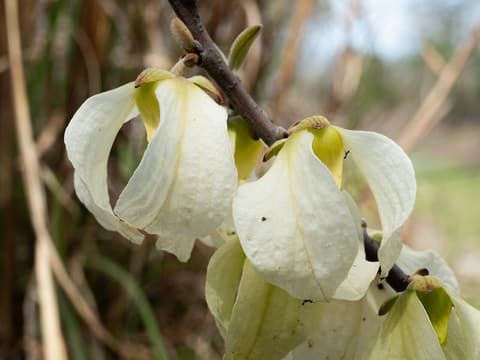
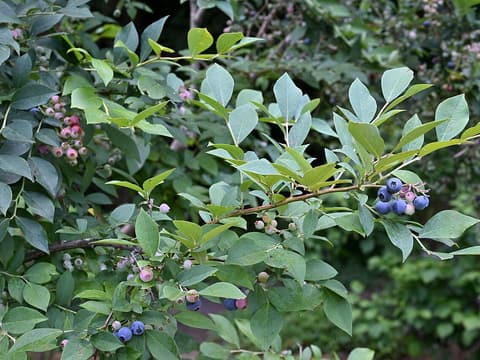
Clusters of small white flowers open from April into June. The berries ripen in June and July, purple-black and about half an inch across, and they lift off the core as a hollow cap. They taste sweet and slightly tart, with a rich flavor in the best plants. Wild turkeys, songbirds, deer, foxes, black bears, raccoons and squirrels eat them, and birds and small mammals pick the seeds from fallen fruit in winter.
It grows wild from New Brunswick and Maine west to the Dakotas and Colorado, and south to Georgia, Mississippi and Oklahoma. It lives in open woods and woods edges, on bluffs and stream banks, and in old fields, pastures, fencerows and roadsides.
How to grow Black Raspberry
Black raspberry fruits best in full sun and grows in part shade, though its canes will not fruit in deep shade. It wants a moist, well-drained soil rich in organic matter, and it takes limy ground. Standing water can kill the roots. Its canes arch over and root where their tips touch the soil, so a planting creeps outward into a thicket unless the canes are tied up. Keep it away from a patch of garden raspberries or blackberries, since wild brambles nearby can bring diseases into the patch. Set plants 4 feet apart, and keep each one 4 feet from a wall. It is small enough to stand within 15 feet of overhead wires.
Saplings ship bare-root or potted. Plant them in early spring while they are still dormant, in a hole wide enough to spread the roots and at the depth they grew. Put the native soil back in, firm it gently, and keep the mulch clear of the canes. Sow the cleaned seed outdoors in late summer or early fall, an eighth of an inch deep. For spring, hold the seed damp in the refrigerator for 60 to 120 days first. Seedlings come up in spring, some not until the second or third. Most plants are raised from tip layers or divisions, since seed is slow and uneven to sprout. Seed-grown plants vary in the size and flavor of their berries, and none comes true to a named garden variety.
Water weekly from flowering until the harvest, since the roots lie shallow. Rabbits eat the canes in winter, so circle young plants with chicken wire. When new canes reach about 2 feet, pinch out their tips so they branch. After the harvest, cut the canes that fruited to the ground. In early spring, keep four or five strong canes per plant, shorten their side branches to 12 to 18 inches, and tie them to a support.
Each flower carries both male and female parts, so there are no male and female plants to pair. Bumblebees, honeybees and other wild bees carry the pollen, and the more bees at work, the more berries. Each cane bears in its second summer and then dies, so a seedling first fruits in its second year. Honey fungus and cane borers are its main troubles, and spotted wing drosophila can spoil the ripe berries.
Heights and zones are typical ranges for the species in cultivation; local conditions and seed source shift them.
Sources (10)
- NC State Extension Gardener Plant Toolbox: Rubus occidentalis
- Lady Bird Johnson Wildflower Center: Rubus occidentalis
- Flora of North America, Volume 9: Rubus occidentalis (Alice, Goldman, Macklin and Moore)
- Missouri Department of Conservation Field Guide: Black raspberry
- Virginia Tech Dendrology: black raspberry
- Native Plant Trust, Go Botany: Rubus occidentalis
- USDA Forest Service, Woody Plant Seed Manual (Agriculture Handbook 727, 2008): Rubus, blackberry, raspberry
- University of Minnesota Extension: Growing raspberries in the home garden
- NatureServe Explorer: Rubus occidentalis
- USDA NRCS PLANTS Database: Rubus occidentalis
Plan the planting
Check your site for it What to plant with it How big, how fast How much to water How to sow it How many for a crop When it flowers and fruits When to plant it where you live How far from the house and wires How old is yours
Read before planting
- Ten planting mistakes that quietly kill trees
- Transplanting young trees: timing, water and protection
- Protecting young trees from voles, rabbits, deer and squirrels
- The habitat around a tree is part of the tree
- What a young tree looks like: first-year seedlings of oak, walnut, hickory, chestnut, maple and redbud, and the weed trees to pull
- Invasive vines and shrubs are what is killing your woods
Other brambles (Rubus) we grow: Allegheny Blackberry and American Red Raspberry.
Grows in the same conditions
Plants that share its sun and soil
Trees to plant it under: Slippery Elm, Common Hackberry and American Elm.
More like this