Photo: Robert H. Mohlenbrock, Public domain · Wikimedia Commons
Blackhaw Viburnum
Scientific name: Viburnum prunifolium
Also called black haw, stagbush, sweet haw.
A tough, tree-like viburnum with white spring flowers, purple-red fall color and sweet blue fruit.
Be first when blackhaw viburnum is priced
Saplings ship bare-root or in a pot, usually 12 to 18 inches tall, in the dormant season, and their height and age are stated here with the price, once available.
We grow it as saplings and seed. One email when it is listed with prices, and nothing else. Or ask, and we reply with what is ready now. Live plants ship February to May and October to November.
Limited timeSign up now and get 10% off when it is ready.
Share: copy link
Blackhaw Viburnum at a glance
- Type
- Shrub
- Mature height
- 12–15 ft
- USDA zones
- 3–9
- Growth rate
- Medium
- Flowers
- May to June
- Fruit
- Berries, September to October
- First crop
- 8 to 10 years
- Mature spread
- 12 ft
- Sun
- Full, Part, Shade
- Soil moisture
- Dry, Average
- Grows wild in
- The forest understory, dry uplands, old fields and edges
- Native range
- 27 states and the District of Columbia, north to Wisconsin, south to Louisiana and west to Texas See what is native in your state
List all 28
Alabama, Arkansas, Connecticut, Delaware, Georgia, Illinois, Indiana, Iowa, Kansas, Kentucky, Louisiana, Maryland, Michigan, Mississippi, Missouri, New Jersey, New York, North Carolina, Ohio, Oklahoma, Pennsylvania, South Carolina, Tennessee, Texas, Virginia, West Virginia, Wisconsin and the District of Columbia
Blackhaw looks like a small hawthorn without the thorns: horizontal branching, glossy leaves and clusters of dark fruit that persist into winter. It is one of the best native shrubs for a dry woodland edge or a mixed hedge. Plant it as a single-trunk small tree at a patio corner, or in a winter bird planting.
Size, growth and what to expect
Blackhaw makes a shrub 12 to 15 feet high and 6 to 12 feet across, and an old plant trained to one trunk can reach 30 feet. Expect roughly a foot and a half of new height a year when it is young on an average site, the rate our growth estimator uses for a medium shrub.
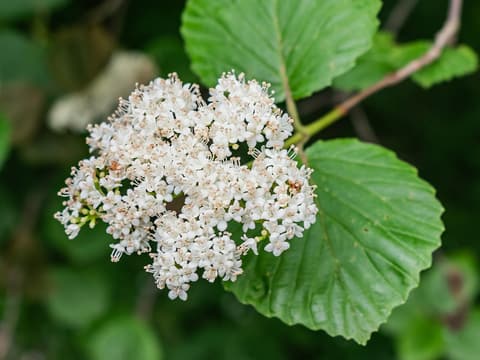
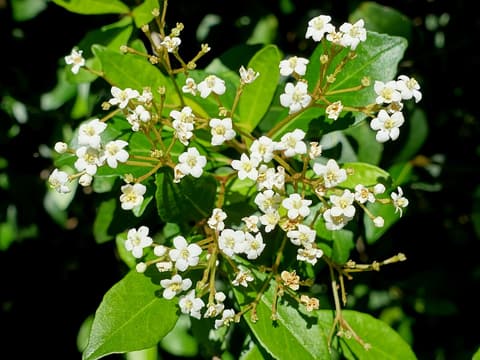
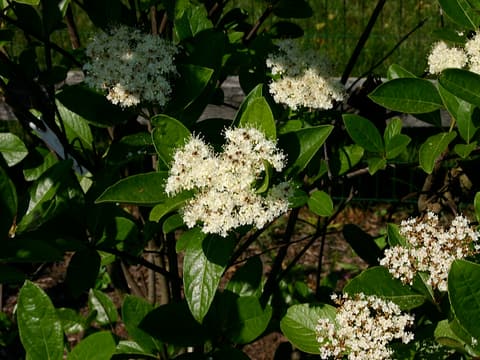
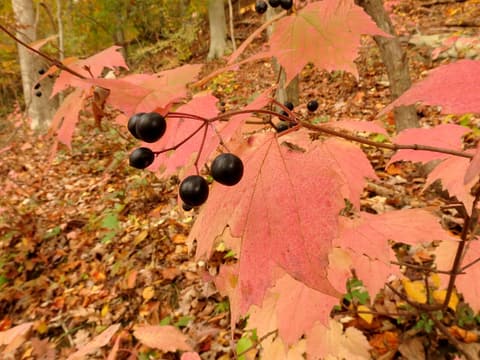
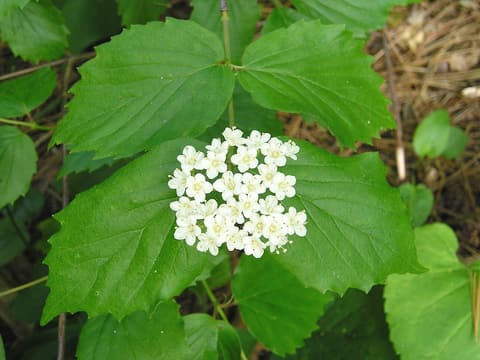
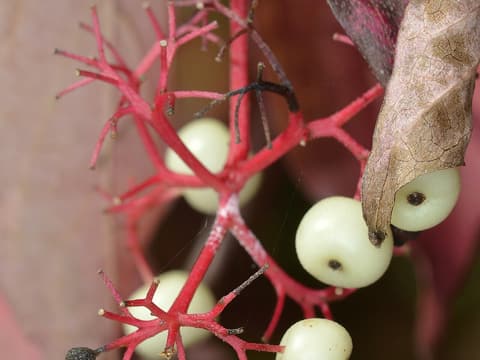
Flat clusters of white flowers 4 to 5 inches across open in May and June. The fruit ripens blue-black in September and October, an oval about a third of an inch long that can be eaten off the bush or cooked into jam. Songbirds, squirrels and chipmunks take what you leave. The name black haw refers to its supposed likeness to the hawthorns, which are sometimes called red haws. The mature bark breaks into brown blocks, and the young stems are reddish with a pink bloom.
It grows wild from Connecticut west to Michigan and Kansas and south to Georgia and Texas, in woods, thickets and along streams.
How to grow Blackhaw Viburnum
Blackhaw viburnum takes full sun, part shade or fairly deep shade, on dry to average soil, clay included. It makes a broad, tree-like shrub, so allow 10 feet between plants in a hedge and as much from a wall.
Plant in the dormant season. We ship saplings bare-root or in pots. Dig a shallow hole twice the root spread, keep the crown at the soil line, and refill with native soil rather than compost or peat. Mulch a ring out toward the branch tips, pulled back from the stems. No stake is needed. Seed has a double dormancy. It roots in summer warmth and sends up a shoot only after the next winter. Sow it outdoors in fall, or hold it and sow by early May, and seedlings appear the second spring after you collect it.
Water through the first two summers in dry weather, because blackhaw is slow to settle in. Rabbits clip young stems in winter and deer browse the tops, so fence the plant for two or three years.
Fruit set is heavier with a second, unrelated plant nearby, so put in two if you want the sweet blue-black fruit. It suckers slowly into a thicket. Fall color holds purple-red late, and the fruit hangs on after the leaves drop. Shape it right after bloom, since flowers form on old wood.
Heights and zones are typical ranges for the species in cultivation; local conditions and seed source shift them.
Sources (11)
- NC State Extension Gardener Plant Toolbox: Viburnum prunifolium
- Missouri Botanical Garden Plant Finder: Viburnum prunifolium
- The Morton Arboretum: black-haw viburnum
- Lady Bird Johnson Wildflower Center: Viburnum prunifolium
- USDA NRCS PLANTS Database: Viburnum prunifolium, VIPR
- USDA Forest Service, Woody Plant Seed Manual (2008), Viburnum chapter
- Missouri Department of Conservation field guide: Black Haw
- Virginia Tech Dendrology: blackhaw, Viburnum prunifolium
- Native Plant Trust, Go Botany: Viburnum prunifolium
- Iowa State University Extension, Natural Resources: blackhaw viburnum
- NatureServe Explorer: Viburnum prunifolium
Plan the planting
Check your site for it What to plant with it How big, how fast How much to water How to sow it How many for a crop When it flowers and fruits When to plant it where you live How far from the house and wires How old is yours
Read before planting
- Ten planting mistakes that quietly kill trees
- Transplanting young trees: timing, water and protection
- Protecting young trees from voles, rabbits, deer and squirrels
- Native trees and shrubs for heavy clay: which take it wet, which take it dry, and how to plant them
- The habitat around a tree is part of the tree
- Invasive vines and shrubs are what is killing your woods
We grow 11 other viburnums (Viburnum): see them all.
Grows in the same conditions
Plants that share its sun and soil
Trees to plant it under: Slippery Elm, Hop Hornbeam and Common Hackberry.
More like this