Photo: romana klee, CC BY-SA 2.0, cropped · Wikimedia Commons
Kentucky Coffeetree
Scientific name: Gymnocladus dioicus
Also called coffee tree, coffeenut.
Bold, coarse and nearly indestructible: a rare native shade tree for tough sites and cold climates.
Be first when Kentucky coffeetree is priced
Saplings ship bare-root or in a pot, usually 12 to 18 inches tall, in the dormant season, and their height and age are stated here with the price, once available.
We grow it as saplings and seed. One email when it is listed with prices, and nothing else. Or ask, and we reply with what is ready now. Live plants ship February to May and October to November.
Limited timeSign up now and get 10% off when it is ready.
Share: copy link
Kentucky Coffeetree at a glance
Drought tolerant, Rare, Wildlife value, Winter interest, Street tree, Erosion control, Salt tolerant
- Type
- Large tree
- Mature height
- 60–80 ft
- USDA zones
- 3–8
- Growth rate
- Medium
- Flowers
- May to June
- Fruit
- Pods, September to October
- First crop
- 20 to 30 years
- Mature spread
- 55 ft
- Sun
- Full
- Soil moisture
- Dry, Average
- Grows wild in
- Floodplain forests and rich moist slopes
- Native range
- 26 states, north and west to North Dakota and south to Texas Also recorded, not native, in Connecticut, Delaware, Maine, Massachusetts, New Jersey and North Carolina. See what is native in your state
List all 26
Alabama, Arkansas, Georgia, Illinois, Indiana, Iowa, Kansas, Kentucky, Maryland, Michigan, Minnesota, Mississippi, Missouri, Nebraska, New York, North Dakota, Ohio, Oklahoma, Pennsylvania, South Carolina, South Dakota, Tennessee, Texas, Virginia, West Virginia and Wisconsin
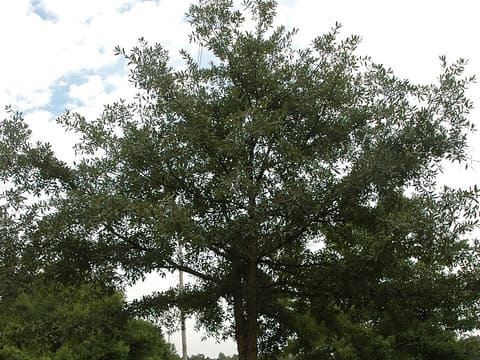
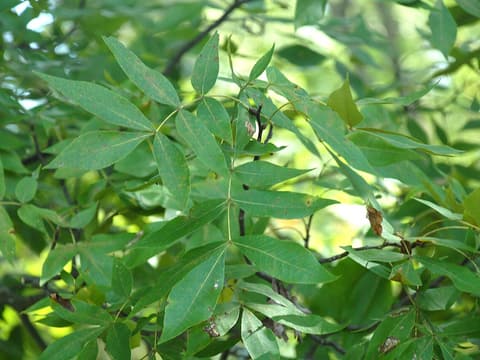
Coffeetree has enormous doubly compound leaves, a picturesque winter silhouette and no serious pests. It tolerates drought, alkaline soil, road salt and urban compaction, which makes it one of the best street trees for the Midwest and Northeast. Female trees carry thick pods; the raw seeds are toxic, so it is not a coffee substitute despite the name. On mine spoils it has been planted to stabilize and reclaim the soil. Perfect for a lawn, where its open crown lets grass grow right up to the trunk.
Size, growth and what to expect
At maturity a Kentucky coffeetree stands 60 to 80 feet with a crown 40 to 55 feet wide, and the trunk on a big tree runs 2 to 3 feet through. It grows fast when young and slows with age. Our growth estimator models it at roughly a foot and a half a year in youth on an average site, the rate it assumes for a medium tree. Trees can live to about 100 years or more.
Male and female flowers grow on separate trees, and only the females carry pods. Trees begin bearing at 20 to 30 years and then fruit yearly. The pods are thick and woody, 5 to 10 inches long, with 4 to 8 dark seeds about three quarters of an inch long, and they hang on unopened until late winter. Early settlers of Kentucky and Tennessee used the seeds as a coffee substitute, which is where the name comes from.
It grows wild in rich bottomlands from New York, Pennsylvania, southern Ontario and Minnesota south to eastern Nebraska, Oklahoma and Tennessee.
How to grow Kentucky Coffeetree
Coffeetree needs full sun and open sky. Average to dry soil of any texture suits it. In shade it leans and thins. At full size, keep it 35 feet from the house and never beneath a wire. Set trees about 50 feet apart.
Set it out while dormant. Saplings come bare-root or in deep pots, and coarse roots move best young. Dig two to three times the root width, no deeper, hold the flare at grade, and refill with the soil you dug. Mulch a wide ring clear of the bark, and stake only if the tree will not stand. Seed has a stony coat. File through it, soak until the seeds swell, and sow an inch deep under screen.
Water weekly the first two summers. Guard the trunk against voles and rabbits, and cage against deer rub for three winters. Prune in winter while it is young to hold one leader.
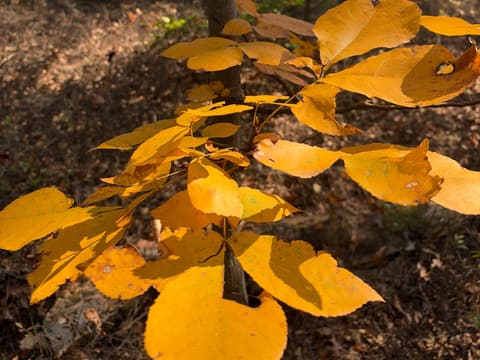
Kentucky coffeetree is dioecious, and a seedling will not show which it is until it flowers, years from now. Females drop thick pods whose raw seed is poisonous, so pick them up where children or stock reach. It leafs out very late, drops early, and suckers now and then into the lawn.
Heights and zones are typical ranges for the species in cultivation; local conditions and seed source shift them.
Sources (12)
- USDA Forest Service, Woody Plant Seed Manual, Gymnocladus dioicus
- Iowa State University Extension, Kentucky Coffeetree
- NC State Extension Gardener Plant Toolbox, Gymnocladus dioicus
- Morton Arboretum, Kentucky coffeetree
- USDA NRCS PLANTS Database: Gymnocladus dioicus
- USDA NRCS Plant Guide: Kentucky coffeetree, Gymnocladus dioicus, Row and Geyer
- NatureServe Explorer: Gymnocladus dioicus
- Lady Bird Johnson Wildflower Center: Gymnocladus dioicus
- USDA Forest Service, Gen. Tech. Rep. PNW-GTR-963: Kentucky coffeetree, Gymnocladus dioicus (L.) K. Koch: current abundance in nature and prospective persistence, Carstens and Schmitz 2017
- Virginia Tech Dendrology: Kentucky coffeetree, Gymnocladus dioicus
- Go Botany, Native Plant Trust: Gymnocladus dioicus
- South Dakota State University Extension: Kentucky Coffeetree, David Graper, updated 2019-01-09
Plan the planting
Check your site for it What to plant with it How big, how fast How much to water How to sow it How many for a crop When it flowers and fruits When to plant it where you live How far from the house and wires How old is yours Moving one you already have
Read before planting
- Ten planting mistakes that quietly kill trees
- Transplanting young trees: timing, water and protection
- Protecting young trees from voles, rabbits, deer and squirrels
- Native trees for the Great Plains: Iowa, Nebraska, Kansas, the Dakotas, eastern Colorado and Wyoming
- Native trees for the Great Lakes and Midwest: Michigan, Ohio, Indiana, Illinois and Wisconsin
- Six trees not to plant near a house, and what to plant instead
Grows in the same conditions
Plants that share its sun and soil
Under its canopy: Sweetleaf, Red Buckeye and Bottlebrush Buckeye.
More like this