Photo: Antony-22, CC BY-SA 4.0, cropped · Wikimedia Commons
Purple-flowering Raspberry
Scientific name: Rubus odoratus · Family: Rosaceae (rose family)
Also called flowering raspberry, fragrant thimbleberry, sweet-scented bramble, Rubacer odoratum.
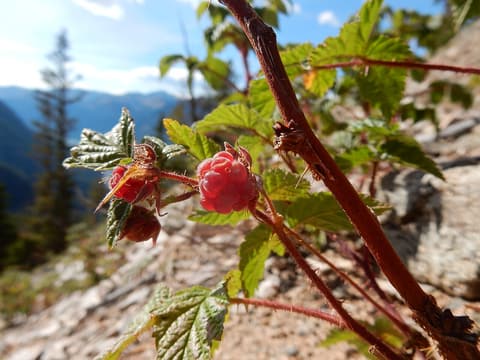
A thornless bramble for part shade, with fragrant rose-purple flowers 2 inches across all summer over big, maple-like leaves.
Be first when purple-flowering raspberry is priced
Saplings ship bare-root or in a pot, usually 12 to 18 inches tall, in the dormant season, and their height and age are stated here with the price, once available.
We grow it as saplings and seed. One email when it is listed with prices, and nothing else. Or ask, and we reply with what is ready now. Live plants ship February to May and October to November.
Limited timeSign up now and get 10% off when it is ready.
Share: copy link
Purple-flowering Raspberry at a glance
- Type
- Shrub
- Mature height
- 3–6 ft
- USDA zones
- 3–8
- Growth rate
- Medium
- Flowers
- June to August
- Fruit
- Berries, July to September
- First crop
- 2 years
- Mature spread
- 12 ft
- Sun
- Full, Part, Shade
- Soil moisture
- Average
- Grows wild in
- The forest understory, rocky ground and stream banks
- Native range
- 23 states and the District of Columbia, north to Maine, south to Georgia and west to Wisconsin Also recorded, not native, in Washington. See what is native in your state
List all 24
Alabama, Connecticut, Delaware, Georgia, Illinois, Indiana, Kentucky, Maine, Maryland, Massachusetts, Michigan, New Hampshire, New Jersey, New York, North Carolina, Ohio, Pennsylvania, Rhode Island, Tennessee, Vermont, Virginia, West Virginia, Wisconsin and the District of Columbia
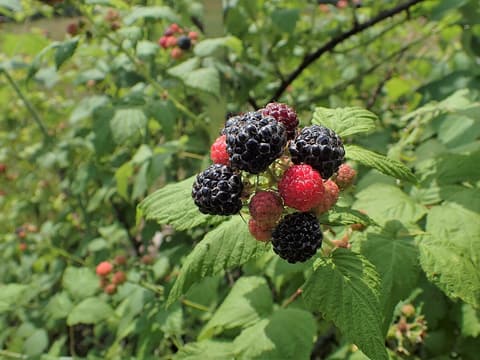
Purple-flowering raspberry is a thornless bramble of the Northeast and the eastern mountains, grown more for its flowers than for its fruit. Unlike our black raspberry and American red raspberry, it has simple leaves shaped like a maple's and big, fragrant flowers in place of small white ones. Indiana lists it as endangered. Give it a shady woods edge or a wild corner where it has room to spread.
Size, growth and what to expect
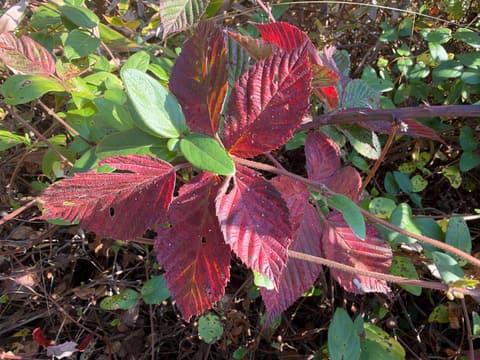
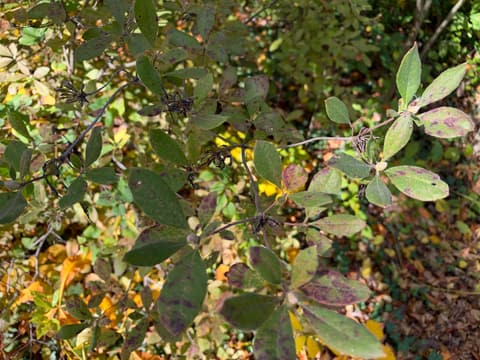
Purple-flowering raspberry grows at a medium pace, about a foot a year in our growth estimator. Its thornless canes stand 3 to 6 feet tall, and a patch spreads 6 to 12 feet across. The bark of older canes peels, and the young stems bristle with dark purple, gland-tipped hairs. Its simple, maple-like leaves run 4 to 10 inches across and turn pale yellow in fall.
Fragrant rose-purple flowers about 2 inches across open from June to August, a few at a time over a long season. Songbirds, game birds and mammals eat the berries.
It grows wild from southern Quebec and Maine west to Michigan and south through the mountains to Georgia and Alabama, with outposts in northern Illinois. Its home is moist, shady woods and woods edges, rocky slopes, wooded talus and stream banks.
How to grow Purple-flowering Raspberry
Purple-flowering raspberry grows in part shade, sun or shade, and in part shade its flowers last longer. It wants a moist, well-drained soil rich in organic matter, and it dislikes clay, soggy ground and hot, humid summers. It spreads by underground stems into a thicket, so give it room or pull the strays. Set plants 4 feet apart, and keep each one 6 feet from a wall. It is small enough to stand within 15 feet of overhead wires.
Saplings ship bare-root or potted. Plant them in a hole wider than the roots and no deeper. Set the crown at the soil line, put the native soil back in, and keep the mulch clear of the canes. Sow the cleaned seed outdoors in late summer or early fall, an eighth of an inch deep. For spring, hold the seed damp in the refrigerator for 60 to 120 days first. Seedlings come up in spring, some not until later springs. Plants are most often started from suckers, which dig up easily.
Water it every day for the first two weeks after planting, then every two to three days until week 12. After that, water weekly through the first two summers. Prune right after it fruits, and take out the old canes each winter. Every few years, dig up part of the patch and replant it more thinly.
Each flower carries both male and female parts, so there are no male and female plants to pair. Bumble bees, other native bees and honey bees visit the flowers, and native bees use the plant for nesting. Honey fungus, which troubles most brambles, is its one known problem. The flat red berries ripen from July to September, and they are edible but dry, crumbly and bland.
Heights and zones are typical ranges for the species in cultivation; local conditions and seed source shift them.
Sources (11)
- NC State Extension Gardener Plant Toolbox: Rubus odoratus
- Lady Bird Johnson Wildflower Center: Rubus odoratus
- Missouri Botanical Garden Plant Finder: Rubus odoratus
- Flora of North America, vol. 9: Rubus odoratus
- Native Plant Trust, Go Botany: Rubus odoratus
- Trees and Shrubs Online: Rubus odoratus, from Bean
- USDA Forest Service, Woody Plant Seed Manual (Agriculture Handbook 727, 2008): Rubus, blackberry, raspberry
- NatureServe Explorer: Rubus odoratus
- Indiana Department of Natural Resources: Endangered, Threatened, and Extirpated Plants of Indiana, 2025
- Delaware Division of Fish and Wildlife: Rare and Uncommon Plants of Delaware
- USDA NRCS PLANTS Database: Rubus odoratus
Plan the planting
Check your site for it What to plant with it How big, how fast How much to water How to sow it How many for a crop When it flowers and fruits When to plant it where you live How far from the house and wires How old is yours
Read before planting
- Ten planting mistakes that quietly kill trees
- Transplanting young trees: timing, water and protection
- Protecting young trees from voles, rabbits, deer and squirrels
- The habitat around a tree is part of the tree
- What a young tree looks like: first-year seedlings of oak, walnut, hickory, chestnut, maple and redbud, and the weed trees to pull
- Invasive vines and shrubs are what is killing your woods
Other brambles (Rubus) we grow: Allegheny Blackberry, American Red Raspberry and Black Raspberry.
Grows in the same conditions
Plants that share its sun and soil
Trees to plant it under: Hop Hornbeam, Common Hackberry and Eastern Hemlock.
More like this