Photo: USDA NRCS, Public domain · Wikimedia Commons
Nannyberry
Scientific name: Viburnum lentago
Also called sheepberry, wild raisin, nannyberry viburnum.
A big, adaptable viburnum with creamy flowers, edible blue-black fruit and wine-red fall color.
Be first when nannyberry is priced
Saplings ship bare-root or in a pot, usually 12 to 18 inches tall, in the dormant season, and their height and age are stated here with the price, once available.
We grow it as saplings and seed. One email when it is listed with prices, and nothing else. Or ask, and we reply with what is ready now. Live plants ship February to May and October to November.
Limited timeSign up now and get 10% off when it is ready.
Share: copy link
Nannyberry at a glance
Showy flowers, Wildlife value, Edible, Fall color, Tolerates shade, Drought tolerant, Tolerates wet soil, Winter interest
- Type
- Shrub
- Mature height
- 12–18 ft
- USDA zones
- 2–9
- Growth rate
- Medium
- Flowers
- May
- Fruit
- Berries, September
- First crop
- 8 years
- Mature spread
- 10 ft
- Sun
- Full, Part, Shade
- Soil moisture
- Dry, Average, Wet
- Grows wild in
- Stream banks, the forest understory, old fields and edges
- Native range
- 28 states, north to North Dakota, south to Georgia and west to Montana Also recorded, not native, in Alabama. See what is native in your state
List all 28
Colorado, Connecticut, Georgia, Illinois, Indiana, Iowa, Kentucky, Maine, Maryland, Massachusetts, Michigan, Minnesota, Missouri, Montana, Nebraska, New Hampshire, New Jersey, New York, North Dakota, Ohio, Pennsylvania, Rhode Island, South Dakota, Vermont, Virginia, West Virginia, Wisconsin and Wyoming
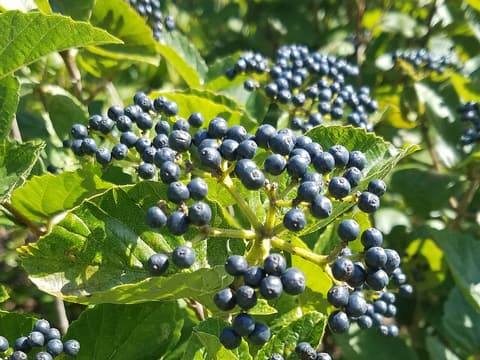
Nannyberry grows almost anywhere from zone 2 south: sun or shade, wet or dry, sand or clay. Flat white flower heads in May become sweet, raisin-like fruit in September that birds and people both eat. It reaches small-tree size and makes an excellent tall screen or hedgerow anchor. The blue-black fruit hangs on the branches into winter. Good for the inner row of a windbreak or a bird thicket along a seasonal creek.
Size, growth and what to expect
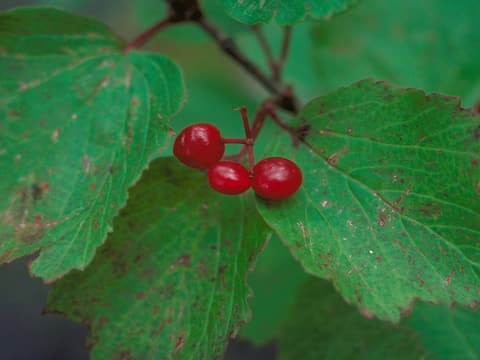
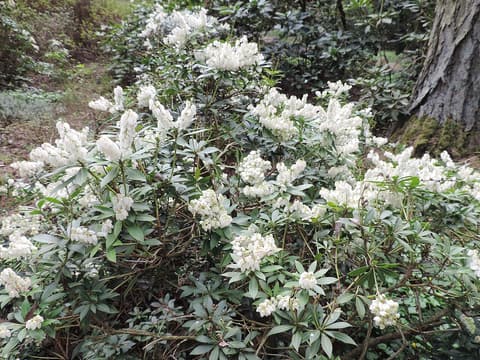
Nannyberry's half-inch oval fruits hang in clusters and turn from green through yellow and pink to blue-black in September, sweet and edible with a single flat stone. It grows at a medium pace, roughly a foot and a half a year in its youth on an average site, which is the rate our growth estimator uses for it. It makes a multi-stemmed shrub or small tree of 15 to 18 feet and 8 to 10 feet wide, leggy at the base and suckering.
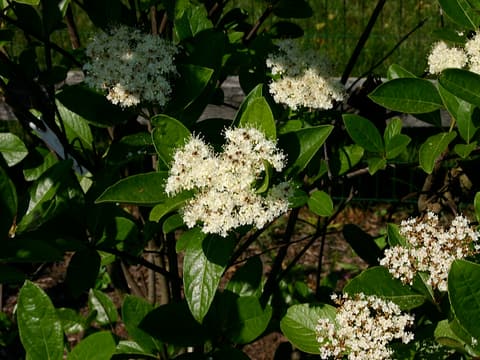
The flowers come in late May in flat-topped creamy clusters 3 to 4 inches across. Cedar waxwings, brown thrashers, ruffed grouse, chipmunks and red squirrels take the fruit. The USDA Plant Guide lists sheepberry among its names and notes that the ripe fruit smells of wet sheep's wool as it rots.
It grows wild from New Brunswick and Quebec west to Saskatchewan and south to Colorado, Nebraska, West Virginia and Pennsylvania, in low woods, swamp borders and rich valleys near streams. It transplants easily.
How to grow Nannyberry
Nannyberry grows in sun, part shade or shade, on dry, average or wet ground, and it is not fussy about soil. Sun brings the heaviest flowering and fruit. It reads as a small tree at full size, so leave 8 feet from a building and set a hedgerow 6 to 8 feet apart.
Plant during the dormant season. Saplings arrive bare-root or potted. Open a hole twice the root spread, hold the crown at the soil surface, put back the soil you dug, and lay mulch short of the stems. It stands without a stake. Seed has a double dormancy. It roots during about five months of warm, damp conditions, and then three months of cold lets the shoot grow. Sow cleaned seed outdoors in spring or early summer, half an inch deep, and seedlings come up the following spring.
Water weekly through the first summer in dry stretches. Deer browse young viburnums hard, so cage new plants until they clear browse height, and check for voles under winter mulch. Prune right after flowering, because next spring's buds form on this year's wood.
For fruit, plant more than one seedling, since viburnums set far better with a second, unrelated plant nearby. Cut suckers out for a single-stemmed tree. Powdery mildew whitens leaves late in summer in still, shady spots, which looks poor and does little harm. In the Northeast and Great Lakes, watch for viburnum leaf beetle.
Heights and zones are typical ranges for the species in cultivation; local conditions and seed source shift them.
Sources (12)
- USDA NRCS Plant Guide, Nannyberry
- NC State Extension Gardener Plant Toolbox, Viburnum lentago
- University of Maine Cooperative Extension, Bulletin 2583, Nannyberry Viburnum
- USDA NRCS PLANTS Database: Viburnum lentago
- USDA NRCS Plant Fact Sheet: nannyberry, Viburnum lentago
- USDA Forest Service, Woody Plant Seed Manual (2008), Viburnum chapter, Bonner, Gill and Pogge
- Iowa State University Extension and Outreach, Forestry: Nannyberry Viburnum
- The Morton Arboretum: nannyberry
- Minnesota Wildflowers: Viburnum lentago, nannyberry
- Lady Bird Johnson Wildflower Center: Viburnum lentago
- Virginia Tech Dendrology: nannyberry, Viburnum lentago
- Go Botany, Native Plant Trust: Viburnum lentago
Plan the planting
Check your site for it What to plant with it How big, how fast How much to water How to sow it How many for a crop When it flowers and fruits When to plant it where you live How far from the house and wires How old is yours
Read before planting
- Ten planting mistakes that quietly kill trees
- Transplanting young trees: timing, water and protection
- Protecting young trees from voles, rabbits, deer and squirrels
- Native hedges, screens and windbreaks: which trees to use and how far apart to set them
- Small native trees and large shrubs for a small yard, and how to place them
- The habitat around a tree is part of the tree
We grow 11 other viburnums (Viburnum): see them all.
Grows in the same conditions
Plants that share its sun and soil
Trees to plant it under: Slippery Elm, Sugarberry and American Elm.
More like this