
Companion species
Pick one plant and see what grows with it: the natives that share its ground in the wild, and the ones that pair with it in a yard because they want the same sun, soil and climate.
In the wild
Arrowwood Viburnum grows in stream banks, the forest understory, rich moist slopes and the coast
These natives share that ground, so they will look right together and want the same care.
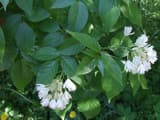 Bladdernut
Staphylea trifolia shares stream banks, rich moist slopes and the forest understory
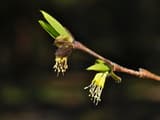 Eastern Leatherwood
Dirca palustris shares rich moist slopes, the forest understory and stream banks
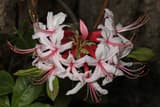 Pinxterbloom Azalea
Rhododendron periclymenoides shares the forest understory, rich moist slopes and stream banks
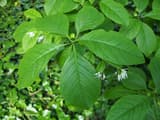 White Fringetree
Chionanthus virginicus shares stream banks, the forest understory and rich moist slopes
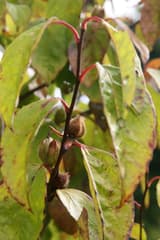 Mountain Camellia (Mountain Stewartia)
Stewartia ovata shares stream banks, rich moist slopes and the forest understory
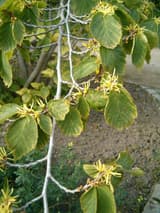 Witch Hazel
Hamamelis virginiana shares the forest understory, rich moist slopes and stream banks
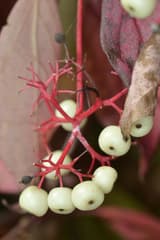 Gray Dogwood
Cornus racemosa shares stream banks and the forest understory
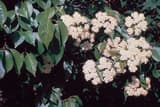 Nannyberry
Viburnum lentago shares stream banks and the forest understory
In the yard
Trees to plant it under
Arrowwood Viburnum takes some shade, so it can live beneath these.


How the matches are made
Every species we grow is tagged with the natural communities it lives in: floodplain forests, swamps, stream banks, rich slopes, dry ridges, sandy barrens, rocky ground, old fields, the forest understory, the mountains and the coast. Wild neighbors are the species that share one or more of those tags, with the closest matches first. Yard pairings use the plant's own needs instead: overlapping hardiness zones and soil moisture, and for the shade pairings, a size difference of at least two classes and a smaller plant that tolerates part shade or shade.
Sharing a habitat tag does not mean two plants always grow side by side, and a tag says nothing about how far apart to plant them. Use the planting-site check for the spot itself, and the growth estimator for how much room each one will want in twenty years.