Photo: Steve Law, CC BY-SA 2.0, cropped · Wikimedia Commons
Bristly Locust (Rose Locust)
Scientific name: Robinia hispida
Also called moss locust.
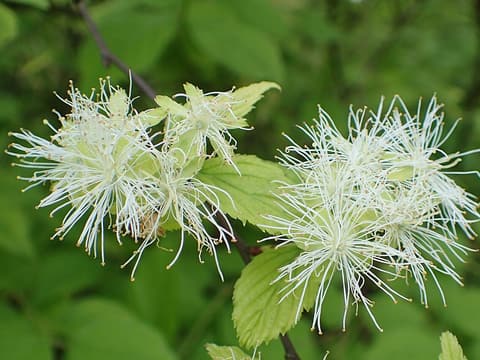
Rose-pink wisteria-like flowers in May on a suckering, nitrogen-fixing shrub for dry banks.
Be first when bristly locust is priced
Saplings ship bare-root or in a pot, usually 12 to 18 inches tall, in the dormant season, and their height and age are stated here with the price, once available.
We grow it as saplings. One email when it is listed with prices, and nothing else. Or ask, and we reply with what is ready now. Live plants ship February to May and October to November.
Limited timeSign up now and get 10% off when it is ready.
Share: copy link
Bristly Locust at a glance
- Type
- Shrub
- Mature height
- 3–8 ft
- USDA zones
- 5–8
- Growth rate
- Fast
- Flowers
- May
- Fruit
- Pods, July to September
- First crop
- About 2 years
- Mature spread
- 15 ft
- Sun
- Full
- Soil moisture
- Dry, Average
- Grows wild in
- Dry uplands, sandy barrens, old fields and edges
- Native range
- 8 states, north to Maryland, south to Georgia and west to Alabama Also recorded, not native, in 33 other states (listed above). See what is native in your state
List all 8, and the 33 others
Alabama, Georgia, Kentucky, Maryland, North Carolina, South Carolina, Tennessee and Virginia
Also recorded, not native, in Arkansas, California, Colorado, Connecticut, Delaware, Florida, Illinois, Indiana, Iowa, Kansas, Louisiana, Maine, Massachusetts, Michigan, Minnesota, Mississippi, Missouri, Nebraska, New Hampshire, New Jersey, New Mexico, New York, Ohio, Oklahoma, Oregon, Pennsylvania, Rhode Island, Texas, Utah, Vermont, Washington, West Virginia and Wisconsin.
Bristly locust is native to the southern Appalachians and has naturalized widely on road cuts and mine spoil, where its running roots hold loose soil. The flowers are as showy as any garden shrub. Good for a bee planting on gravel, or for lining a long driveway where it can run.
Size, growth and what to expect
Bristly locust is a colony more than a shrub. In a yard expect stems of 3 to 8 feet, though wild plants can reach 10, and a clump spreads 5 to 15 feet wide by root suckers. It grows fast, nearly three feet of new height a year on an average site in our growth estimator's model. It usually begins to flower in its second year.
Rose-pink pea flowers hang in clusters 2 to 4 inches long in May, and the name rose locust comes from that bloom. Bristly purple pods 2 to 3 inches long follow, each holding three to five seeds, and the stiff hairs on the branches, stalks and pods are what bristly means. Native bees and honey bees work the flowers, and highway crews have planted it to hold dry sand and to serve as a snow fence in the north.
It grows wild in the mountains from Virginia to Kentucky and south to Georgia and Alabama, in open woods, on mountain slopes and on sand hills, and it has spread far beyond that range.
How to grow Bristly Locust
Bristly locust needs full sun and dry to average soil; sand, road cuts and mine spoil suit it. The roots run, so plan on a colony several times wider than the stems are tall, and keep it away from lawn edges and beds. Set plants 5 to 15 feet apart.
Plant in the dormant season. Saplings ship bare-root or in pots, and because they start as rooted suckers the roots are shallow and wide. Dig wide rather than deep, set the crown at grade, refill with the soil you removed, and water it in. Mulch lightly, off the stems, and skip the stake.
Water through the first summer only. This shrub fixes its own nitrogen, so do not feed it; rich ground only makes it run harder. Rabbits and deer browse new shoots, so cage a young plant for its first two winters, then cut winter-killed tips back in spring.
Stems and pods carry stiff reddish bristles that catch on skin and clothing, so wear sleeves around it. The wood is brittle and breaks in ice and wind. It seldom sets seed, spreading instead by root suckers, which holds a bank and overruns a border. Wisconsin restricts its sale and transport, so we do not send it there.
Heights and zones are typical ranges for the species in cultivation; local conditions and seed source shift them.
Sources (9)
- NC State Extension Gardener Plant Toolbox: Robinia hispida
- Missouri Botanical Garden Plant Finder: Robinia hispida
- Lady Bird Johnson Wildflower Center: Robinia hispida
- Virginia Tech Dendrology: bristly locust, Robinia hispida
- Illinois Wildflowers (John Hilty): Bristly Locust, Robinia hispida
- USDA Forest Service, Woody Plant Seed Manual (2008), Robinia chapter
- Go Botany (Native Plant Trust): Robinia hispida, bristly locust
- The Morton Arboretum: Bristly locust, Robinia hispida
- NatureServe Explorer: Robinia hispida, Bristly Locust
Plan the planting
Check your site for it What to plant with it How big, how fast How much to water How many for a crop When it flowers and fruits When to plant it where you live How far from the house and wires How old is yours
Read before planting
- Ten planting mistakes that quietly kill trees
- Transplanting young trees: timing, water and protection
- Protecting young trees from voles, rabbits, deer and squirrels
- Native trees and shrubs for dry, sandy soil: the plants of barrens and dunes, and how to grow them
- Native trees and shrubs that fix nitrogen, and the legumes that do not
- The habitat around a tree is part of the tree
Other locusts (Robinia) we grow: Black Locust and Clammy Locust.
Grows in the same conditions
Plants that share its sun and soil
More like this