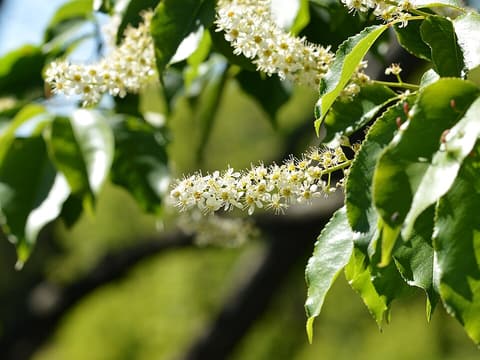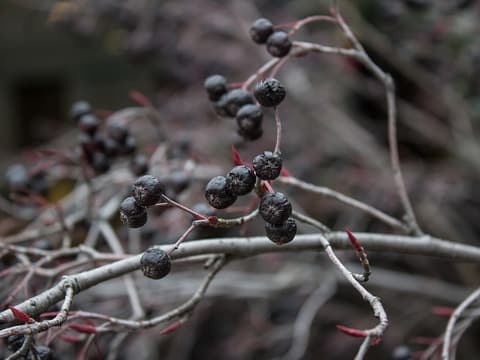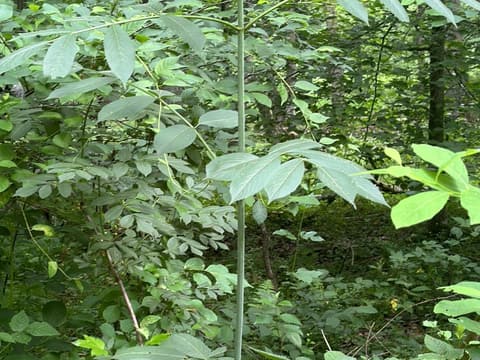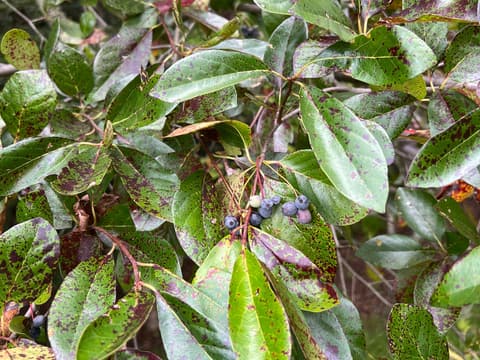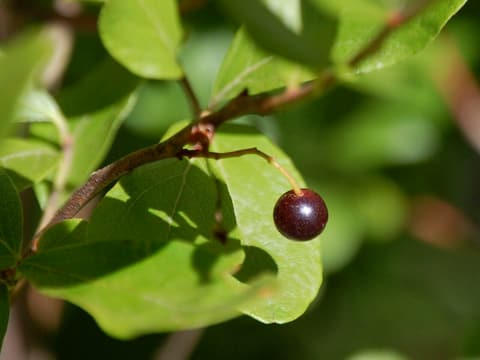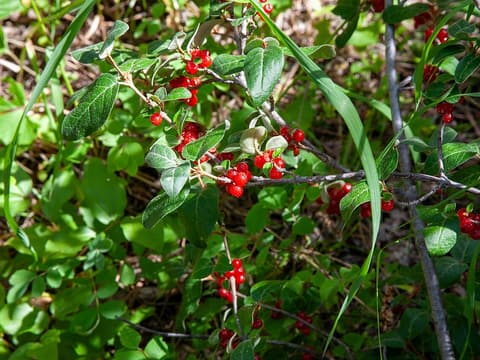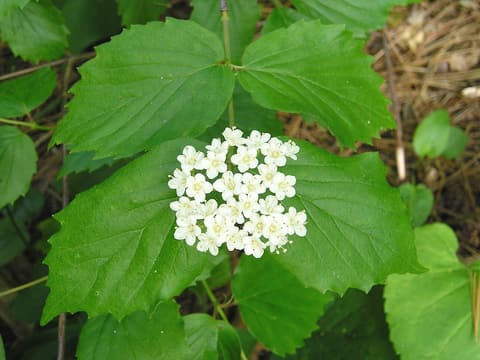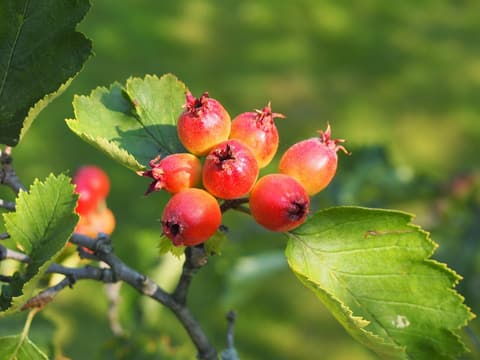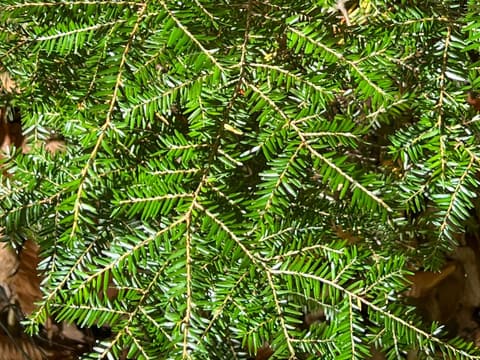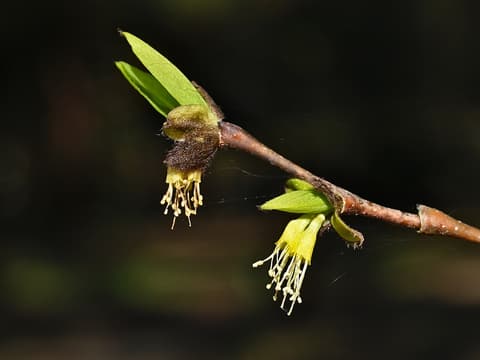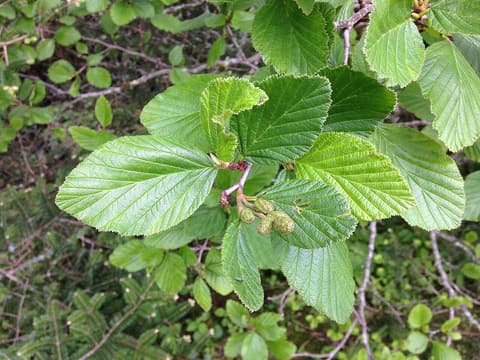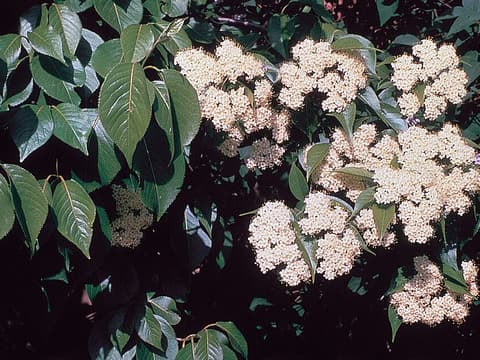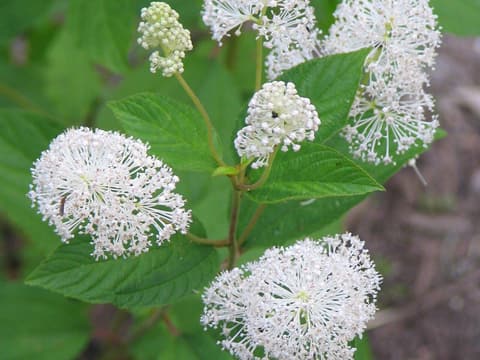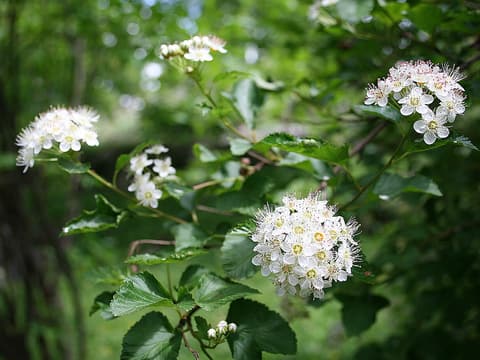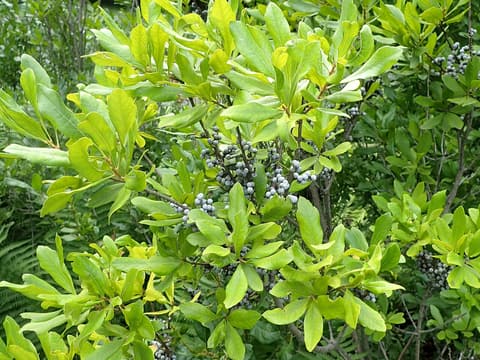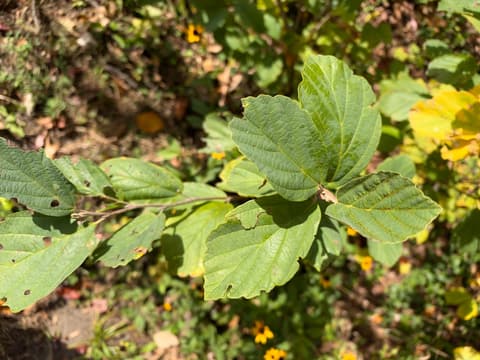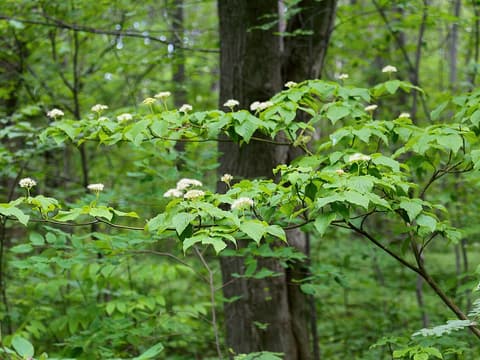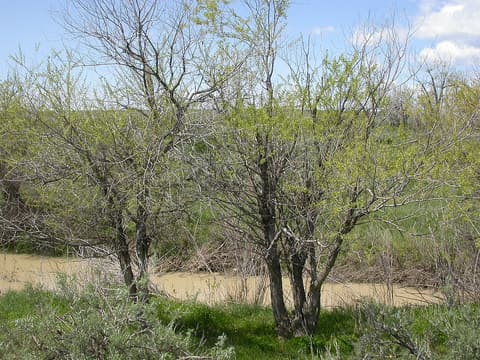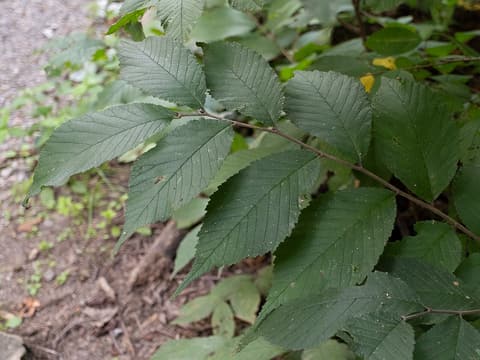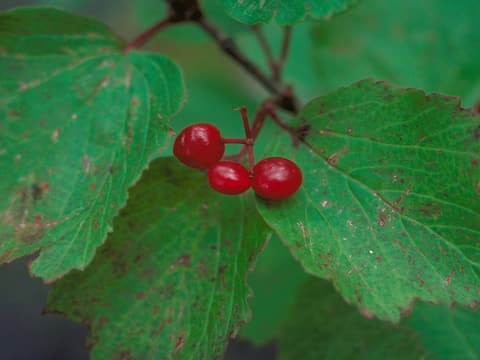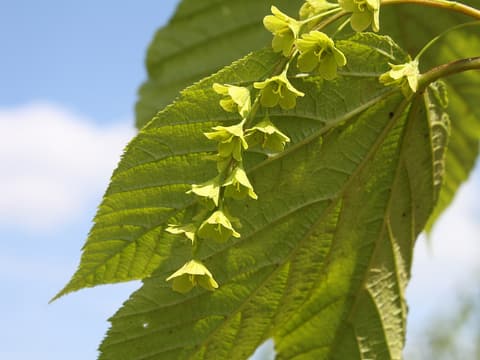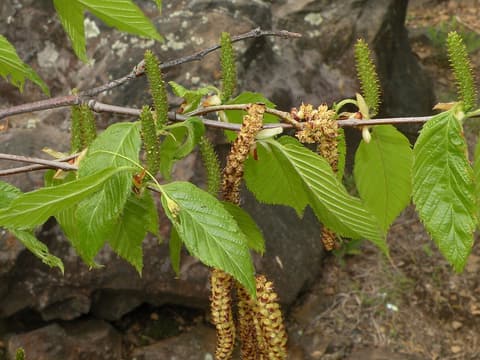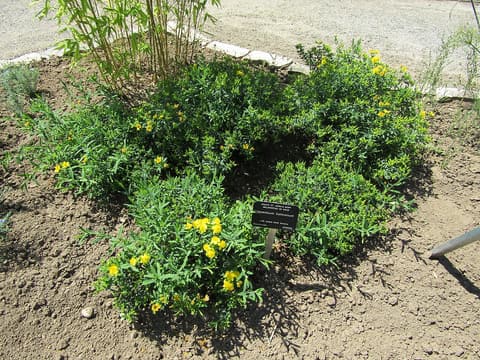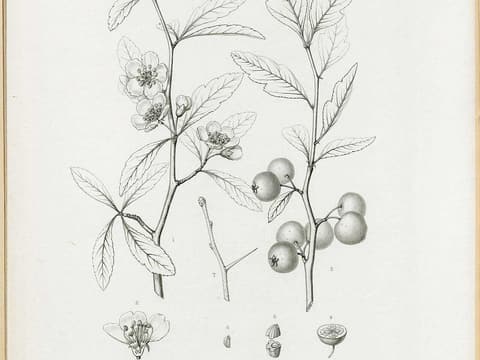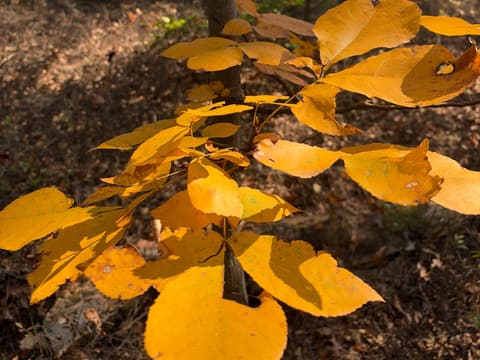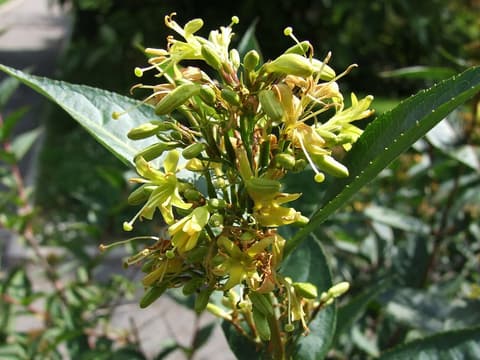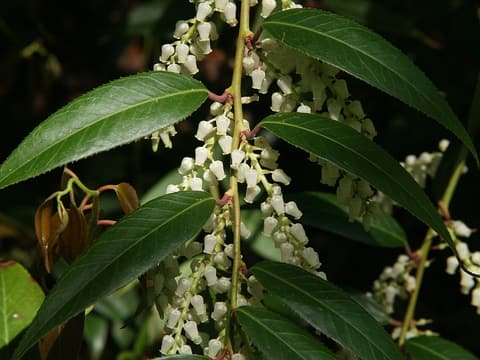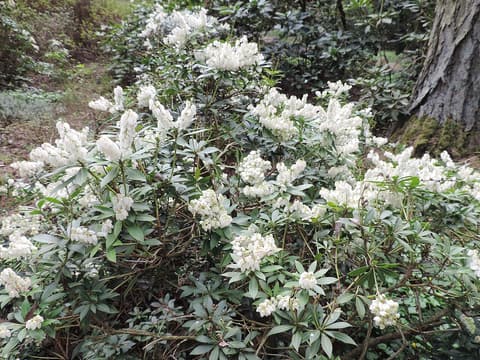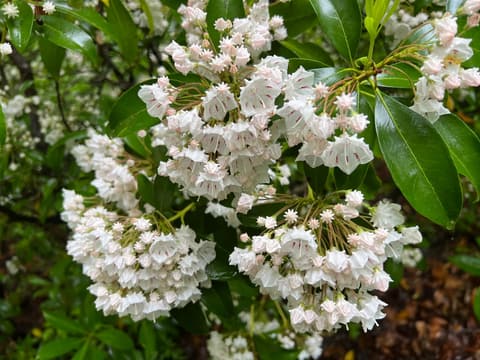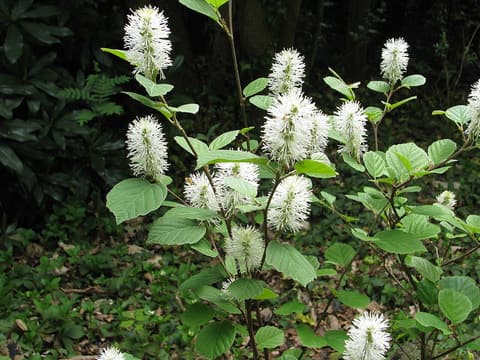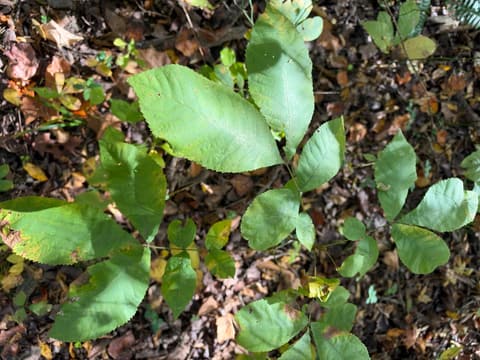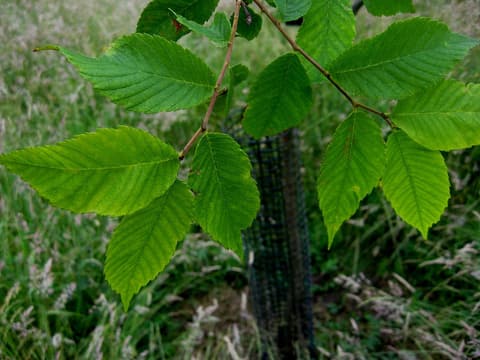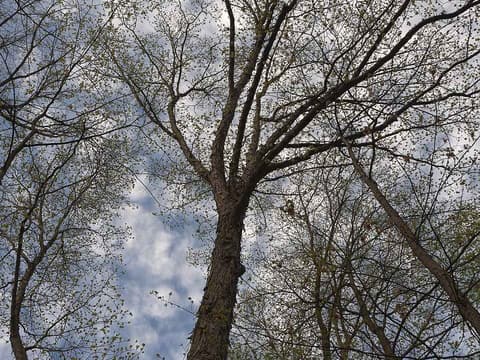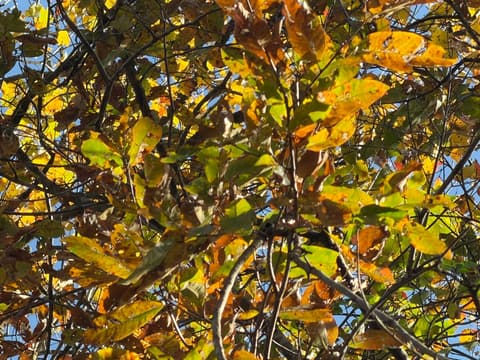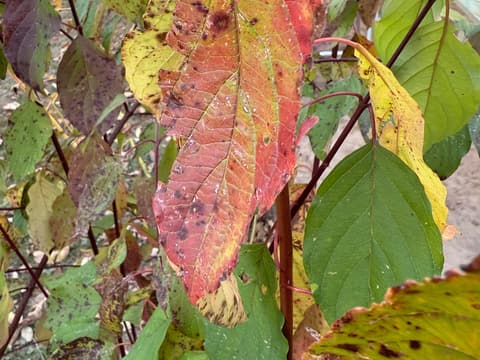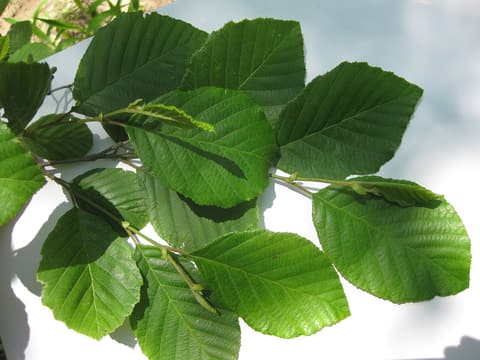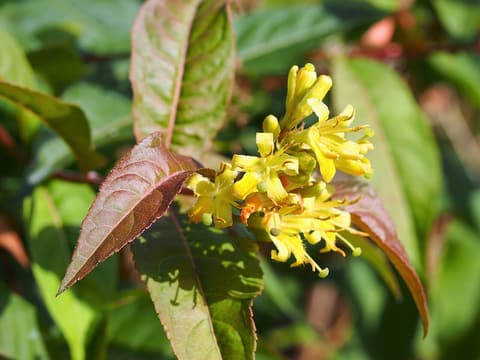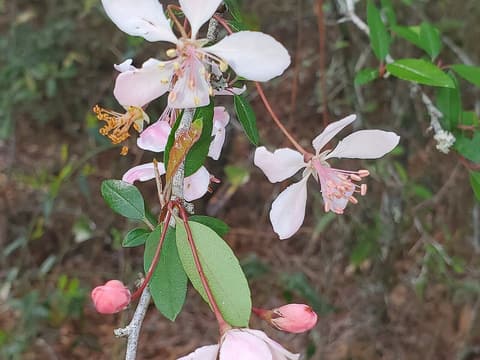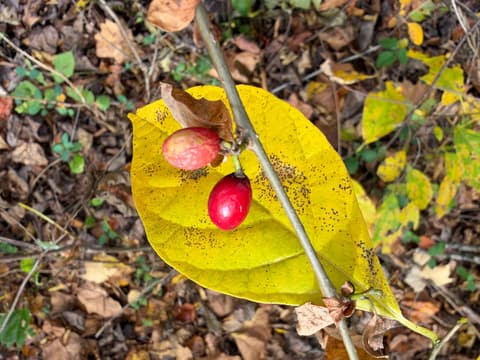
Alderleaf Buckthorn
Rhamnus alnifoliaShrubZones 3–72–5 ft
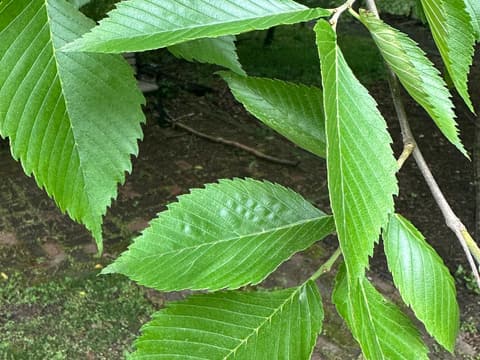
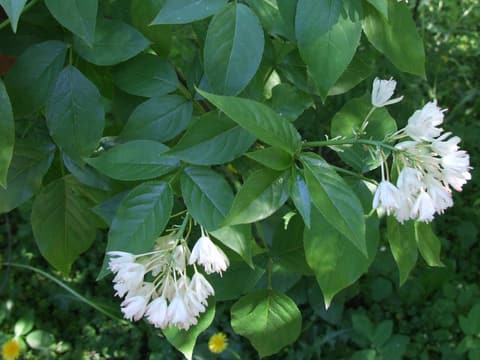
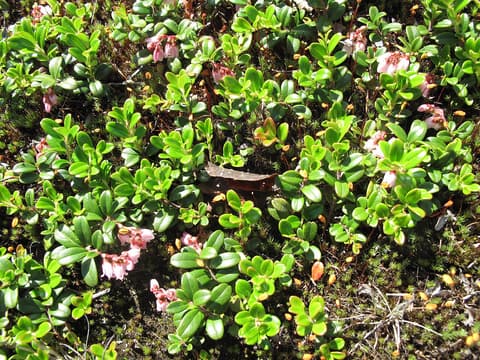
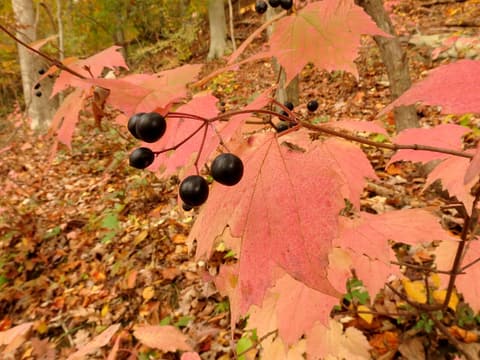
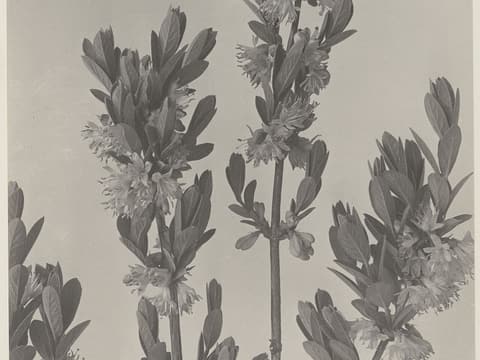
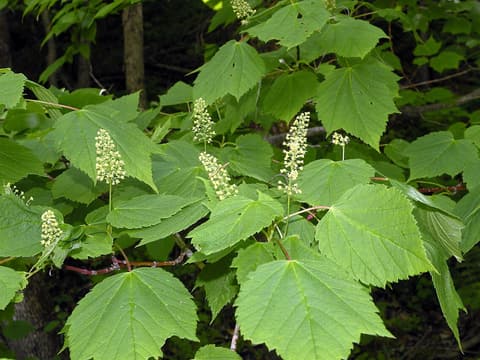
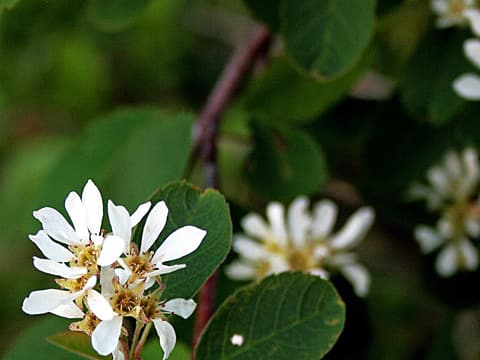
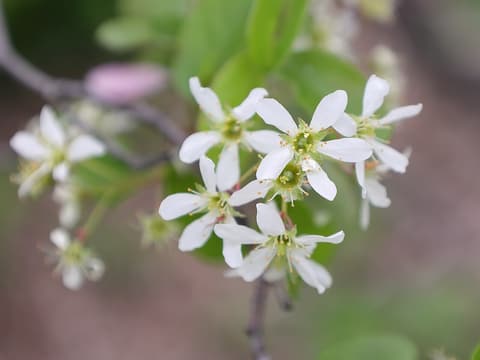
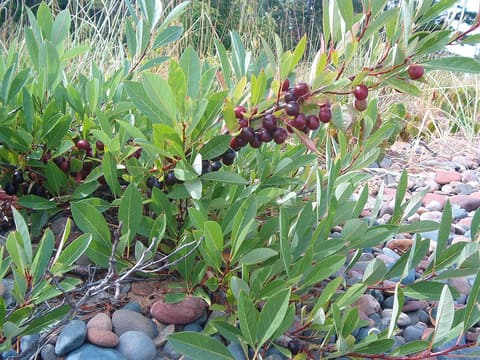
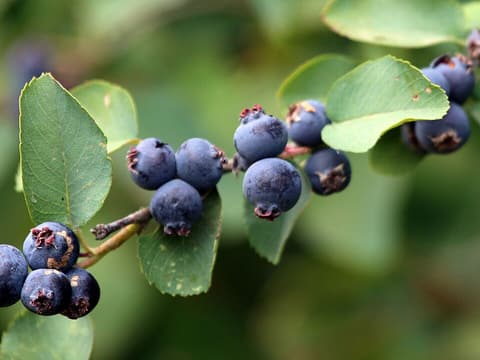
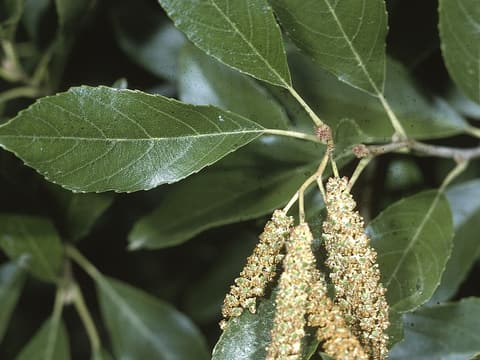
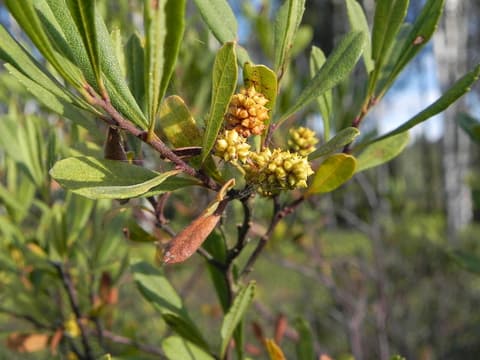
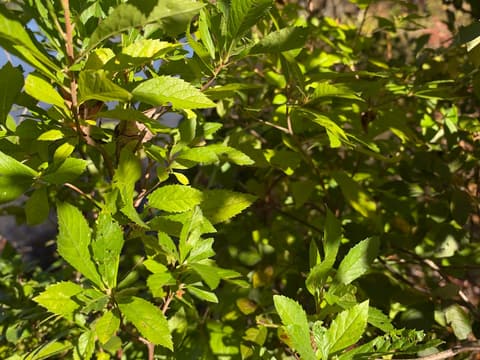
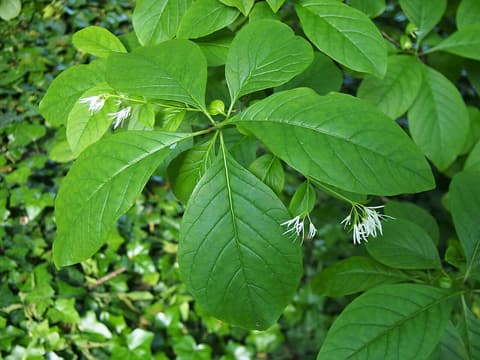
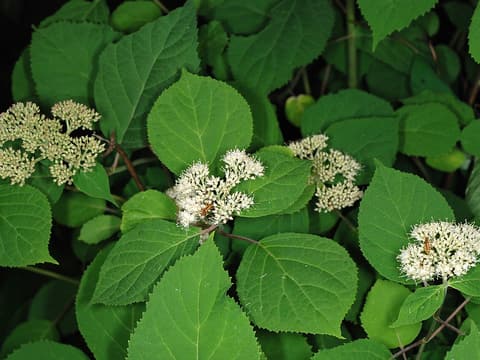
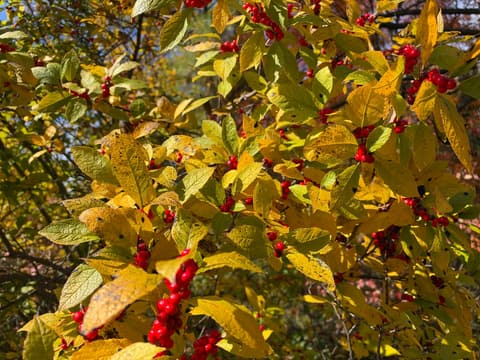
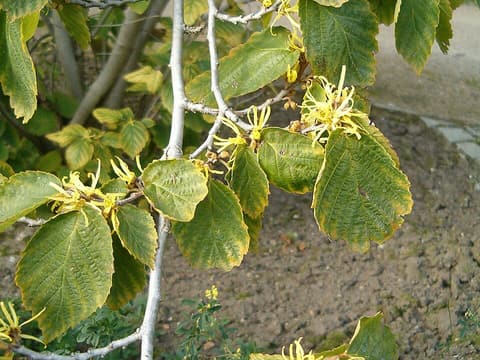
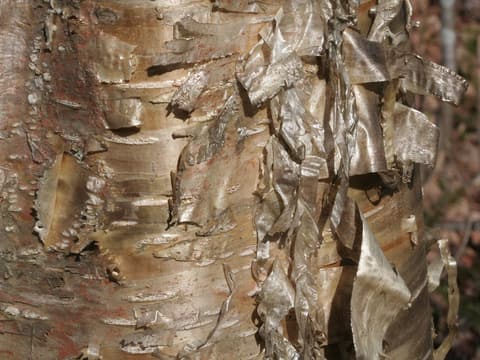
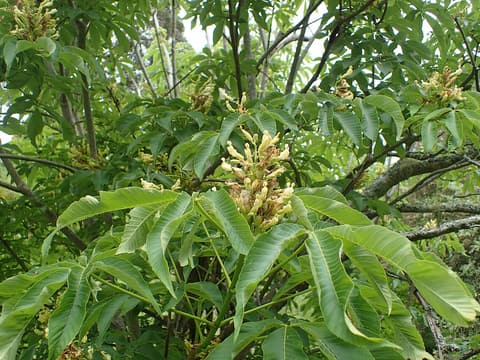
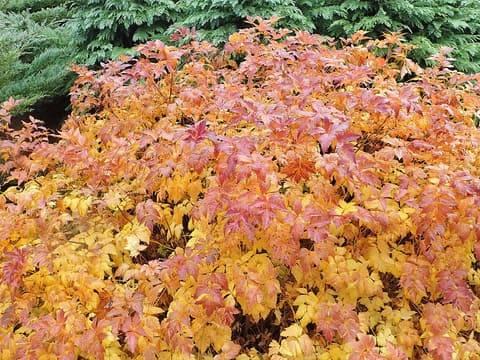
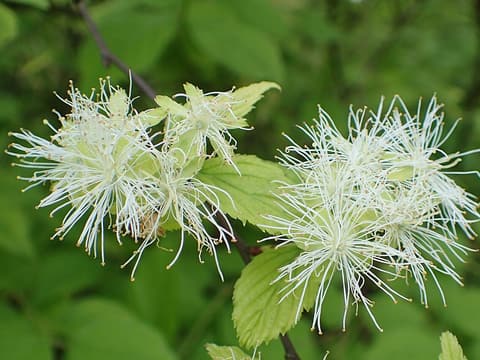
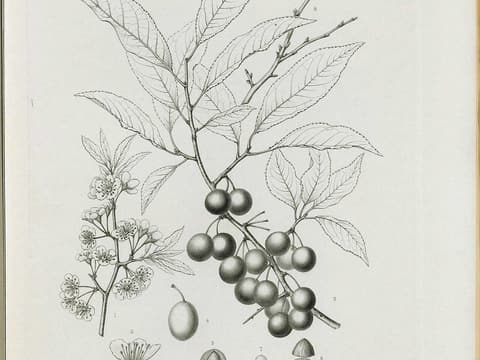
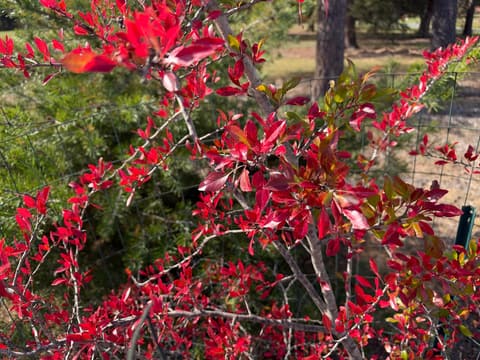
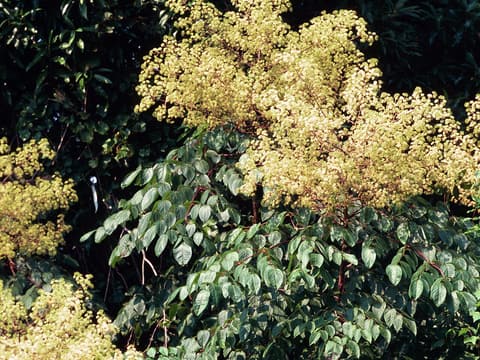
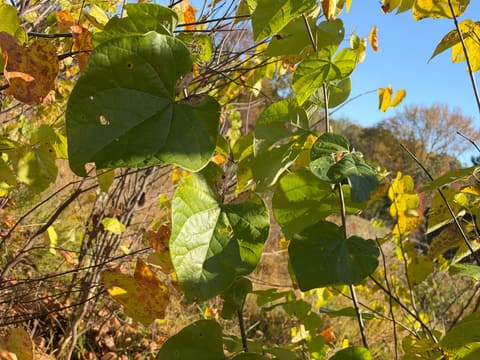
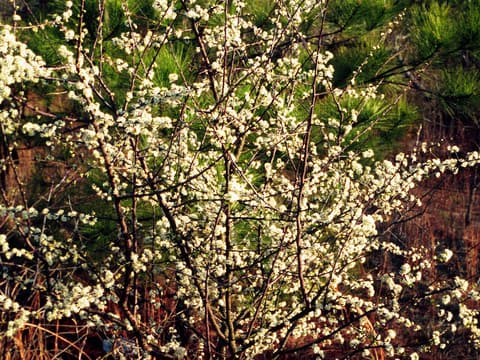
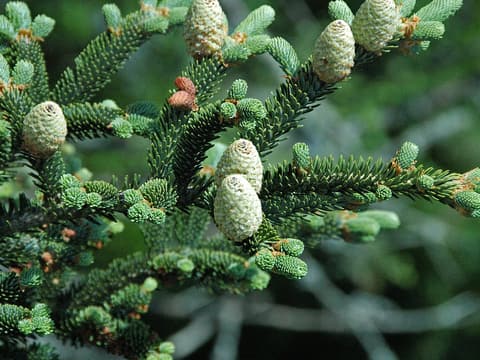
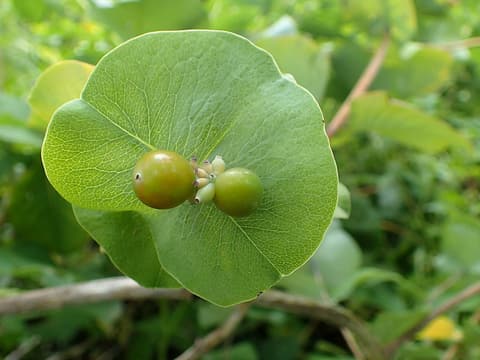
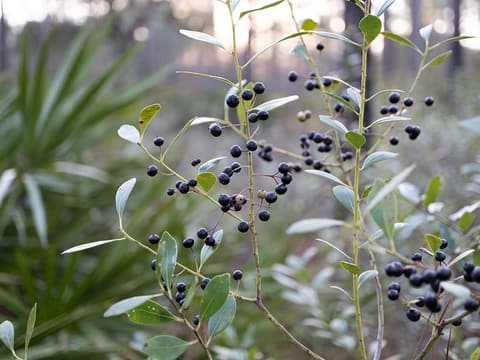
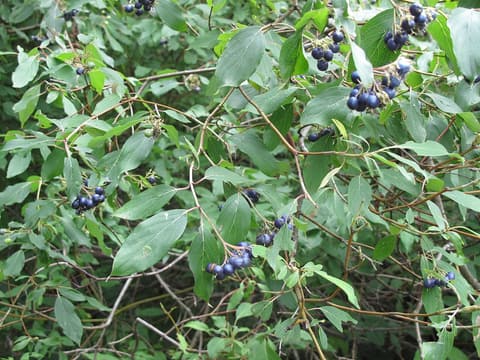
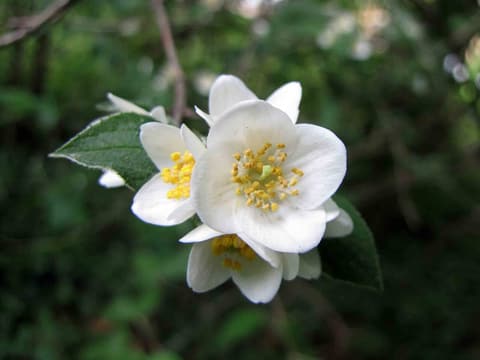
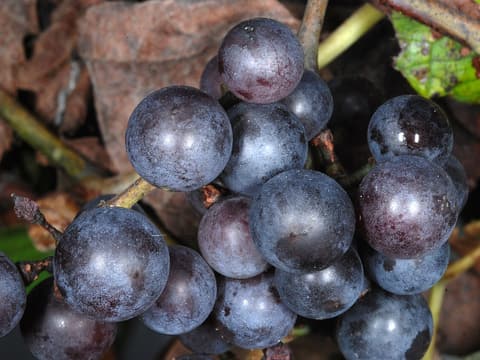
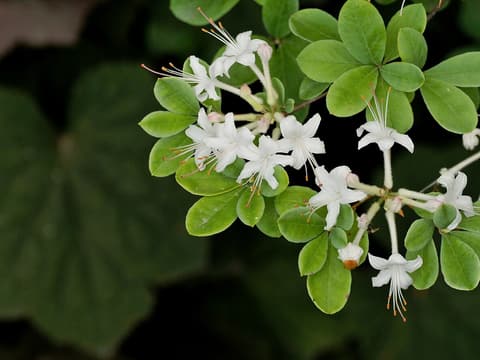
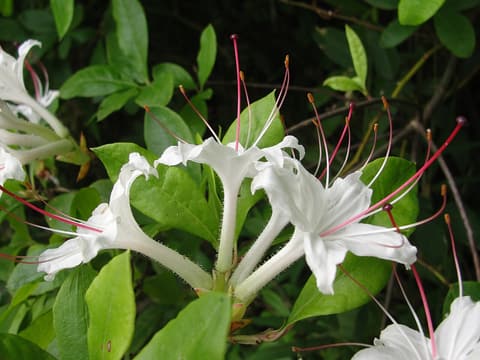
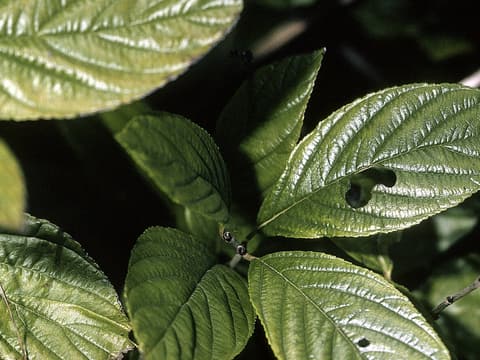
A low native buckthorn of fens, swamps and wet thickets, with alder-like leaves and black fruit for birds, at home in cold, limy wetlands.
Find the right native tree or shrub for your site by filtering on USDA hardiness zone, mature size, sun, soil moisture and what you want from each species. The list narrows as you set each filter. Every result is a tree or shrub we grow from seed, so anything it shows can be requested now and ordered once it is priced.
Best fits first: those that list your sun outright, then those that only tolerate it.
Still a long list. or set a height limit.
Want one of these? Email me when it is ready to order. Notify me
A low native buckthorn of fens, swamps and wet thickets, with alder-like leaves and black fruit for birds, at home in cold, limy wetlands.
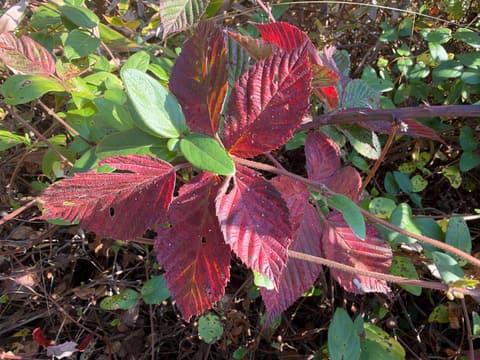
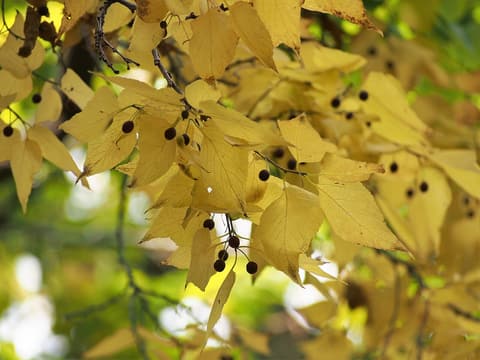
The common wild blackberry of eastern woods edges and old fields, a thorny thicket of arching canes with sweet black berries in midsummer.
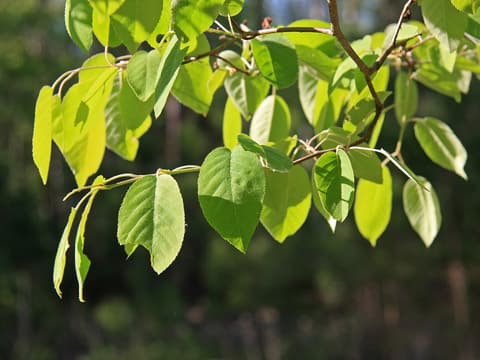
Bronze-purple new leaves under white flowers, and the sweetest fruit of the serviceberries.
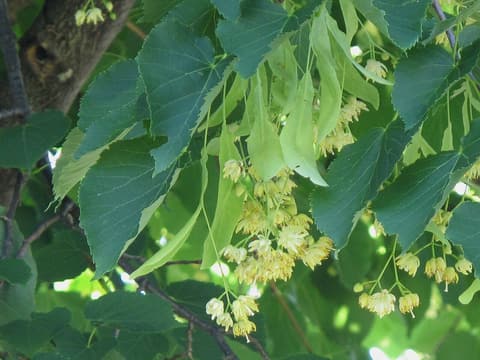
The bee tree: a broad shade tree whose fragrant June flowers hum with pollinators.
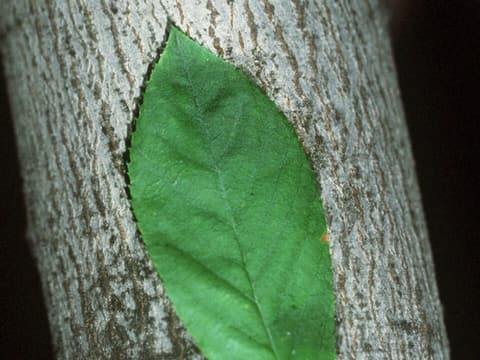
A smooth, silver-gray tree of eastern forests, with triangular nuts that feed wildlife and copper fall leaves that cling through winter.
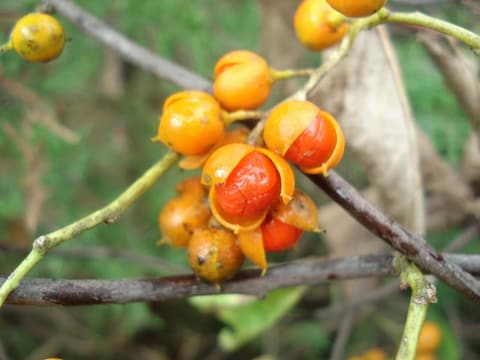
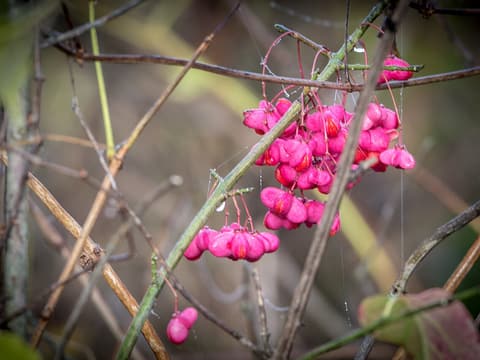
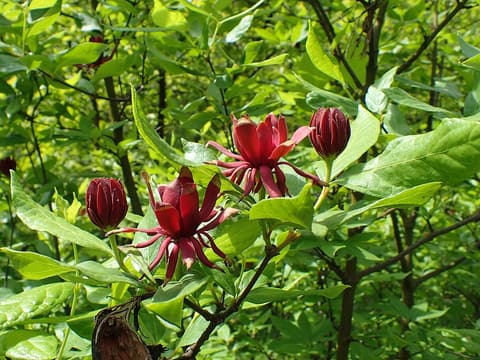
A native twining vine whose orange capsules split in fall to reveal scarlet seeds that stay showy on the vine into winter.
The great vase-shaped elm of old American streets, a fast shade tree for wet or dry ground, now best planted alone among trees of other kinds.
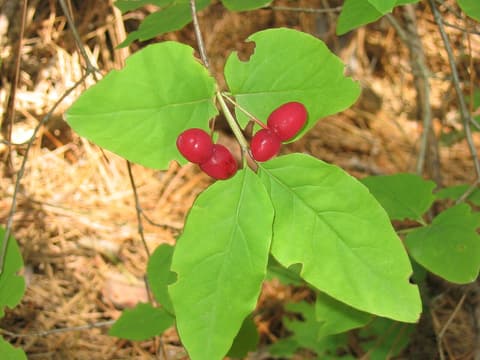
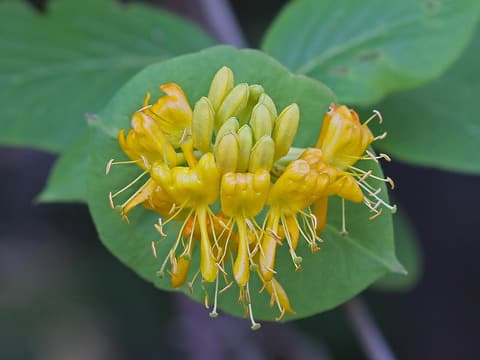
A native woodland honeysuckle of moist northern and mountain forests, with yellow flowers in pairs and twin red berries for birds.
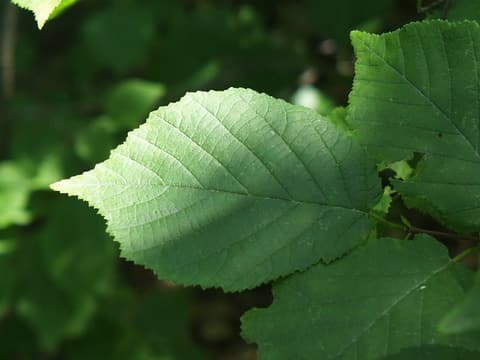
Sweet native filberts in late summer on a dense, easy hedgerow shrub.
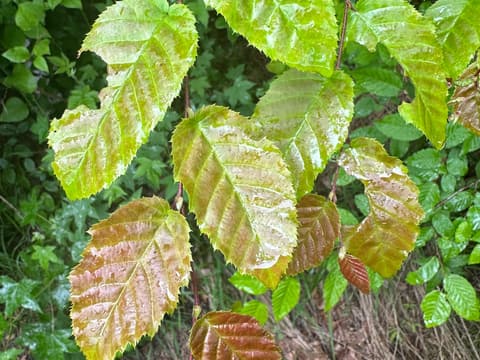
Smooth, sinewy gray trunks, orange-red fall color and complete comfort in shade and damp soil.
Flat white flower clusters, orange-red berries and brilliant fall color for cold, cool-summer regions.
A thicket-forming wild plum for dry banks and wet ground alike, with fragrant white spring bloom and tart red-yellow fruit for jelly and wildlife.
The native red raspberry of northern woods and mountain clearings, a bristly, suckering bramble with soft, sweet red berries in midsummer.
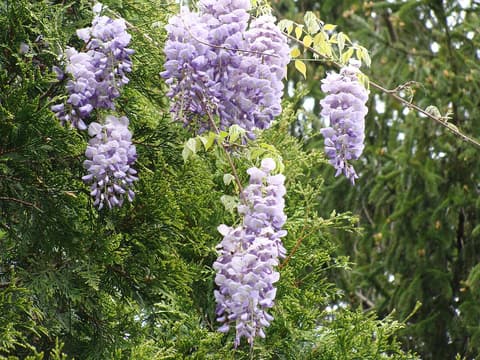
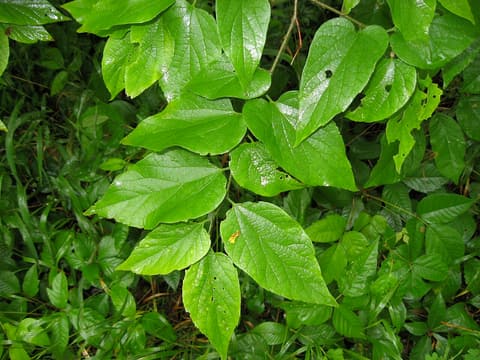
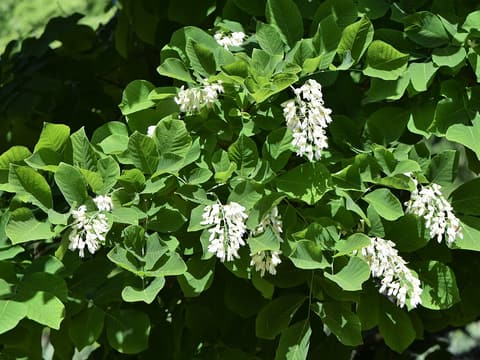
A native wisteria whose purple flower clusters open after its leaves unfold, much tamer than the invasive Asian wisterias it resembles.
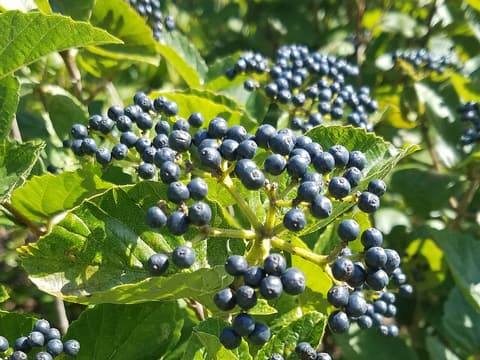
Blue-black berries nearly half fat by dry weight ripen from August for robins, bluebirds and catbirds, after flat white flower heads in May for the bees.
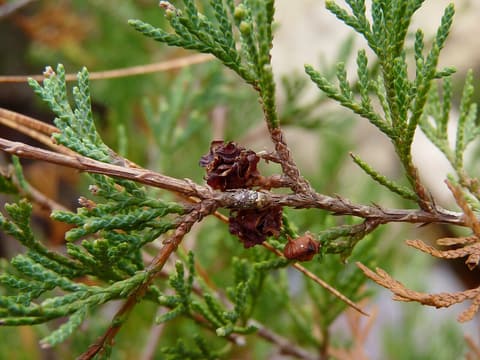
The only false cypress native to the eastern states, a narrow blue-green evergreen of coastal bogs that makes a year-round screen on wet, acidic ground.
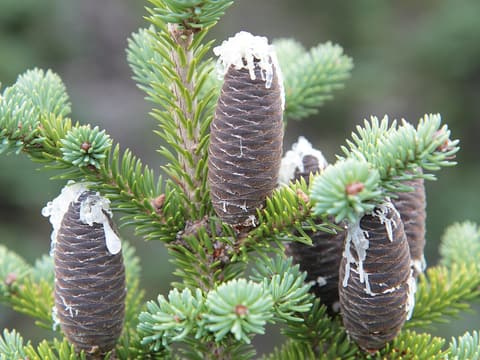
The fragrant Christmas-tree fir of the North Woods, with flat, dark needles of strong balsam scent, upright purple cones and a narrow spire of a crown.
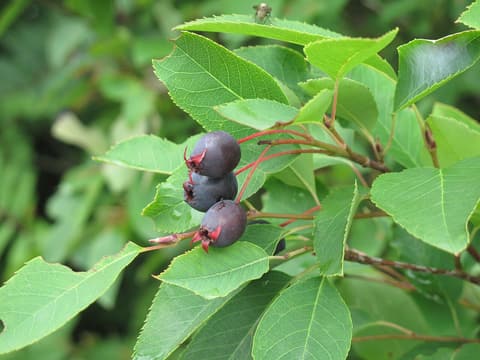
The most northern of the eastern serviceberries, a low shrub of cool bogs and mountain woods with white flowers and pear-shaped purple fruit.
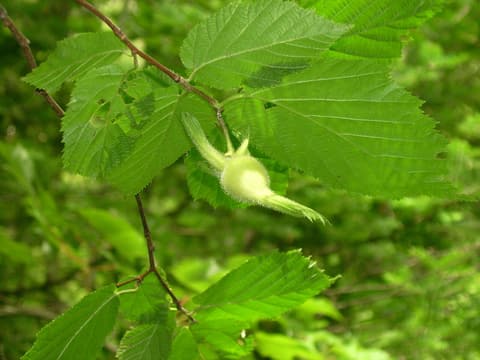
A small, suckering native hazel of northern and mountain woods, whose tasty nuts ripen inside bristly husks drawn out into a long beak.
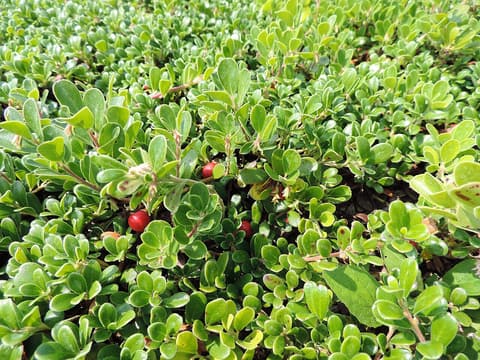
A slow, flat evergreen mat for sun and sand, with leathery leaves that bronze in winter and red berries that feed birds and bears.
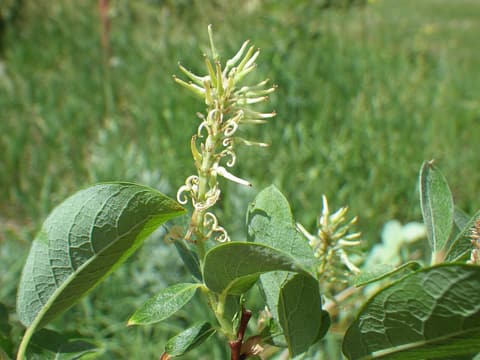
A northern willow of streams and wet meadows, the main source of carved diamond willow, with spring catkins and twigs that moose and deer browse.
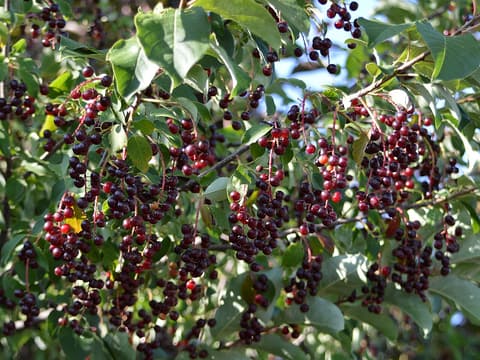
The largest native cherry, a fast-growing tree with drooping spikes of white flowers in spring and black cherries in summer for birds, bears and jelly.
White spring flowers, glossy black antioxidant-rich berries and some of the best red fall color of any shrub.
Broad white flower plates in June, purple-black berries in August, and a magnet for dozens of bird species.
Blazing scarlet fall color, superb bee forage, and one of the longest-lived hardwoods in the East.
A low, colony-forming shrub of dry acidic woods with sweet, seedy black berries and crimson fall leaves.
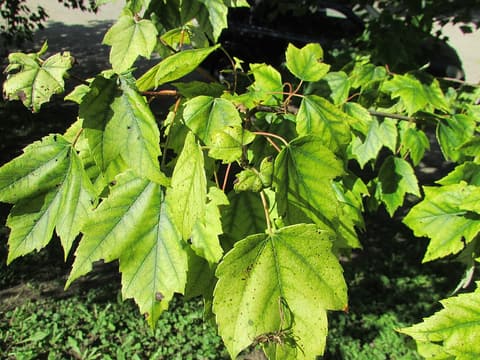
A sugar maple for warmer, drier ground, with a dense rounded crown, nearly black furrowed bark and sap that boils down to syrup.
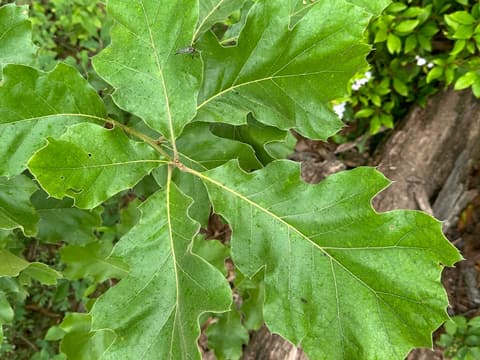
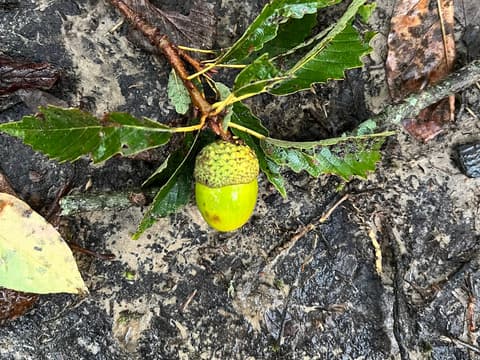
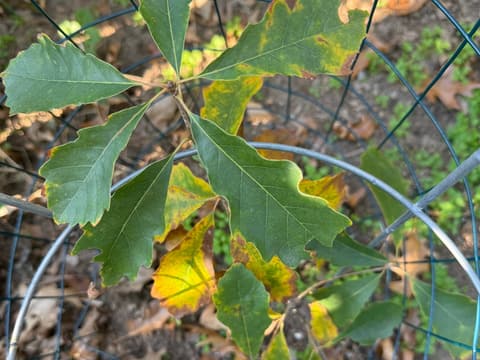
A tough red oak of dry ridges, sand and rocky slopes, with yellow inner bark once used for dye and acorns that feed turkeys and deer.
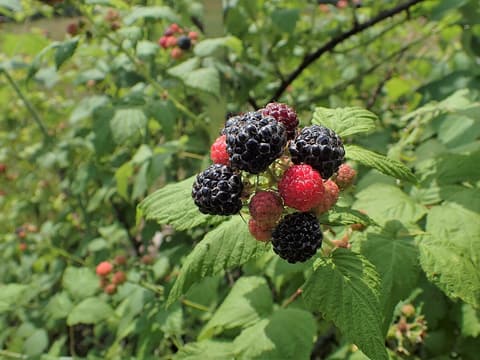
The eastern native blackcap, with arching canes dusted white and sweet purple-black berries in early summer for jam, pies and the birds.
A tough, tree-like viburnum with white spring flowers, purple-red fall color and sweet blue fruit.
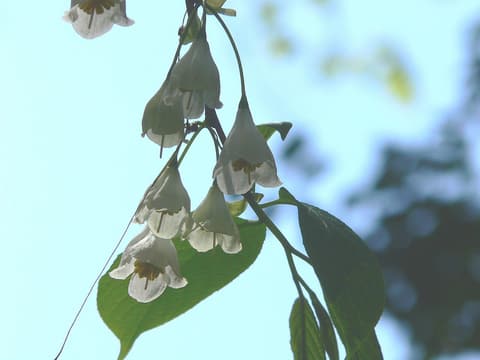
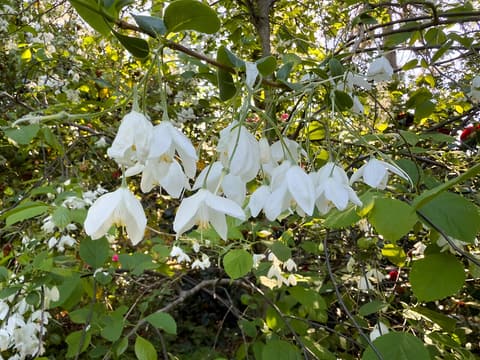
Drooping white bell flowers in May and papery inflated seed pods that rattle in the fall wind.
A dogwood only a few inches tall, with white four-bracted flowers in late spring, bunches of red berries in late summer and wine-red fall leaves.
A massive, drought-hardy oak of the prairie edge, with corky bark, a broad crown and the biggest acorns of any native oak in fringed, mossy cups.
A slow, thornless northern shrub that fixes its own nitrogen, with silvery, rust-flecked leaves and bitter red berries that bears and birds eat.
The northernmost native plum, a hardy small tree with fragrant white flowers that blush pink as they age and red to yellow plums for jam.
A low, sprawling evergreen for deep shade whose branches root as they spread, with bright red, berry-like fruit that birds eat.
A deciduous holly of northern bogs and lakeshores, with red summer berries on thread-like stalks and leaves that feed Columbia silkmoth caterpillars.
A tough, thicket-forming native cherry with fragrant white flower spikes in spring and dark red to black cherries for jelly, syrup and birds.
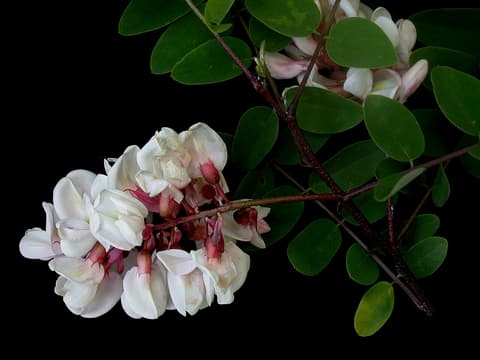
A rare southern Appalachian locust with clusters of pale rose flowers in spring and sticky glands on its twigs, leaf stalks and pods.
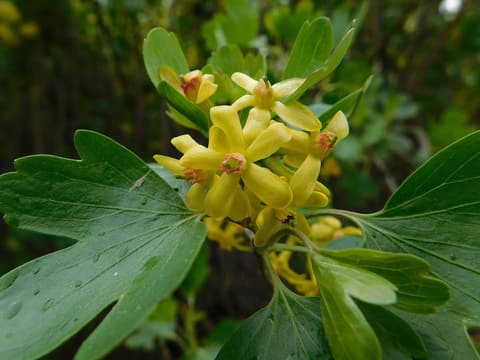
A thornless Plains currant whose golden yellow spring flowers smell of cloves, followed by sweet black berries for jam, jelly and pie.
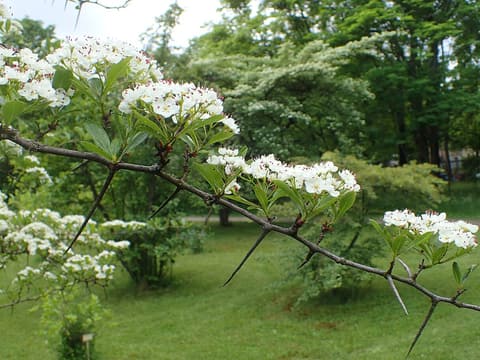
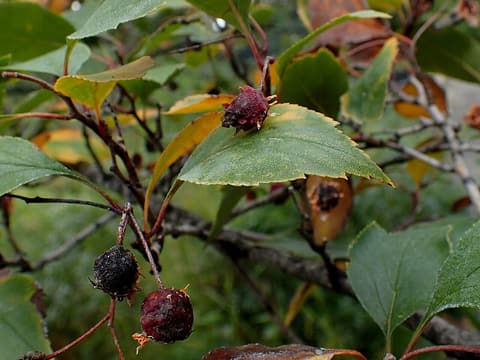
A flat-topped native hawthorn with thorns 2 to 3 inches long, white flowers in May and June, and dull red haws that often hang on until January.
Sole host of the hackberry emperor and American snout, with sweet fruit held for waxwings and bluebirds until March. A tough tree for dry or city ground.
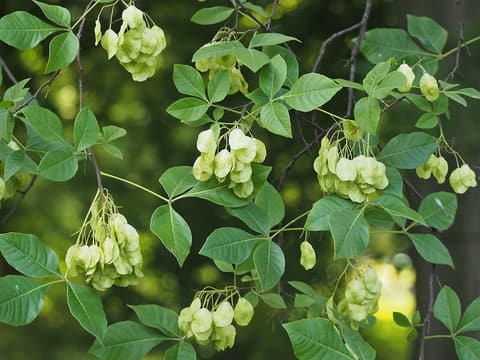
A small citrus-family tree for shade or dry rock, one of only two native giant swallowtail hosts in the Northeast. Papery wafer fruit hangs all winter.
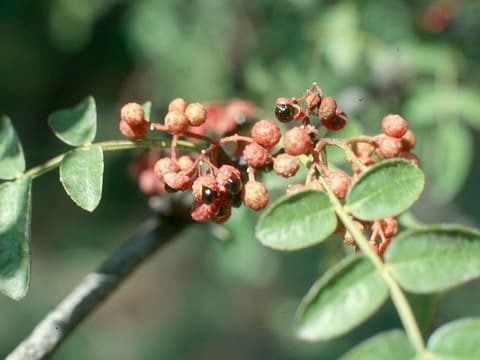
A thorny citrus-family thicket shrub, the giant swallowtail's other native host, with lemon-scented leaves and red capsules of shiny black seed.
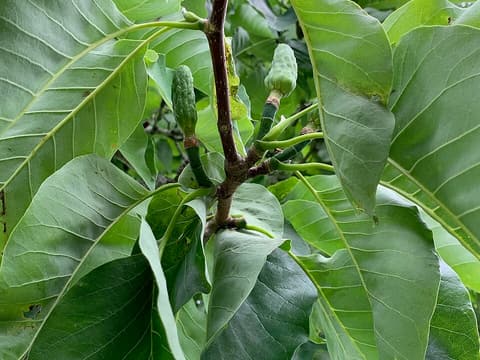
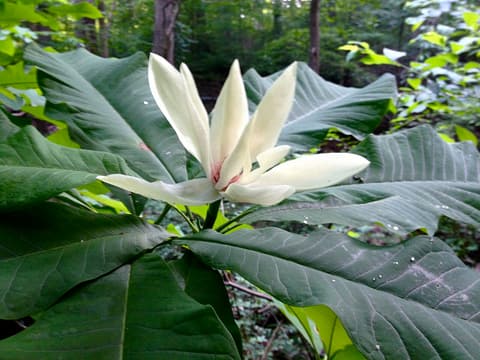
The hardiest and largest native magnolia, a fast-growing shade tree with cucumber-shaped fruit that ripens to red.
A small arrowwood for dry, shady woods, with flat white flower clusters in late spring, dark fruit for birds and purplish red fall leaves.
Missouri's state flower, a broad native hawthorn that blooms early in spring, with soft, downy leaves and red haws up to an inch across.
A graceful evergreen of cool northern woods and Appalachian ravines, with flat sprays of fine needles and tiny cones, that grows even in deep shade.
Tiny yellow flowers in the first week of spring, on a rare, slow shade shrub with bark you can tie in knots.
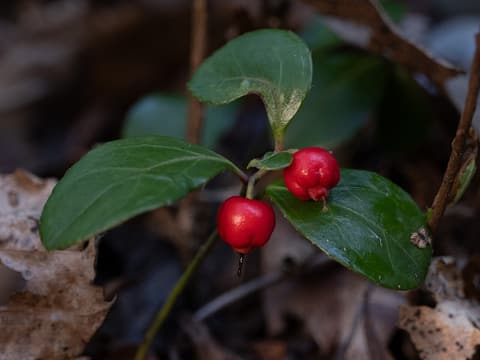
An evergreen groundcover for acidic shade, with glossy leaves that smell of wintergreen and red berries that often hang on through the winter.
A native shrub or small tree of rich woods and stream banks, with dark purple flowers, yellow to red fall leaves and pink capsules that open on scarlet seeds.
A low, thicket-forming sumac for dry banks, with lemon-scented leaves, fuzzy red fruit for birds and orange to red fall color.
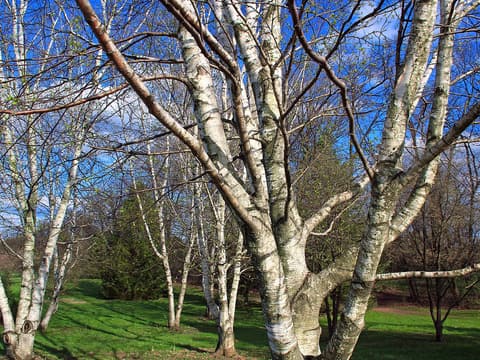
A fast, small birch with chalky white bark that does not peel, often growing as a clump of slender trunks on poor, sandy ground.
The alder of the far North, a spreading, nitrogen-fixing shrub for stream banks and poor, gravelly ground, with catkins that open with the leaves.
A native twining vine for cold northern gardens, with whorls of yellow flowers in early summer and orange-red berries in fall.
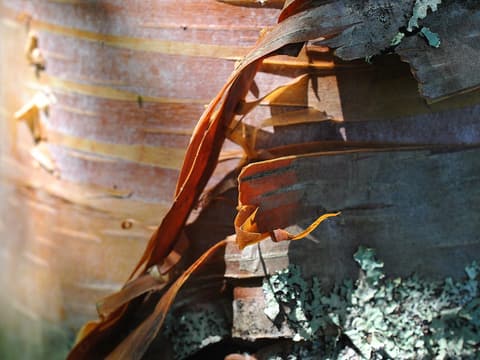
The white birch of the high mountains and the far North, with heart-shaped leaves, orange fall color and bark that peels in pinkish-white sheets.
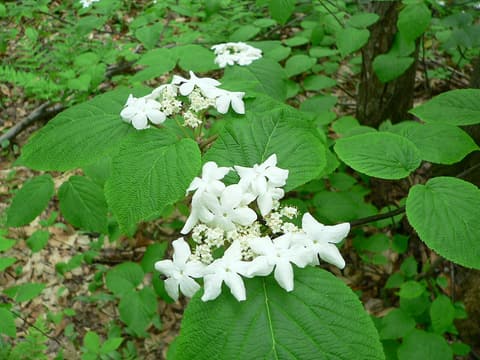
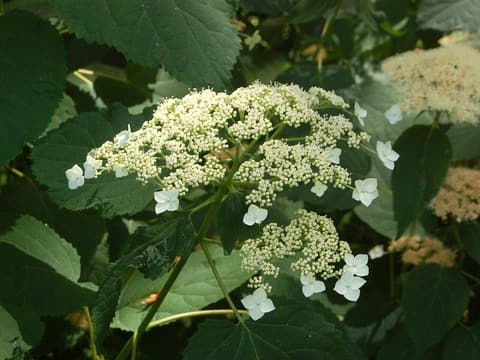
A shade shrub of cool northern woods with lacy white flower heads in spring and big heart-shaped leaves that turn bronze-red and purple in fall.
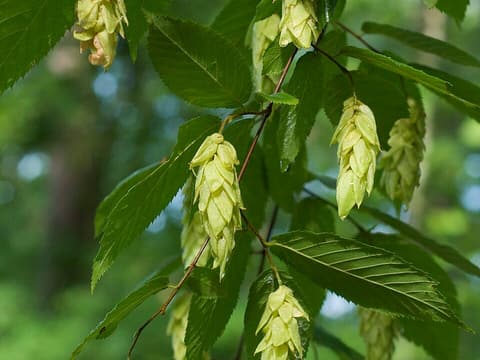
A tough, shade-tolerant tree of dry upland woods with shreddy bark and hop-like seed clusters.
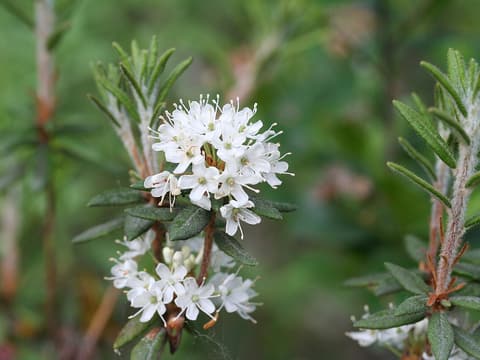
A low evergreen shrub of northern bogs, with rounded clusters of small white flowers and leathery, fragrant leaves felted rusty beneath.
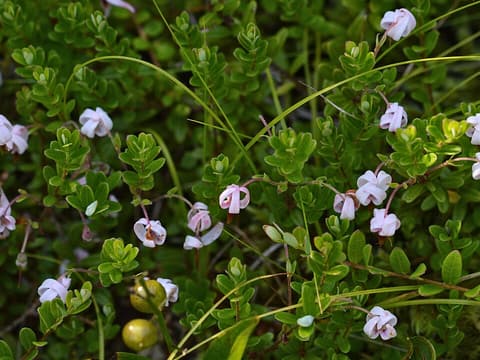
A low evergreen mat of wiry runners, with pink crane-like flowers in early summer and red fall berries, the wild parent of the cultivated cranberry.
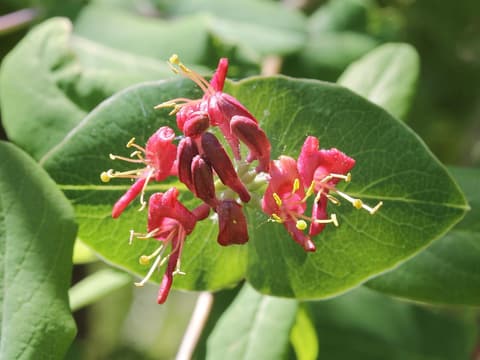
A low native honeysuckle that twines up a fence or sprawls as a shrub, with whorls of yellow to red flowers for hummingbirds and red berries for birds.
A low evergreen of northern rocks and bogs, with pink bell flowers and tart red berries for sauce and jam, for gardens with cold winters.
A small viburnum for shade, with maple-shaped leaves that turn pink, magenta and purple in fall and blue-black berries for birds.
A small native shrub of northern bogs and wet woods, a wild relative of the haskap, with paired pale yellow flowers and edible blue berries.
A shade-loving small maple with upright spikes of tiny flowers in early summer and leaves that turn yellow, orange and red in fall.
A big, adaptable viburnum with creamy flowers, edible blue-black fruit and wine-red fall color.
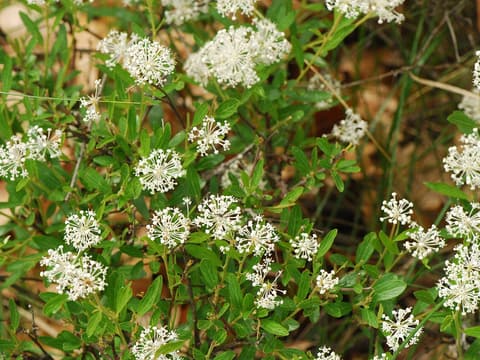
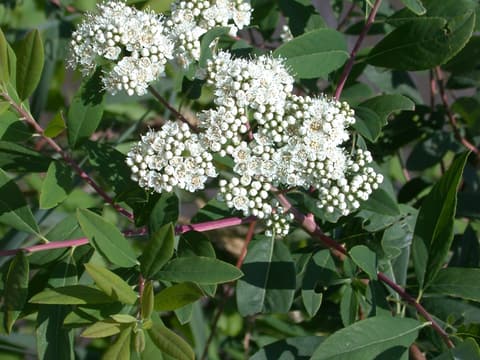
A knee-high shrub for dry, poor ground, with fragrant white flower clusters in June that feed azures, hairstreaks and two bees that use almost nothing else.
Peeling bark, white flower balls in June, and a constitution that shrugs off drought, flood and cold.
Waxy gray berries hold above the snow all winter for yellow-rumped warblers, tree swallows and quail. A salt-tolerant shrub that fixes its own nitrogen.
A fast, long-lived red oak with big, bristle-tipped leaves that turn russet to bright red in fall and acorns that feed turkeys, bears and deer.
A tough native shrub of the northern prairies that spreads into low thickets, with pink summer flowers and greenish-white berries that hang on into winter.
The wild arborvitae, a narrow, fragrant evergreen of northern cedar swamps and limestone cliffs that makes a dense screen.
Ohio's state tree, among the first to leaf out, with upright clusters of greenish yellow flowers and glossy brown buckeyes in prickly husks.
Fragrant red, orange or yellow flowers on bare branches from January into March, the first bloom of the year, on a shrub that takes floods.
A small dogwood with branches held in flat tiers like a pagoda, cream flower clusters in late spring and blue-black fruit on red stalks.
A trailing evergreen an inch or two high, whose paired white flowers join to make one red berry that often lasts the winter.
The tallest native willow of the prairie states, a fast tree for stream banks and wet ground with peach-like leaves that are whitish beneath.
The wild crabapple of the Midwest prairies, whose pink buds open to fragrant blossoms in spring before waxy green apples ripen for jelly and wildlife.
A low, prickly rose of the Plains whose stems often die back to near the ground, with clusters of pink flowers in early summer and orange-red hips into winter.
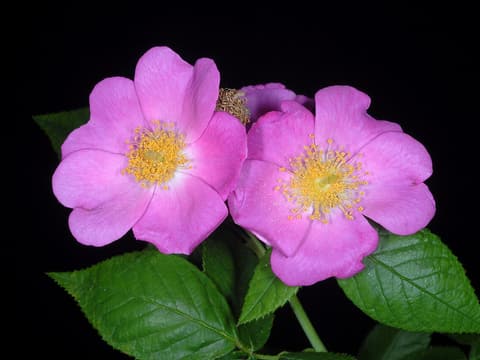
The wild rose of the northern forests, a thicket of bristly stems with fragrant pink flowers in early summer and red hips that last the winter.
A thornless bramble for part shade, with fragrant rose-purple flowers 2 inches across all summer over big, maple-like leaves.
A tall, suckering shrub of bogs and swamps with white spring flowers, glossy red fruit that hangs into winter and blazing red fall leaves.
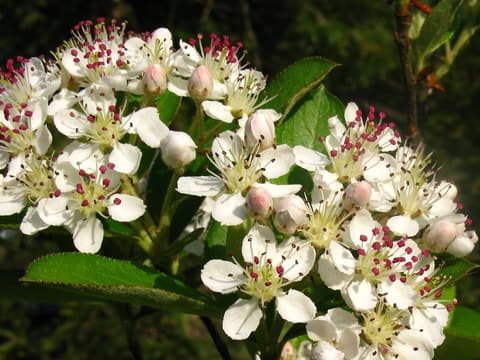
Cone-shaped white flowers in May and glowing red berries by June, the earliest berry crop for birds.
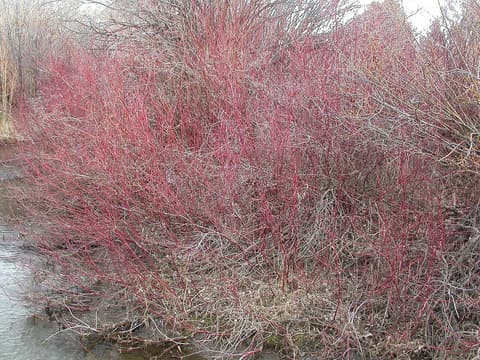
A fast, thicket-forming shrub of wet ground whose young stems turn bright red after the leaves fall and glow against snow all winter.
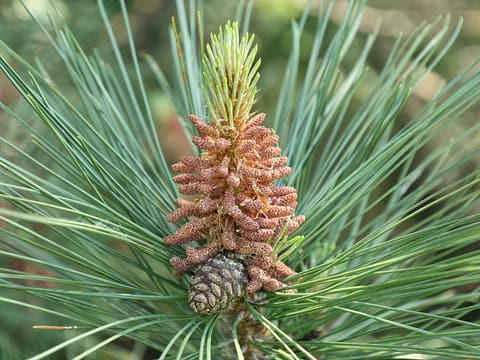
A tall, straight northern pine with reddish, plated bark and long needles in pairs, for windbreaks on dry, sandy ground where summers stay cool.
The native spruce of the Northeast and the high Appalachians, a narrow, long-lived evergreen for cool, moist, acidic ground.
Rose-purple, two-lipped azalea flowers on bare twigs in May, lighting up the bogs and wet woods of the Northeast before the leaves.
A fast birch for wet ground and southern heat, with salmon to cinnamon bark that peels in papery curls and shows all winter.
A hardy native grape vine that climbs by tendrils along streams and fences, with fragrant spring flowers and tart blue-black grapes for birds and jelly.
The elm with the hardest, strongest wood, a tall tree of limestone ridges and rich woods with corky-winged branches and seed that wildlife relish.
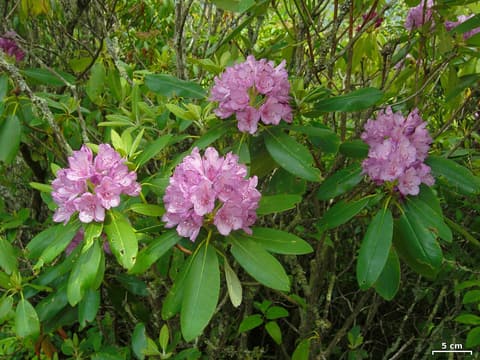
The great evergreen rhododendron of Appalachian stream valleys, with pink-white trusses in July.
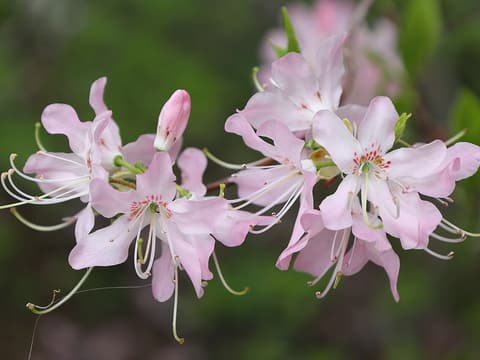
Bright pink, clove-scented flower clusters in spring on a wild azalea hardy enough to grow from southern Quebec to the Ozarks.
A shade-tolerant northern dogwood with nearly round, wrinkled leaves, flat clusters of white flowers and pale blue berries on red stalks.
A shrub of rocky slopes and sandy woods with nearly round leaves, white spring flowers and sweet dark purple fruit, rare at the edges of its range.
A low serviceberry that spreads by runners into thickets on rocky ground, with white flowers in spring and purple-black fruit for birds in summer.
A low, tough shrub of dunes, beaches and sandy prairies, with white spring flowers and purple-black cherries for jam from its second or third year.
A suckering shrub of the northern Plains and the West, with fragrant white flowers in spring and sweet purple-black berries for pies and jam.
The one native alder that blooms in fall, hanging gold catkins in August and September on a rare shrub that stands in water and feeds its own soil.
A clump-forming serviceberry of swamps and wet thickets, with upright white flower clusters in early spring and sweet purple-black berries by June.
A low evergreen shrub of northern bogs and barrens, with rose-pink flowers ringing the stems in early summer. Every part is poisonous to livestock.
A small tree of the far North, with flat clusters of white flowers and heavy bunches of scarlet berries that bend the branches and feed birds.
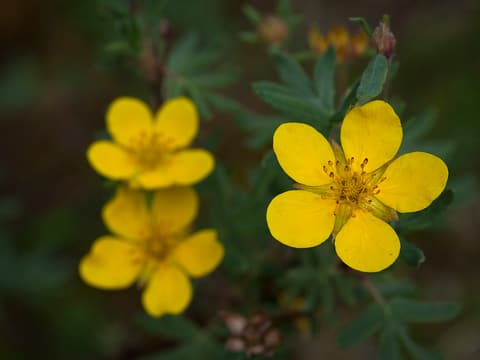
A low, rounded native shrub of northern fens and rocky shores whose bright yellow flowers open from June until frost.
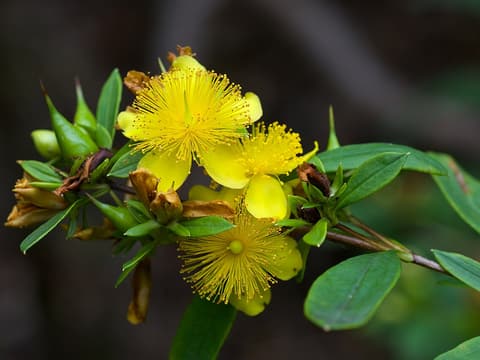
A dense, rounded shrub whose golden summer flowers each hold a brush of up to 500 stamens, above bark that peels to orange-brown.
A fast shrub willow for wet, sunny ground, with narrow leaves silky white beneath and spring catkins that native bees and honey bees visit.
White lacecap flowers from May into July over leaves that flash silver in the wind, on a woodland shrub of the southern Blue Ridge.
The elm of the slippery inner bark, a fast, shade-tolerant tree of moist slopes and bottomlands, best grown in a wild corner among trees of other kinds.
A northern viburnum with lobed leaves that turn brilliant red in fall and sour red fruit for jam, for cool, moist woods and stream banks.
A small maple for deep, cool shade, with green bark striped in white and big three-lobed leaves that turn bright yellow in fall.
Wintergreen-scented twigs, tight cherry-like black bark that never peels and clear gold fall color on the birch that feeds 284 kinds of caterpillars.
A fragrant shrub of northern bogs and lake shores, with resin-dotted leaves that smell sweet when crushed and roots that fix their own nitrogen.
Spires of intensely fragrant white flowers in August, when almost nothing else is blooming, and bees know it.
A creeping evergreen only inches high whose sweetly scented pink and white flowers open in early spring, the mayflower of New England woods.
A low wild blueberry of the North with softly hairy leaves that turn red in fall and sweet, tart blue berries from July into September.
A fast native vine that climbs by sticky pads, turns crimson early in fall and feeds birds through the winter with blue-black berries.
Clouds of fragrant white fringe in May, then blue fruit for the birds, on a small tree for any yard.
The great white oak of eastern woods, a broad shade tree that can live 600 years, with wine-red fall color and sweet acorns that wildlife seek out.
A thornless currant of moist woods and stream banks, with drooping yellow-green flowers in spring, black berries in summer and gold and crimson fall leaves.
A woodland shrub that blooms on new stems even when cut to the ground each winter, with broad heads of creamy white flowers in early summer.
Bare winter branches lined with scarlet berries, on a deciduous holly that loves wet ground.
The last flower of the year: ribbon-like yellow blooms in November as the golden leaves fall.
A long-lived shade tree for cool, moist ground, with shiny golden bronze bark that peels in thin curls and bright yellow leaves in fall.
A tall buckeye for big spaces, with upright clusters of yellow flowers that draw hummingbirds and bees in spring.
A low, suckering shrub for shady stream banks and moist woods, with leaves like celery that turn yellow and reddish purple in fall.
A rare southern shrub whose arching stems carry puffs of white flowers with no petals in spring, for a shady border or woodland edge.
A rare thicket plum of the Appalachians, with white flowers that fade to pink and small dark purple plums under a blue bloom.
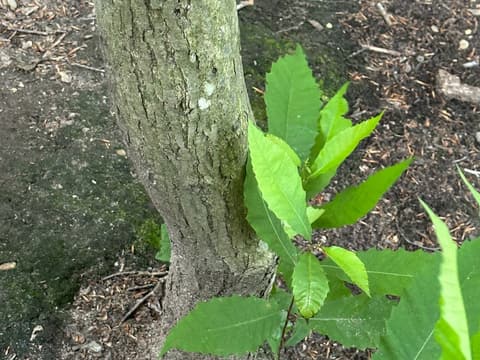
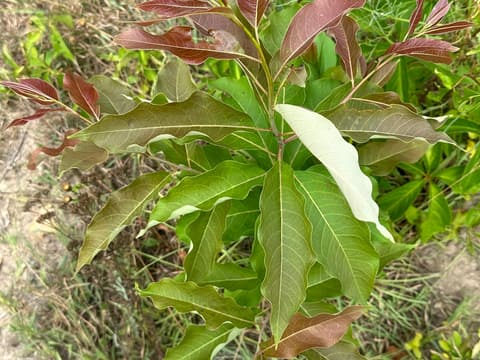
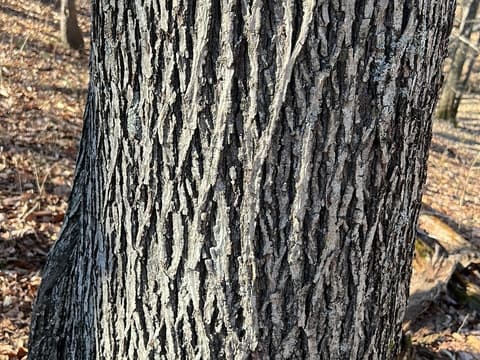
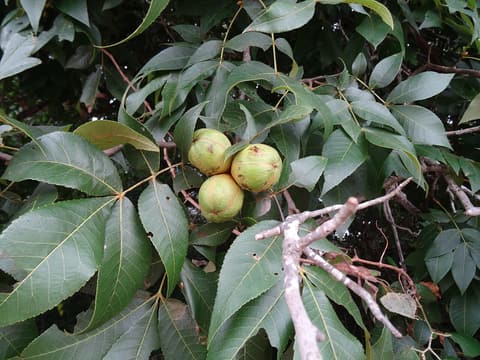
Once a dominant tree of the eastern forests, with sweet nuts for people and wildlife, now held to sprouts by a blight that kills its stems but not its roots.
Sweet orange fruit after frost, blocky alligator bark and a tree that grows nearly anywhere.
The hardiest hickory and the fastest-growing, with sulfur-yellow winter buds and clear yellow fall color, on a tree nurseries seldom carry.
A hickory of dry, rocky hills, with near-black, deeply furrowed bark, rusty-scaled buds and small, sweet nuts.
A tall southern hawthorn whose fruit wears a waxy blue bloom in late summer, with white spring flowers and brilliant orange and red fall color.
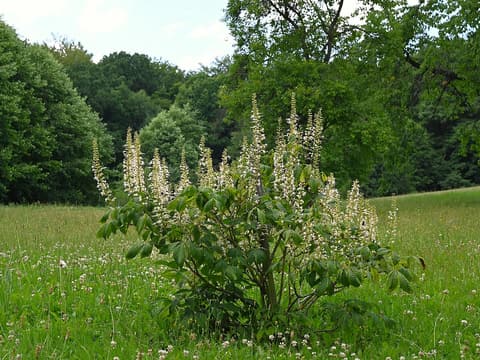
A shade shrub that spreads into a broad mound and lifts white flower spikes up to a foot long in early summer, when few other shrubs bloom.
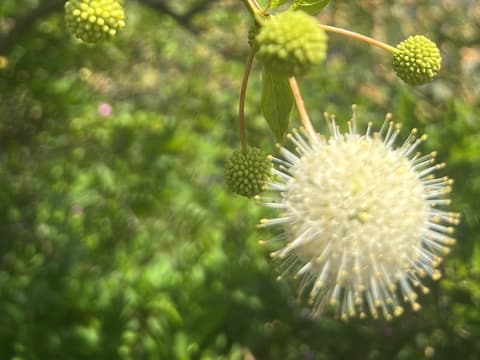
A wetland shrub for pond edges and rain gardens, with round white pincushion flowers in summer that draw bees, butterflies and hummingbirds.
Rows of white bell flowers hang beneath the branches in April on this graceful Appalachian understory tree.
Lilac-purple trusses of 15 to 20 flowers open in late spring on an evergreen shrub of Appalachian ridges, parent of the hardy garden rhododendrons.
The white oak of dry, rocky Appalachian ridges, with deeply ridged dark bark, chestnut-like leaves and big, sweet acorns that fall early.
A native rose with long arching canes, rose-pink flowers that fade toward white in early summer, red hips for birds and bright fall leaves.
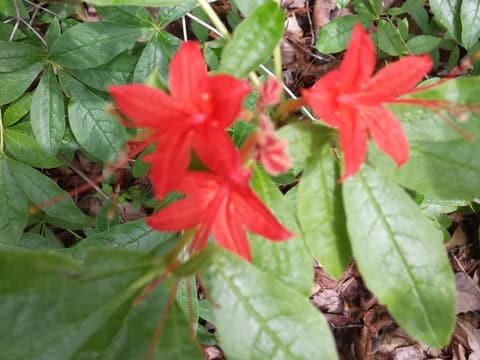
Red to orange flowers in June and July, after the leaves are out, from a low wild azalea of the Cumberland Plateau and nearby mountains.
Two-foot heads of white flowers in August when little else blooms, then purple-black fruit for thrushes and waxwings, on a stem with leaves up to 5 feet long.
First to bloom in the woods, first fruit of summer, and orange-red fall color. A four-season small tree.
A true shrub oak that starts dropping sweet, low-tannin acorns within a few years of planting.
A small, twisting hackberry for dry, rocky ground, with sweet orange fruit for birds and leaves that feed hackberry emperor caterpillars.
Magenta flowers on bare branches in early spring, heart-shaped leaves and a graceful spreading crown.
A small, single-trunked southern plum that clouds over with white bloom before its leaves, then ripens tart to sweet purple plums for jelly and wildlife.
The fragrant Christmas-tree fir of the southern Appalachian peaks, a narrow, spire-shaped evergreen now rare in the wild.
A native midwestern honeysuckle with round, blue-green leaves, whorls of pale yellow flowers in late spring and clusters of red berries in fall.
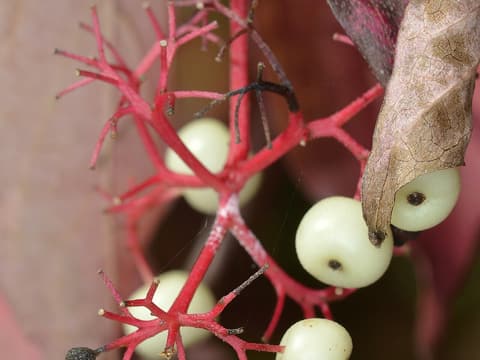
White berries on red stalks, about a third fat, feed migrating warblers and sparrows in September. A thicket shrub for dry or wet ground, sun or shade.
A southern bottomland hawthorn, often with few thorns, that bears white flowers in spring and small red fruit that holds on well into winter.
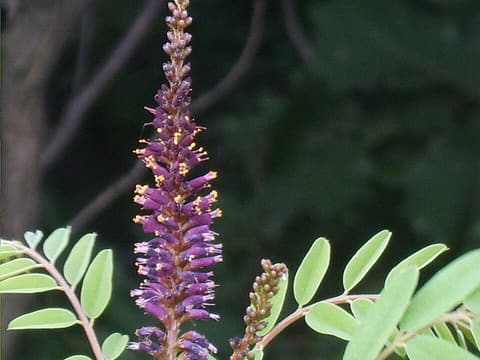
Purple flower spikes with orange stamens in June, on a nitrogen-fixing shrub for streambanks and hot dry edges.
An evergreen holly with glossy, spineless leaves for hedges and screens on damp, acidic ground, and black berries all winter on female plants.
A dense, low shrub of Great Lakes shores with narrow, bluish-green leaves, covered for a month in midsummer with golden flowers.
A thorny native hawthorn of southern swamps that flowers white in late winter and ripens tart red fruit in May, the fruit of mayhaw jelly.
A squirrel's preferred mast, with citrus-scented leaves, fat furry winter buds and clear gold fall color, on a hickory the trade seldom sells.
A rare, colony-forming shrub of southern Appalachian bluffs, with clusters of pale yellow summer flowers, hairy leaves and yellow and red fall color.
Arching evergreen stems hung with sprays of waxy white bells in spring, from the thicket shrub of southern Appalachian stream banks.
A compact evergreen of southern Appalachian balds, with upright clusters of fragrant white bells in spring from buds that show all winter.
Native evergreen with clusters of origami-like pink and white flowers in June and twisted, sculptural trunks.
Honey-scented white bottlebrush flowers in April and leaves that turn yellow, orange and red in fall, on a rare shrub of southern mountains.
Orchid-like white flowers in June, giant heart-shaped leaves and a tolerance for almost any soil.
A spreading dogwood for wet, sunny ground, with sweetly fragrant creamy flowers in early summer and blue fruit that birds take in fall.
A small southern hawthorn with leaves cut fine as parsley, white flowers with red anthers in early spring, peeling bark and glossy scarlet fruit.
One of the last hawthorns to bloom and one of the most shade-tolerant, a vase-shaped small tree with white flowers into June and small orange-red haws.
The everyday hickory of Appalachian ridges: tight gray bark, pear-shaped nuts that fox and gray squirrels live on through winter and rich gold fall color.
Wide-open pink flowers on bare spring twigs, from a rare azalea that grows wild only in the mountains of North Carolina.
Fragrant pink trumpets open on bare branches in April for bumble bees, hummingbirds and swallowtails. The deciduous wild azalea of Mid-Atlantic woods.
A knee-high prairie shrub for dry, limy ground, with round clusters of white flowers in spring that feed bees and butterflies, and roots that fix nitrogen.
A small buckeye for part shade whose upright clusters of tubular red flowers open in early spring, in time for the returning hummingbirds.
An upland hickory with sweet nuts, leafstalks often tinged red and gray bark that turns slightly shaggy with age.
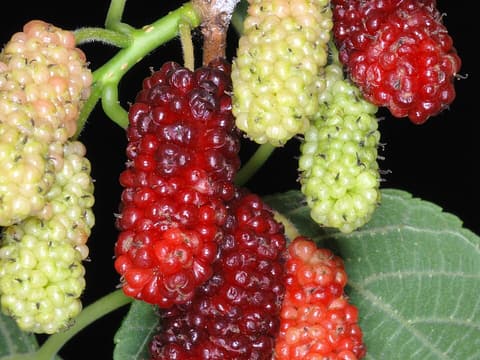
The native mulberry, with big sandpapery leaves and long, sweet, dark fruit that birds and people fight over.
Mitten leaves, orange fall color and fat-rich blue berries on red stalks that thrushes and flycatchers strip in late summer. Host of the spicebush swallowtail.
A rare southern elm that blooms in September and ripens fringed seed by November, a fast-growing shade tree of limestone bluffs and stream sides.
Peeling plated bark, golden fall color and the sweetest wild nut in the eastern forest.
A red oak with long, glossy leaves that have no lobes at all, turning russet in fall and clinging to the branches through winter.
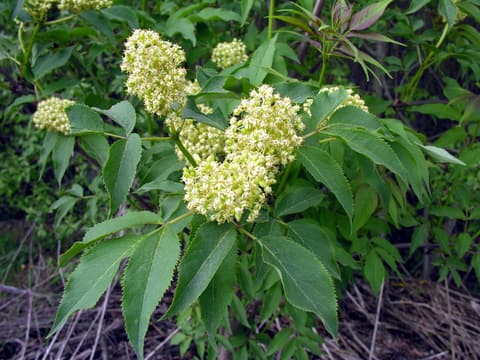
Creamy flower clusters in June, porcelain-blue berries in September and purple-red winter stems for wet spots.
A nitrogen-fixing streambank shrub that holds soil, feeds woodcock and grouse, and thrives in standing water.
A tough, suckering native shrub of southern mountain balds and rocky slopes, with clusters of sulfur-yellow summer flowers for bumble bees.
A southern wild crabapple whose pink blossoms smell of violets in spring, followed by small, sour, yellow-green apples for jelly and wildlife.
Yellow flowers in March, spicy-scented leaves, red berries for thrushes and the host plant of the spicebush swallowtail.
A thin, arching southern shrub of rocky bluffs and stream banks, with white spring flowers and leaves that are white and hairy beneath.
An eastern native grape of dry upland woods that climbs by tendrils into the treetops, with clusters of small blue-black grapes from late summer.
Sticky, clove-scented white flowers from May to July, one of the last wild azaleas to bloom, on a shrub that takes wet, acidic ground.
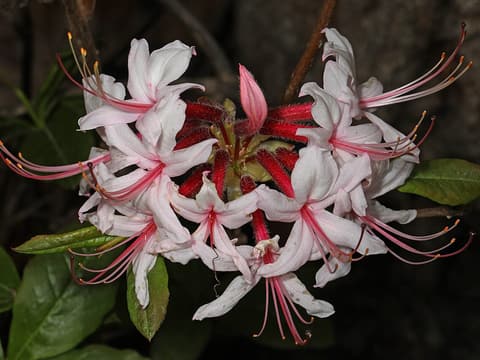
Very fragrant white flowers with red stamens in late spring and early summer, among the last wild azaleas to bloom.
A shrub for sun or deep shade whose maroon spring flowers smell of strawberry, pineapple and banana.
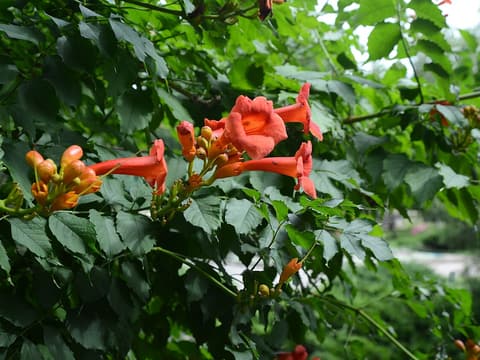
A fast native vine whose orange-red trumpets draw hummingbirds all summer, for a sturdy arbor or fence where its root suckers can be kept in check.
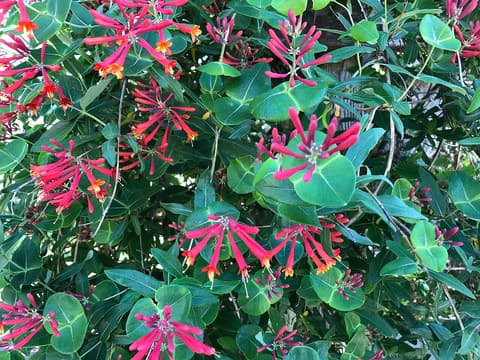
A native twining vine whose red trumpet flowers draw hummingbirds from spring into summer, followed by red berries for birds.
White bells in spring and two-winged fruit in fall, on a small tree of southern floodplains that takes shade and wet ground.
Leaves up to 2 feet long gather at each branch tip like the ribs of an umbrella, around creamy white flowers up to 10 inches across.
A rare Appalachian streambank shrub with arching stems and flat clusters of tiny cream-white flowers in early summer, spreading into thickets.
Cascading wisteria-like white flowers in late spring on a smooth, gray-barked tree that few nurseries grow.
Ask what is ready: put the first 12 on my request list.
The finder answers as you choose and has a height limit. The shop lists the same trees and shrubs, with a search box and a native state filter: see these in the shop.
The address follows your filters, so the link saves this list.
Narrow the list to 12 or fewer and we can email you when any of them is ready to order.
Be first
One email per plant you tick, when it is priced, and nothing else. Each carries a code for 10% off the plants in that order, not shipping or tax. Or ask, and we reply with what is ready now.
While you wait, ask what is ready now.
In the finder's list the best fit comes first: trees and shrubs whose pages list your sun and soil outright, then those that only tolerate them. Within each group, those with your zone in the middle of their range come before those at its edge.
No: the finder lists native trees and shrubs to plant, matched to your zone, size, sun and soil. To name a tree you found, use the tree identification tool, which names it from a photo of a leaf, the bark, a twig, fruit or a flower.
Set the finder's height limit to the room you have: it matches the top of each species' typical mature height. Our article on small trees for a small yard says how far each one goes from a house.
Within 15 feet of the wires, the International Society of Arboriculture says a tree should mature at 20 feet or lower. Virginia Cooperative Extension allows trees to 25 feet within 20 feet of the wires, and suggests large shrubs under 15 feet directly under them.
Divide the hedge's length by the spacing, round down and add one, since a straight row has one at each end: a 40-foot hedge at 4 feet apart takes 11. On its Hedge or screen list, the finder gives each species the spacing its own page sets.
The address carries every choice, so a copied link opens the same list. The page draws that list before any script runs, so a shared link and the page's Markdown copy show the trees and shrubs themselves. These are its keys:
Each tree's facts come from its own page: its zones, mature height, sun, soil, labels and hedge spacing. The 20 and 40 ft height steps are the International Society of Arboriculture's zones by overhead wires (Avoiding Tree & Utility Conflicts (PDF), 2021). Within 15 feet of distribution wires, the species chosen "should have a mature height of 20 feet (6 meters) or lower". From 15 to 50 feet out, it should have "a potential mature height of 40 feet (12 meters) or lower". The planting-site check follows the same zones. The 30 ft step is the small-tree ceiling the growth estimator uses for its generic small tree. Virginia Cooperative Extension draws the low zone wider, to 20 feet from the line, where "trees in the low zone should not exceed 25 feet at maturity" (Selecting and Managing Trees to Avoid Conflicts with Overhead Utility Lines, 2024). Under the line itself it suggests large shrubs with "a mature height of less than 15 feet", the limit's first step. A ZIP code's zone is the 2023 USDA Plant Hardiness Zone Map's ZIP code listing, prepared by the PRISM Climate Group at Oregon State University.
When nothing fits, the site is usually the problem rather than the catalog: tell us the zone, soil, sun and what the tree needs to do, and we will suggest something.
The address carries the tree finder's inputs, so a link opens it filled in, and Copy link on a result writes one: zone (a whole number from 2 to 10), size (shrub, small-tree, medium-tree or large-tree), height (a mature height to stay under: 15, 20, 30, 40 or 60 feet, or 60-plus), sun (full, part or shade), moisture (dry, average or wet), want (one or more of flowers, fall-color, winter-interest, wildlife, honey, edible, evergreen, rare, early-bearing, screening, nitrogen-fixing, salt, street-tree, erosion-control, shade, wet-tolerant or drought, joined by commas), hedge (a hedge or screen length in feet, for a plant count), sort (featured, name, price-asc, price-desc, height, hardy or fast), compare (the slugs of the plants to compare, joined by commas). For example, /tools/tree-finder/?zone=6&size=small-tree&sun=part&moisture=average&want=fall-color.